
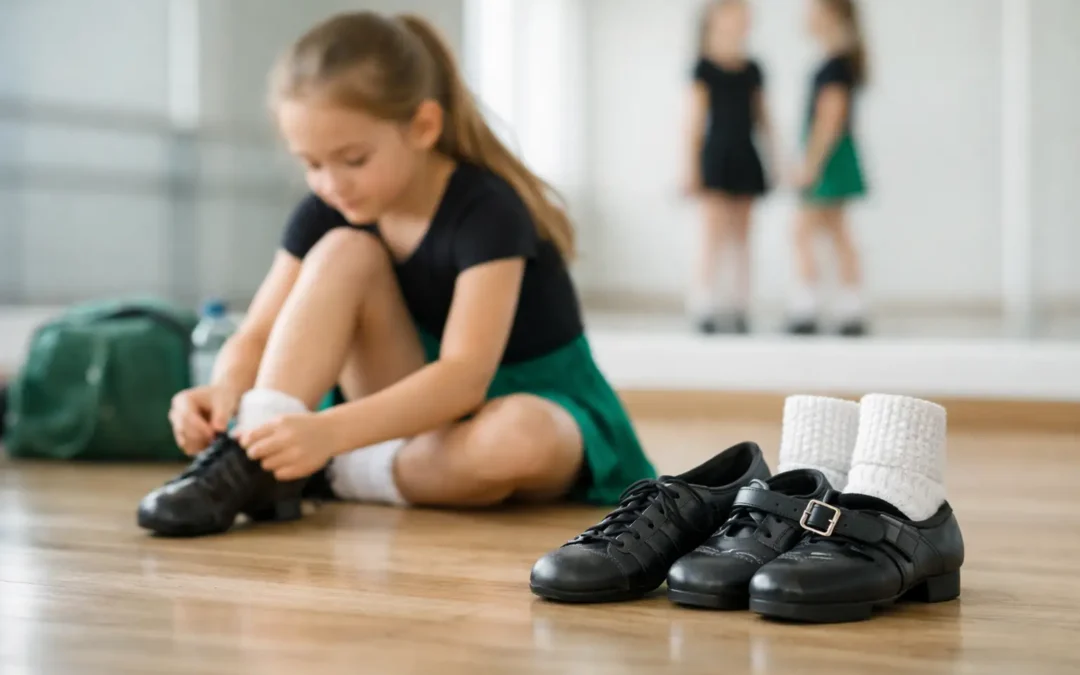
A first Irish dance class should feel exciting, not like a last-minute hunt for a specialist outfit. If you are wondering what to wear to Irish dance class, the reassuring answer is simple: your child, or you, only needs comfortable clothes that are easy to move in, clean indoor footwear and a willingness to have a go.
At Kane Irish Dance, beginners are welcomed exactly as they are. There is plenty of time to learn the steps, understand the rhythm and decide whether Irish dance is the right fit before investing in any dancewear. The focus at the first class is on confidence, good teaching and enjoying those first steps.
What to wear to Irish dance class as a beginner
For most children and adults, a T-shirt or comfortable top with leggings, joggers or shorts is ideal. Choose something that allows easy movement through the legs and does not need constant adjusting. Irish dance involves lots of footwork, bouncing, skipping and high-energy movement, so clothing should feel secure without being restrictive.
For younger children, especially pre-school dancers, familiar clothes are often best. Soft leggings or joggers and a favourite T-shirt can help them settle quickly. Avoid very loose trousers that may sit under the heel, long skirts that limit movement, or outfits with dangling accessories that distract from the class.
Adults beginning Irish dance can follow the same rule. Exercise clothes, leggings, a breathable top and clean trainers are a sensible starting point. There is no need to arrive in a competition dress, a dance skirt or specialist shoes. Every accomplished dancer started by learning basic positions and rhythm, not by owning a full dance wardrobe.
Start with clean, secure footwear
Footwear is the part parents and new dancers tend to think about most, and it does matter. At a first class, clean indoor trainers are usually a practical choice unless your teacher has given different instructions. They protect the feet, provide support and allow beginners to concentrate on coordination.
Please avoid outdoor shoes that may bring mud, grit or moisture into the studio. Slippers, flip-flops, Crocs and socks are not suitable for energetic dance movement. They can slip, move around on the foot or offer too little support when practising jumps and quick steps.
Irish dance shoes are introduced as dancers progress. There are two main types: soft shoes for light, graceful movements, and hard shoes for the distinctive rhythms that many people recognise from Irish dance. A beginner does not need either pair for a trial or first lesson unless advised by the academy.
This is worth saying clearly because specialist shoes are an investment, and the right style and fit depend on the dancer’s age, level and class pathway. Buying shoes too early can mean buying twice. Once a dancer is settled in class and ready to develop particular skills, your teacher can advise you on what is appropriate.
Why trainers are a sensible first choice
Irish dance technique asks dancers to use their feet precisely, often while holding a strong, upright posture. A clean trainer is not a replacement for dance shoes forever, but it gives beginners a stable, low-pressure place to start. Children can listen, copy, practise and build confidence without worrying about unfamiliar footwear.
If your child already owns Irish dance soft shoes from a previous class or a sibling, check that they fit properly and ask before bringing them along. Shoes that are too small, overly worn or the wrong type can make learning harder rather than easier.
Dress for movement, not for a performance
Irish dance has a wonderful performance tradition, with striking dresses, sparkling details, colourful waistcoats and beautifully presented hair. Those outfits belong to displays, competitions and special occasions, not to the everyday beginner class.
Starting in simple activewear helps children understand that dance is a skill they can learn through practice. It keeps attention on timing, balance and trying again after a missed step. It also takes away the pressure to look a certain way before they feel part of the group.
For families, this makes the first step more accessible. There is no expectation to purchase a costume before a child has decided whether they enjoy Irish dance. As they grow in experience, opportunities to perform, take part in shows or compete can bring different clothing requirements. Those choices can be made at the right time, with clear guidance.
A few practical details that make class easier
Long hair should be tied back so it stays out of the dancer’s eyes during movement. A ponytail, plait or bun is perfect. There is no need for a competition-style wig or elaborate hairstyle for class.
Jewellery should be kept minimal or removed where possible. Small studs may be fine, but long earrings, necklaces, watches and bracelets can catch during activity or become uncomfortable. Keep pockets empty too, particularly of mobile phones, keys or bulky items.
Bring a named water bottle, particularly for children attending after school or anyone taking a longer class. Irish dance is lively, athletic activity, and regular sips of water help dancers stay comfortable and focused. For holiday clubs or a full session, follow the joining information for any extra items such as a snack or packed lunch.
Layering can be useful in cooler weather. A zip-up hoodie or jumper is easy to take off after a warm-up, while a light T-shirt underneath keeps the dancer ready to move. Very thick jumpers and coats are not ideal for the active part of class, as dancers can become too warm quickly.
Does the outfit change for different ages?
The essentials stay much the same, but comfort looks slightly different at each stage. Pre-school children benefit from clothes they can manage independently, especially for toilet breaks and changing shoes. Avoid complicated fastenings if possible, and choose something they already enjoy wearing.
Children aged five to twelve often want to feel that they belong in their new class. Comfortable activewear is still the right choice, and letting them select a favourite colour or top can make arrival feel more positive. The aim is to encourage their individuality while keeping them ready for safe, energetic learning.
Teen dancers may prefer standard sportswear, and adults can wear whatever makes them feel comfortable and confident in a movement class. There is no age limit on being a beginner, and no dress code should make someone feel they have to earn their place before their first lesson.
When will my dancer need Irish dance shoes and uniform?
It depends on the route your dancer chooses. Someone joining a beginner course for fun, fitness and friendship may need only comfortable classwear for a good while. A dancer developing towards performances, grades or competitions will eventually need more specific footwear and, in some cases, uniform or costume arrangements.
That progression should be exciting, not confusing. A well-timed conversation with the teacher means parents can plan purchases around genuine need rather than guesswork. It also ensures equipment supports the dancer’s development, from their first reel through to more ambitious goals.
What not to worry about before a trial
Do not worry about having the right Irish dance shoes, knowing the names of steps or arriving with a polished performance outfit. You do not need previous dance experience either. A trial class is there to give your child, or you as an adult learner, a welcoming introduction to the music, movement and community.
The best outfit is the one that lets a new dancer walk through the door comfortably and leave proud of having tried something new. Pack clean trainers, wear clothes made for moving, tie back long hair and bring some water. Then let the class do what it does best: turn a first step into growing confidence, new friendships and a real sense of achievement.