
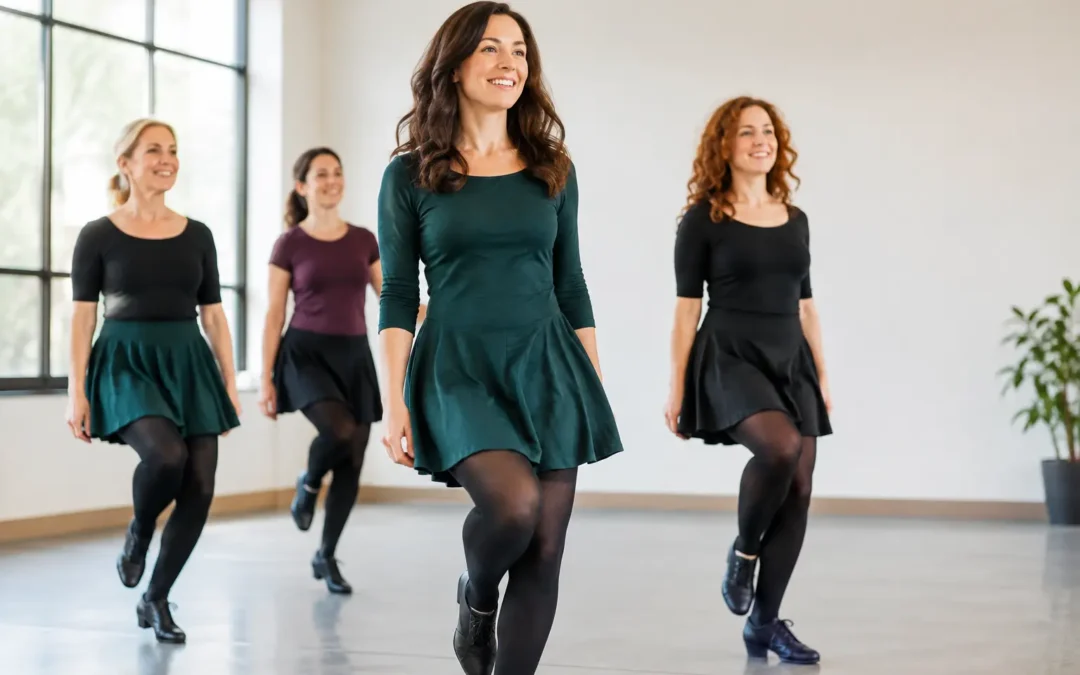
The first class can begin with a small hesitation at the studio door: What if everyone else already knows what they are doing? What if I cannot keep up? Adult learner stories often begin there. They rarely end there. With patient teaching, a welcoming group and a willingness to have a go, complete beginners find that Irish dance can become a valued part of their week.
For some adults, the appeal is the music and energy. For others, it is a chance to get moving again, meet people locally or finally try the activity they have watched from the side-lines for years. Whatever brings someone into class, the most meaningful progress is often not only in the steps they learn. It is in how they feel about themselves.
Why adult learner stories matter
It is easy to look at an experienced dancer and assume they have always been confident. Yet most dancers remember being new: concentrating hard on their feet, losing the beat, laughing when a sequence goes wrong and wondering whether their legs would ache quite so much next week.
Adult beginners can be especially hard on themselves. They may compare their first lesson with a child who has trained for years, or with the polished dancers they see on a stage. That comparison misses the point. An adult class is not a test of whether you should have started earlier. It is an opportunity to start now, at your own level, with a clear place to grow.
The stories worth sharing are not only about dramatic transformations. They include the learner who arrives after a demanding day at work and leaves brighter than when they came in. The parent who wanted an activity of their own after years of putting everyone else first. The former dancer who returns cautiously, then remembers the joy of hearing their steps meet the music. Each story makes the next person through the door feel less alone.
The first steps are designed to be achievable
Irish dance has a reputation for speed, precision and impressive footwork. Those qualities are real, particularly in performance and competition training, but they do not need to make a first class intimidating. Good adult teaching starts with the foundations: posture, rhythm, basic positions and manageable step patterns.
At Kane Irish Dance, adult beginner learning is approached with the same care given to every stage of a dancer’s development. That means expert guidance, clear corrections and enough repetition to let a movement settle without making the room feel pressured. Nobody needs previous dance experience to begin.
Early progress may look modest from the outside. Learning to stand correctly, recognise the count or complete a short sequence without stopping are genuine achievements. These building blocks protect technique and make later steps feel far more possible. Trying to rush past them can be frustrating, while taking the time to understand them gives learners confidence.
Progress does not always move in a straight line
One week, a particular rhythm may suddenly make sense. The next, it may disappear as soon as the music starts. That is normal. Dance is physical learning, and physical learning takes practice, rest and repetition.
Adults also bring busy lives into the studio. Work, family responsibilities, travel and unexpected illness can interrupt a routine. A supportive class does not treat every missed week as failure. It helps dancers pick up where they are, rather than feeling they have fallen too far behind to return.
There is a useful balance to strike. Consistency helps technique, fitness and confidence develop, but perfection is not the entry requirement. The best reason to keep coming back is that class feels rewarding enough to become a commitment you want to make.
Confidence grows beyond the dance floor
Many adult learners initially book a course for fitness. Irish dance certainly gives the body plenty to do: coordinated footwork, posture, balance, stamina and musical timing all ask for attention. It can be a lively alternative for people who do not enjoy a conventional gym routine.
But the change learners describe most often is confidence. It can begin with something simple, such as being willing to stand at the front of the line for a practice run. Later, it may show up at work, in social settings or in the way someone talks about trying new things.
Dance gives adults regular evidence that they can learn. A step that felt impossible in week one becomes familiar by week five. A dancer who once watched every count begins to hear the pattern in the music. That sense of earned progress carries weight because it is real. It comes from showing up, practising and allowing yourself to be a beginner.
For adults who have spent years supporting children, colleagues or relatives, there is also something powerful about reserving time for their own development. It is not selfish. A hobby that builds energy, friendship and self-belief can make a positive difference to the rest of life too.
Friendship is part of the rhythm
Adult classes work best when nobody feels they need to arrive with a friend. Irish dance creates natural moments of connection: learning a pattern together, encouraging someone through a tricky section and sharing a smile when the whole group turns the wrong way at once.
This is especially valuable for people who are new to Huddersfield or whose social circles have changed. Making friends as an adult can feel harder than it should. A regular class gives people a reason to see one another each week, with conversation growing naturally around a shared challenge.
The atmosphere matters. A little laughter has its place, but so does respect. Every learner should feel able to ask a question, repeat a section and make a mistake without embarrassment. High standards and kindness are not opposites. In fact, dancers make stronger progress when they feel safe enough to try.
From a first course to a proud performance
Not every adult learner wants to perform, and there is no requirement to pursue a competitive pathway. For some, the weekly class, music and exercise are exactly what they need. Others discover that they enjoy setting a bigger goal.
A display, celebration or social ceilí can offer a memorable next step. Performing is not about being flawless. It is about contributing to something shared, remembering what you have learned and experiencing the pride of seeing your work come together. Adult dancers are often surprised by how much they enjoy that moment once they have had time to build their confidence.
There are trade-offs to consider. Preparing for a performance asks for extra practice and commitment, which may not suit every season of life. It can also be deeply motivating for learners who want a clear target. The right pathway is the one that fits your goals, schedule and enjoyment, not somebody else’s idea of what dance should look like.
What experienced adults wish they had known at the start
Most would say they did not need to get fitter, more flexible or more confident before booking. Class was where those things began to develop. Comfortable clothing, a willingness to listen and a sense of humour were enough for day one.
They would also say that it helps to expect a learning curve. Irish dance is skilful, and that is part of its appeal. A class that challenges you while still meeting you where you are can feel far more satisfying than an activity that asks nothing new of you.
Your story can begin with one class
Adult learner stories are not reserved for naturally confident people or former performers. They belong to people who decide that curiosity is a good enough reason to begin. If Irish dance has been on your mind, a trial class or beginner course is a practical way to see how it feels, meet the group and learn the first steps with guidance.
Bring your questions, take the pace that is right for you and allow yourself to enjoy being new at something. The first rhythm may feel unfamiliar, but it could become the hour in your week that reminds you what you are capable of.