
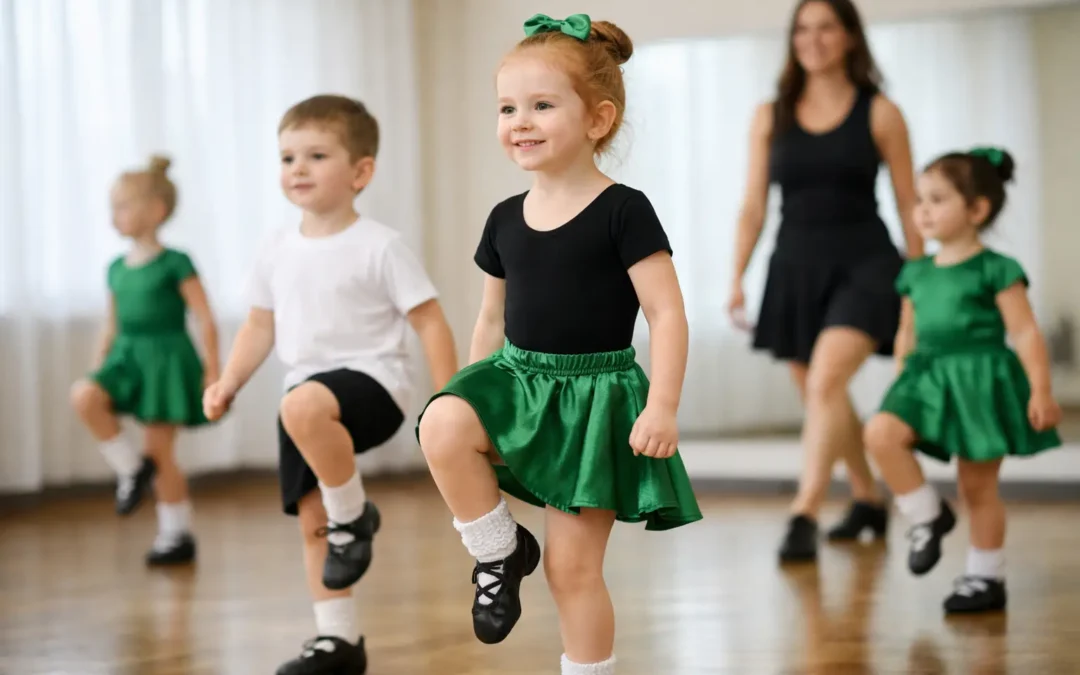
A first dance class can feel like a big moment for a little person. One child may race straight onto the floor, while another prefers to watch from a parent’s side before joining in. The best pre-school Irish dance classes Huddersfield families can choose make room for both, turning those first tentative steps into a happy, confidence-building routine.
For children in their early years, Irish dance is not about getting every step perfect. It is about moving to music, learning to listen, trying something new and feeling proud of what their bodies can do. With kind encouragement and clear structure, pre-schoolers can begin building skills that support them well beyond the dance studio.
Why Irish dance works so well for pre-schoolers
Young children learn through doing. They enjoy rhythm, repetition, imagination and the chance to copy a teacher or join in with friends. Irish dance brings these elements together in an energetic, age-appropriate way. Little ones practise simple foot patterns, skipping, marching, balance and musical timing, all while enjoying lively Irish music and a warm group atmosphere.
That movement has real value. Pre-school dance can support coordination, spatial awareness and gross motor development, while helping children understand simple instructions such as stopping, starting, waiting for a turn and following a sequence. These are useful early learning skills, but they should never make class feel like hard work. For a young child, the aim is to leave smiling, talking about their favourite part and looking forward to coming back.
There is a social benefit too. A dance class offers a gentle introduction to being part of a group outside nursery or home. Children learn alongside one another, celebrate small wins and gradually become more comfortable being seen and heard. For some, that may mean joining a circle without a parent. For others, it may be proudly showing a new step at home. Both are meaningful progress.
What good pre-school Irish dance classes in Huddersfield look like
A high-quality early-years class should feel organised without being overly formal. Pre-school children have short attention spans and different confidence levels, so teaching needs to move at the right pace. Activities should be varied, instructions should be simple, and teachers should understand when a child needs reassurance, a quick reset or an extra moment to observe.
At Kane Irish Dance, beginner teaching is designed to give every child a positive start. The academy’s approach combines the joy and accessibility young dancers need with the care, knowledge and standards expected from specialist Irish dance tuition. Families can feel reassured that their child is learning in a supportive environment led by experienced professionals.
The atmosphere matters as much as the steps. Look for a class where children are greeted warmly, effort is praised and no one is made to feel behind. Pre-schoolers develop at very different rates. A child who is quiet in week one may be dancing confidently by week six, while an enthusiastic child may need help learning to take turns. A patient teacher knows both responses are completely normal.
A clear routine helps children settle
Children often thrive when they know what to expect. A familiar class rhythm – a welcoming start, movement activities, simple Irish dance steps, a game or musical activity, then a calm finish – can make a new environment feel safe. Repetition is useful here. It helps little dancers remember the routine and spot their own improvement.
Parents should not expect a pre-school class to resemble the tightly drilled training of older competitive dancers. There may be giggles, wobbles and occasional changes of mind. Yet, beneath the fun, children are learning discipline in its earliest form: listening, giving things a go and returning to a task with encouragement.
The right clothing keeps the focus on fun
For a first class, comfort is usually the priority. Children need clothes that allow them to bend, skip and move freely, with secure footwear suited to the studio floor. Specialist Irish dance shoes are not always necessary at the very beginning, particularly while a child is deciding whether classes are right for them.
As children become more confident and progress through their programme, the academy can advise parents on what they will need next. Starting simply removes pressure and means the first session can be about the experience rather than the kit.
Confidence grows one small step at a time
Parents sometimes ask whether their child is too shy, too energetic or too young to begin. In most cases, the answer depends less on personality and more on the setting. A welcoming teacher can help a hesitant child participate at their own pace, while a structured activity can give an energetic child a positive outlet.
Irish dance has a particularly satisfying way of showing progress. A child can hear the music, practise a step and feel the difference when it starts to come together. That sense of achievement is immediate and tangible. Over time, it can encourage children to stand taller, join in more readily and trust their ability to learn.
The benefits do not stop at the studio door. Families often notice little changes at home: a child singing a tune, demonstrating a step to grandparents, or speaking more confidently about their day. These moments may seem small, but they are the foundations of self-belief.
Choosing a class that suits your family
The most suitable pre-school class is one your child can attend consistently and enjoy. Location, timing and class size all matter, especially when fitting an activity around nursery, work, naps and family life. A class close to home in Huddersfield can make a weekly commitment feel manageable rather than rushed.
It is also worth considering what happens after the first term. Some families simply want a joyful weekly activity, while others hope their child will eventually perform, make lasting friends or pursue competition. Neither ambition is better than the other. What matters is choosing an academy with a route that can meet your child where they are now and support them if their interest grows.
A specialist school should offer clear beginner entry points and a genuine pathway onwards. As dancers move through the ages, they may choose to develop their technique, take part in displays, enjoy social ceilí dancing or work towards competitive opportunities. Starting young does not commit a child to one destination, but it gives them a wonderful base from which choices can grow.
A trial is the easiest way to decide
No description can tell you exactly how your child will feel in the room. A trial class lets families see the teaching style, meet the community and judge whether the session feels right. It also removes the pressure of making a long-term decision before your child has had the chance to try it for themselves.
Before booking, share anything the teacher should know. Perhaps your child is nervous in new groups, has a particular learning need, or is happiest if they can watch first. A good academy will welcome that information and help make their first experience as comfortable as possible.
More than a weekly activity
For many families, dance becomes a dependable part of childhood: a place for healthy movement, friendships, routines and proud achievements. In Irish dance, children can enjoy the excitement of learning a distinctive skill while becoming part of a community that values effort, respect and encouragement.
The first few classes may involve more bouncing than dancing, or a child may need time before they feel ready to join in fully. That is all part of the process. Give them a patient start, celebrate the smallest brave moments, and their first steps may become the beginning of something they truly love.