
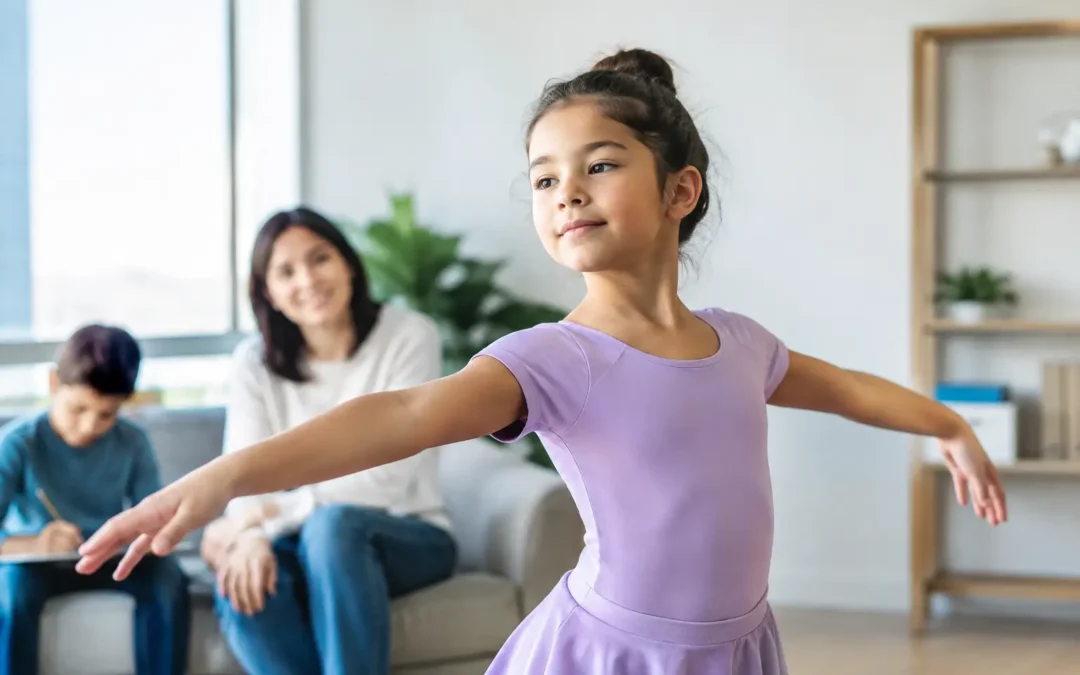
A child is trying to remember a sequence of steps, keep time with the music, stand tall, listen for a correction and stay with the group. That is far more than a dance class moment – it is a small, active exercise in concentration. So, does dance improve focus? For many children, teenagers and adults, regular dance can provide a practical and enjoyable way to practise paying attention.
Irish dance is particularly engaging because it asks dancers to use both mind and body. There is rhythm to follow, technique to refine and routines to remember. Progress does not rely on being perfect straight away. It comes from returning to the movement, listening carefully and trying again with growing confidence.
Does dance improve focus in children?
Dance can support focus because it gives children a clear reason to concentrate. Rather than being asked to sit still and pay attention in the abstract, they are working towards something they can hear, feel and achieve: getting the next step right, dancing in time with their classmates or preparing for a performance.
In a well-structured class, attention is built in short, manageable stretches. A teacher may demonstrate a movement, break it down, give dancers time to practise and then bring the group back together. This rhythm suits many young learners. They are not expected to concentrate for an hour without moving; they are invited to concentrate through movement.
For children aged five to twelve, this can be especially valuable. School already makes big demands on listening, memory and following instructions. Dance offers another setting in which those skills can grow, but with music, movement and the encouragement of a team around them.
That does not mean dance is a cure for every concentration difficulty. Children develop differently, and some will need extra support, a quieter space or more repetition than others. The value of a welcoming academy is that every dancer can make progress from their own starting point, without being labelled as the child who cannot keep up.
Why Irish dance asks the brain to stay involved
Irish dance has a wonderfully direct relationship with rhythm. Dancers need to hear the beat, count phrases of music and place their feet accurately. As steps become more advanced, they may need to remember patterns while keeping posture, timing and energy consistent.
This combination can strengthen the habit of returning attention to the task. A dancer may lose their place in a routine, then listen for the count and rejoin. They may receive one technical correction, such as lifting through the body or sharpening a movement, and focus on applying it during the next attempt. These are useful moments of self-management, not failures.
Memory, timing and coordination work together
Learning a dance routine involves working memory: holding a series of instructions in mind long enough to use them. At first, a child might learn just two or three movements. With regular practice, those small sections become a complete dance.
Timing adds another layer. It is not enough to remember the order of the steps; dancers also learn when to do them. This is why repetition matters. Repeating a sequence helps it become more familiar, leaving the dancer with more mental space to notice their timing, technique and expression.
Coordination also requires close attention. Arms, feet, posture and musical timing all need to work together. Younger dancers often begin with the foundations, while experienced dancers refine details that an audience may barely notice but judges and teachers certainly do. Both stages reward patient concentration.
A goal makes concentration feel worthwhile
Focus is easier to practise when children can see where it is leading. A new dance, a class display, a holiday club performance or a competition goal can give training a purpose beyond simply completing an exercise.
For some dancers, performing in front of family and friends becomes a proud milestone. For others, the motivation is mastering a difficult reel, moving into the next class or working towards championship qualification. The goal will vary, but the process is similar: show up, listen, practise and improve.
The confidence-focus connection
Children often concentrate better when they feel safe enough to have a go. If they worry that every mistake will be embarrassing, their attention can turn towards avoiding failure rather than learning. A kind, well-led class changes that atmosphere.
When dancers are praised for effort, careful listening and resilience, they begin to understand that improvement is earned over time. They can take a correction without feeling discouraged. They can watch another dancer succeed and feel inspired rather than left behind.
This confidence can carry into other parts of life. Parents may notice that their child is more willing to practise a skill, speak in a group or persevere with a task that once felt frustrating. Dance cannot promise instant changes at home or school, but it can give children regular experience of working through challenge successfully.
Can dance help teenagers focus too?
Teenagers face a different set of pressures. Homework, exams, friendships, phones and busy schedules can make it difficult to switch off from one thing and fully engage with another. Dance offers a defined space where the next task is physical and immediate.
A teen dancer has to be present in the room. They are listening to music, working with their peers and responding to feedback. This can be a welcome contrast to screen-based activities, especially when dance becomes a consistent part of the week.
There is also a social benefit. Being part of a group with shared goals can make it easier to stay committed. Teenagers who feel connected to their class are more likely to attend, practise and encourage one another through the challenging stages of learning.
For ambitious dancers, competition and performance training bring additional discipline. Preparing properly means building routines, looking after fitness and learning how to stay composed under pressure. Those are demanding skills, but they are learned gradually, with experienced guidance and realistic expectations.
Adult beginners can benefit from focused movement
Adults sometimes assume they have missed their chance to learn dance, or worry that they will be expected to know the steps before they walk through the door. Beginner courses should remove that pressure. No previous experience is needed to enjoy the concentration that comes with learning something new.
For adults, dance can create a welcome pause from a full diary. Following a sequence of movements requires enough attention that everyday worries may have less room to take over. It is not about doing everything perfectly. It is about being present, having a laugh when a step goes wrong and noticing progress week by week.
Ceilí dancing adds another dimension because it involves moving with other people. You are listening, responding and sharing the experience rather than exercising alone. That sense of connection is one reason many adults find it easier to keep going.
How families can support focus through dance
The biggest gains usually come from consistency, not pressure. One class can spark excitement, but regular attendance gives dancers time to feel settled, remember routines and see their own improvement.
At home, keep conversations encouraging and specific. Instead of asking whether they were the best in class, ask what new step they learned, what felt tricky or what they were proud of. This helps children reflect on their effort, not just the outcome.
A simple routine before class can help too: a drink of water, comfortable clothing, the right shoes where needed and enough time to arrive without rushing. These small habits teach organisation while helping the dancer begin class ready to listen.
It is also worth protecting rest. Focus is harder when children are overtired or over-scheduled. Dance should be a positive commitment that brings energy, friendship and achievement, not another source of strain.
At Kane Irish Dance, beginners are introduced to Irish dance in a supportive, structured setting where every dancer can develop at their own pace. From first steps to performance and competition opportunities, the aim is not simply to teach a routine, but to help people feel capable of learning one.
A trial class is often the best way to see whether dance clicks for your child, teenager or for you. Watch what happens when the music starts: a little more attention, a little more determination and, very often, a very proud smile.