
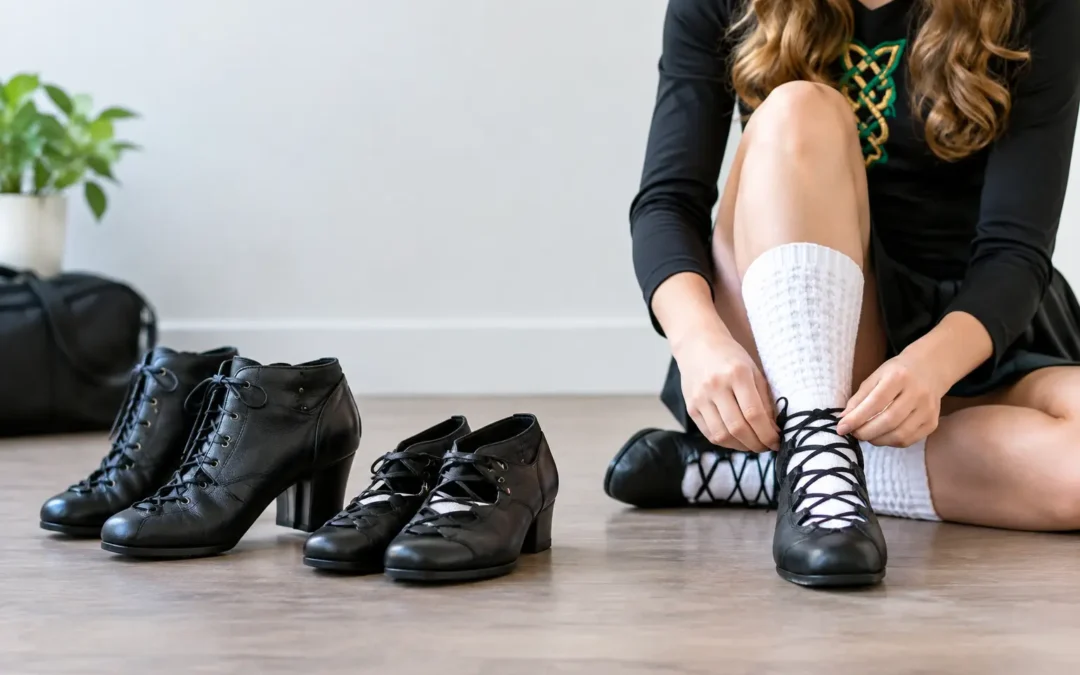
The first pair of Irish dance shoes can feel like a big decision, especially when your child is excited to start classes and you are keen to get it right. The good news is that you do not need to buy every type of shoe before the first lesson. To choose Irish dance shoes well, begin with the dancer’s age, experience and the style of class they are joining, then let comfort, correct fit and teacher guidance lead the way.
For most beginners, the right shoe is the one that supports good technique without making those all-important first steps feel daunting. A carefully fitted pair helps dancers point their toes, hear the rhythm of their feet and move with growing confidence. It also means families can invest gradually as a dancer progresses.
Choose Irish Dance Shoes for the Stage You Are At
Irish dancing uses two main types of footwear: soft shoes and hard shoes. They are designed for different movements, sounds and stages of learning.
Soft shoes are usually the starting point for children and adult beginners. Girls and women generally wear leather ghillies, which lace over the foot and ankle. Boys and men typically wear reel shoes, often with a small heel. Soft-shoe dancing focuses on lightness, turnout, posture, skipping and precise foot placement. The shoes allow the dancer to feel the floor while learning how to hold their feet correctly.
Hard shoes have a fibreglass or similar tip and heel that create the distinctive percussion sounds associated with Irish dancing. They are used for rhythmic dances such as reels, jigs and hornpipes. Although the sound is exciting, hard shoes ask more of a dancer’s control, strength and timing. A beginner does not always need them straight away.
Your teacher should advise when a dancer is ready to move into hard shoes. That decision depends on more than age. It may be influenced by attendance, ankle strength, coordination, confidence with basic steps and the class programme. Starting hard shoes at the right time gives dancers something positive to work towards, rather than adding pressure too soon.
Start With Fit, Not the Number on the Box
Irish dance shoe sizing can differ from everyday school trainers or fashion shoes. A size marked on the box is only a starting point, so avoid assuming a dancer will wear exactly the same size in every brand or style.
Soft shoes should fit closely, like a second skin, without painful squeezing or curling toes. Leather ghillies soften and mould to the foot with wear, so a pair that feels roomy from day one may become too loose quickly. There should not be a large gap at the toe or excess leather gathering across the front of the foot. The dancer needs enough room to move naturally, but not enough for the foot to slide inside the shoe.
Hard shoes should also feel secure around the heel and instep. A loose heel can affect balance and make it harder to produce clean sounds. However, shoes that are painfully tight can distract a dancer from their technique and put unnecessary strain on growing feet. The aim is snug, supported and comfortable enough for a full class.
When trying shoes on, ask the dancer to stand, rise onto their toes, point their feet and take a few controlled steps if the setting allows. Watch for heels lifting, toes gripping tightly or laces pulling uncomfortably. Children may say a shoe is fine because they are eager to dance, so it is worth checking carefully rather than relying on a quick answer.
Allow for Growth, But Do Not Size Too Far Up
Parents understandably want shoes to last, particularly when children’s feet seem to grow overnight. Yet buying several sizes too large often costs more in the long run. Oversized shoes can make it difficult to point the foot, maintain balance and develop the neat lines Irish dancing is known for.
A modest amount of growing room is sensible, particularly for a child who is between sizes, but the shoe still needs to stay secure during movement. If you are unsure, ask before purchasing. A teacher who sees your child dance each week can offer more useful advice than a general size chart alone.
Think About the Dancer’s Class and Goals
The right choice looks different for a pre-schooler taking their first playful steps, a child joining weekly beginner classes, a teenager returning to dance or an adult trying something new.
For very young dancers, simple, well-fitting soft shoes are usually enough. At this stage, the priority is enjoyment, listening skills, rhythm and confidence in a friendly class environment. There is no benefit in rushing into specialist footwear before a child has had time to settle in.
For school-age beginners, soft shoes remain the usual foundation. As dancers learn more steps, perform in displays or work towards competition opportunities, their footwear can develop alongside their skills. A dancer preparing for regular performances may need a more polished pair than someone attending a short introductory course, but correct fit still matters more than appearance.
Teenagers and adults may progress at a different pace. Some arrive with previous dance experience, while others are complete beginners. Soft shoes are often the most sensible first purchase, even for an adult keen to make plenty of noise in hard shoes. Building technique first makes the eventual transition more enjoyable and helps protect against avoidable aches in the feet and lower legs.
At Kane Irish Dance, dancers are encouraged to progress with purpose, whether their goal is a first performance, a new friendship group or championship-level competition. Footwear should support that journey, not make it feel like an expensive barrier to getting started.
Leather, Laces and Everyday Care
Most traditional soft shoes are leather because it can shape to the dancer’s foot and offers the close fit needed for technique. Leather does require a little care. Let shoes air after class rather than leaving them in a sealed kit bag, particularly after energetic practice. This helps them dry properly and keeps them fresher for longer.
Check laces regularly. Ghillie laces should be tied securely according to your teacher’s guidance, with loose ends tucked safely away so they do not become a trip hazard. Do not use slippery socks inside shoes unless specifically advised, as they can change the fit and reduce control.
Hard shoes deserve an extra check before class or performance. Examine the tips, heels, straps and buckles for signs of wear. The sound-producing parts can wear down over time, especially with frequent training, and may need professional attention or replacement. Do not attempt to alter tips or heels yourself. A small change can affect sound, balance and safety.
When to Replace Irish Dance Shoes
Shoes do not need replacing simply because they have a few scuffs. Irish dancers work hard, and well-loved shoes often show it. Replace them when they no longer fit securely, have become painful, have lost their shape or have worn soles, heels, straps or laces that affect safe movement.
For children, fit is usually the deciding factor. Check shoes every few months, and sooner during growth spurts. If toes are pressing at the front, the shoe is difficult to put on or a dancer starts complaining of rubbing, it is time to reassess. For more experienced dancers, look for changes in how the shoe performs: slipping heels, reduced support or uneven wear can all influence technique.
It is also wise to distinguish between normal break-in and genuine discomfort. New leather shoes can feel firmer initially, but they should not cause persistent pain, numbness, blisters or limping. Stop and seek advice if they do. Dancing with discomfort is not a sign of commitment – it is a sign that the fit needs attention.
Avoid the Most Common First-Pair Mistakes
The most frequent mistake is buying hard shoes before a teacher recommends them. Another is choosing a bargain pair that is far too big in the hope that it will last for years. Both can make learning harder at the very moment a new dancer should be building confidence.
It is also easy to focus on looks over function. Traditional Irish dance shoes have a distinctive appearance, but the best pair is not necessarily the shiniest or most expensive. It is the pair that fits the dancer’s current needs, stays secure through class and allows them to practise good technique.
If you are booking a trial class, there is usually no need to arrive in specialist shoes. Comfortable clothing that allows easy movement is a far better starting point. Once a dancer has enjoyed the class and their teacher understands their level, you can make a confident, informed purchase.
A first pair of Irish dance shoes is not just kit for a class. It is often the moment a dancer begins to picture themselves performing, making friends and achieving something they did not think they could do. Choose carefully, ask for guidance and let the shoes become part of a journey that feels exciting from the very first step.