
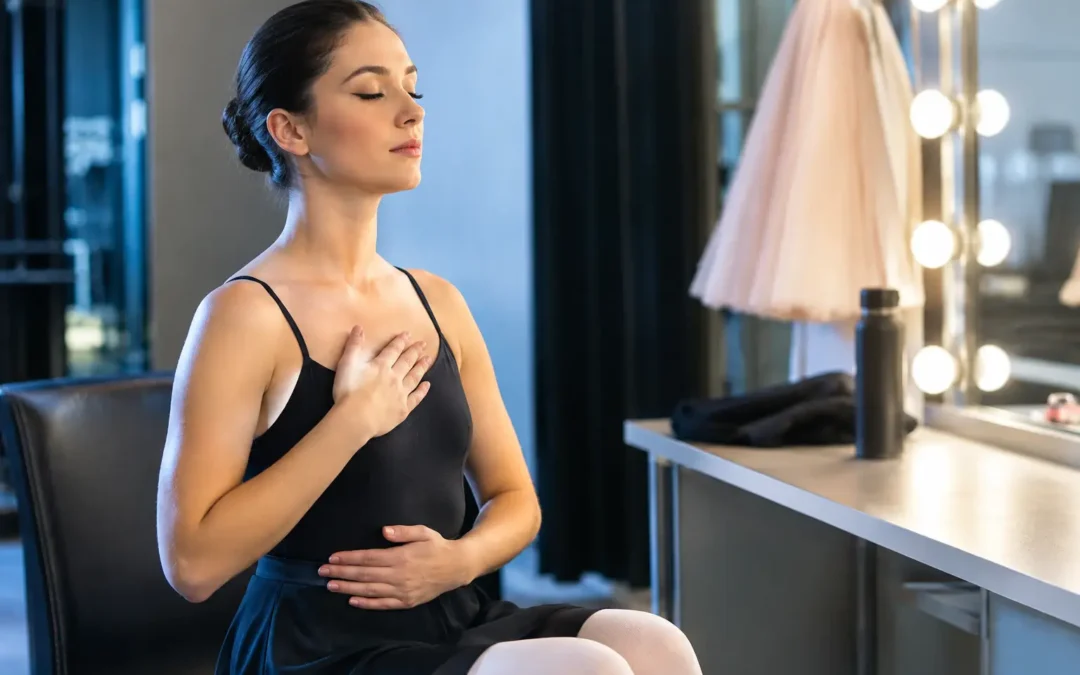
The music begins, the audience goes quiet, and suddenly the steps that felt easy in class can feel very far away. Learning to manage dance performance nerves is part of becoming a dancer, whether it is a child’s first display, a teenager’s feis, or an adult’s first time joining a ceilí. Nerves do not mean a dancer is unprepared. They usually mean the performance matters.
At Kane Irish Dance, we want every dancer to feel proud of stepping onto the floor. The aim is not to remove every flutter of excitement. It is to help dancers use that energy, trust their training and enjoy the moment they have worked towards.
Why performance nerves happen
Performing asks a dancer to do something brave. They are being seen, heard and judged, even if the audience is made up of friendly family members. Children may worry about forgetting a step or being watched. Teenagers can feel pressure to match their own high standards, while adults may fear looking like a beginner.
There is also a physical side. When the body senses a big moment, the heart can beat faster, hands may feel shaky and thoughts can race. This is a normal stress response. The same adrenaline that can make a dancer feel nervous can also sharpen focus and give a performance energy.
The key is helping dancers recognise the feeling without letting it take over. Rather than saying, “I am going to panic,” try, “My body is getting ready to perform.” That small change gives the feeling a more useful meaning.
How to manage dance performance nerves before the day
Confidence is built long before dancers arrive at a venue. It grows through regular attendance, careful correction and practising a routine in small, manageable sections. A dancer who knows what comes next has more room to enjoy performing it.
Practise performing, not just practising steps
At home or in class, dancers often repeat difficult steps until they improve. That matters, but performance practice needs a slightly different approach. Occasionally, ask your child to dance their full routine once, from start to finish, without stopping to correct a mistake. They can begin with their arms by their sides, take their starting position and finish with a smile or bow.
This teaches an important lesson: a wobble does not end a dance. If a step goes wrong, the best next move is usually to keep the rhythm, rejoin at the next familiar point and carry on with purpose. Audiences tend to notice confidence far more than a small error.
For dancers preparing for competitions or displays, it can help to practise in the outfit and shoes they plan to wear. A new sock, a tighter wig or unfamiliar footwear can become a distraction on the day. There is no need to make rehearsal stressful, but reducing surprises is a practical way to settle nerves.
Create a simple pre-performance routine
A routine gives dancers something familiar to do when everything around them feels busy. It should be short enough to use anywhere, from a school hall to a competition venue. For younger dancers, a parent can gently guide the routine at first. Older dancers and adults can make it their own.
A helpful routine may include checking laces and costume, taking three slow breaths, rolling the shoulders loose and quietly saying one encouraging phrase. Something as simple as, “I know my first step,” is more useful than trying to remember every detail at once.
Avoid cramming extra practice into the final few minutes. Repeating steps at speed when a dancer is already anxious can increase pressure. A calm warm-up, a few confident basics and a clear starting cue are usually enough.
Keep the goal realistic
Not every performance needs to be about trophies, perfect timing or getting every step exactly right. For a first display, success may be walking onto the floor and staying with the group. For a more experienced dancer, it may be showing strong posture, keeping the rhythm after a mistake or enjoying the music.
Parents can make a real difference here. Before the event, ask, “What would make you feel proud today?” rather than, “Are you going to win?” The first question keeps the focus on effort and growth. That is especially valuable for children who put a lot of pressure on themselves.
Supporting children who feel nervous
Children take cues from the adults around them. If grown-ups appear rushed, worried or overly focused on results, children often absorb that feeling. A calm voice, enough time to get ready and a familiar snack can make the whole experience feel safer.
It helps to name the emotion without making it bigger. You might say, “It looks like you have butterflies. Lots of dancers get butterflies before they perform.” Then remind them of one thing they can control: listening for the music, finding their place in the line or smiling at the end.
Try not to promise that they will not feel nervous. If they do, they may think something has gone wrong. Instead, reassure them that nerves can come along for the ride and that they are still capable of dancing beautifully.
Afterwards, give praise that is specific and truthful. “You remembered to keep going when you lost your place,” or “I could see how strongly you finished,” builds stronger confidence than a general “well done” alone. If they are disappointed, listen first. A dancer does not need an immediate lesson from every difficult moment. Sometimes they simply need a cuddle, a drink of water and the chance to try again another day.
Helping teens and adults perform with confidence
Teen dancers may feel the weight of comparison, particularly when they are progressing towards more demanding performances or competitions. Social media can make this worse by showing polished clips without the corrections, repetitions and nerves behind them. Encourage dancers to measure progress against their own last performance, not somebody else’s highlight reel.
Adults often arrive with a different kind of worry: the belief that everyone else will know what they are doing. In a good beginner class, that is not the expectation. Learning Irish dance as an adult means being willing to learn in public, laugh when a foot goes the wrong way and return the following week a little more certain.
For both groups, visualisation can be useful when it stays practical. Rather than imagining a flawless performance, picture the first ten seconds clearly: walking to the space, hearing the opening music and beginning the first movement. The brain responds well to familiar sequences. Once the dancer is moving, training often takes over.
What to do when nerves appear on the floor
Even well-prepared dancers can freeze for a moment. The most effective response is to make the next decision small. Feel both feet on the floor. Listen for the beat. Find a teacher, fellow dancer or point at the back of the room to focus on. Then take the next step.
Breathing can help, but it needs to be simple. Breathe in gently through the nose, then breathe out a little longer than the breath in. A long exhale tells the body that it is safe to settle. This is useful while waiting to go on, but dancers should not worry about doing it perfectly.
If a dancer makes a mistake, encourage them to keep their face calm and continue with the music. Stopping and looking distressed can make a small slip feel much larger. Recovering is a performance skill in its own right, and every experienced dancer has had to learn it.
Turn each performance into experience
The first performance is often the hardest because it is unknown. The second can still feel daunting, but it comes with proof: “I was nervous before, and I did it.” Over time, displays, class demonstrations, ceilís and competitions become part of a dancer’s experience rather than a frightening test.
After each event, take a quiet moment to reflect. What helped? Was the warm-up useful? Did they feel more settled with a friend nearby? What would they change next time? Keep the conversation curious rather than critical. A dancer who learns from an experience builds resilience as well as technique.
Performance nerves may never disappear completely, and that is not the goal. The goal is for dancers to know that a racing heart can sit alongside courage, preparation and joy. When they step onto the floor despite the butterflies, they are already achieving something worth celebrating.