
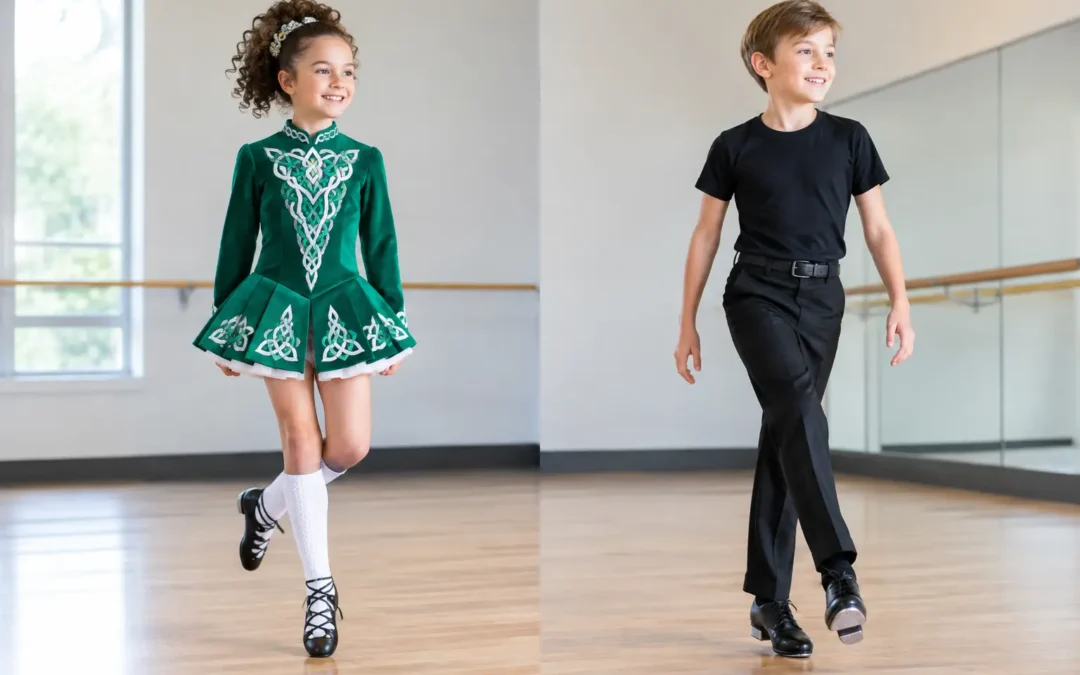
The sound often gives it away before you see the dancers. A tap class may fill the room with improvised rhythms, while Irish dancers create fast, precise beats that carry a tune of their own. For a parent choosing Irish dance or tap, both can look exciting, energetic and brilliantly musical. The best choice comes down to what will help your child feel motivated enough to return each week, practise with pride and enjoy being part of a group.
Both styles build fitness, coordination and confidence. Neither requires a child to arrive with dance experience. Yet the atmosphere, movement vocabulary and opportunities ahead can feel quite different.
Irish dance or tap: the key difference
Tap is a broad dance style built around making rhythm with metal plates on the heel and toe of the shoe. Classes can draw on jazz, musical theatre and contemporary music. Dancers commonly work on combinations, musicality and, at more advanced levels, their own rhythmic phrasing. It can be a particularly good fit for a child who loves show tunes, enjoys a looser performance style or is drawn to creating their own sounds.
Irish dance is rooted in Irish music, tradition and a distinctive technical syllabus. Dancers learn measured steps that become progressively more detailed, performed first in soft shoes and later, when they are ready, in hard shoes. Soft-shoe dancing develops lightness, turnout, posture and control; hard shoes bring the thrilling percussion many people recognise from Irish dance shows.
There is overlap. Both demand listening, timing and strong feet. Both can be social, challenging and joyful. But Irish dance tends to offer a more clearly mapped route through levels, grades, performances and competitions, whereas tap training varies more widely between schools and styles.
Consider what makes your child light up
A child does not need to have Irish family connections to belong in Irish dance. Curiosity, a willingness to learn and a love of moving to music are plenty. For many children, the appeal is the combination of individual achievement and team spirit: they can work towards mastering their own step while sharing the class journey with friends.
Irish dance may suit your child especially well if they enjoy clear goals. Learning a sequence, remembering the music and noticing a step become sharper or quicker gives young dancers visible evidence of progress. That matters for children who gain confidence from knowing what they are working towards.
Tap may be the stronger first choice for a child who wants freedom to explore different music or already enjoys jazz and musical theatre. It can feel less formal in some settings. This is not a question of one style being better. It is about finding the environment where your child will feel safe to try, make mistakes and keep going when a new movement takes time.
For pre-school children, keep the first decision simple. Look for a class that is playful, age-appropriate and led by a teacher who knows how to hold young children’s attention kindly. At this stage, balance, listening, rhythm and confidence matter far more than choosing the “right” long-term discipline.
Shoes are only one part of the picture
Parents sometimes focus on footwear first, especially after seeing the smart hard shoes used in Irish dance or the shiny tap shoes used on stage. In truth, specialist shoes come later than many people expect. Beginners in Irish dance can usually start in suitable soft shoes or simple dance footwear, depending on the class guidance. Technique, safety and enjoyment come before buying advanced kit.
Irish hard shoes are designed to create both a clear heel sound and a sharp toe sound. Learning to use them takes control. Children should not be rushed into harder rhythms before their posture, ankle strength and basic steps are secure. A well-taught class builds those foundations patiently.
Tap shoes also have heel and toe plates, but the movement quality is different. Tap dancers may work close to the floor, shifting weight quickly and using their shoes like percussion instruments. Irish dancers use a combination of lifted movement, fast footwork and defined traditional rhythms. The sound may seem similar at first, but the technique behind it is not interchangeable.
What progression can look like in Irish dance
One reason families choose Irish dance is that it can grow with a child. A first class can simply be a happy hour of music and movement. With steady attendance, dancers develop the discipline to remember longer steps, improve their stamina and perform with more confidence in front of others.
As they become ready, there may be opportunities to take part in displays, community performances and ceilí dancing. Ceilí is social Irish dance, where dancers work with partners or groups. It is a wonderful reminder that progress is not only about being the fastest dancer in the room. Learning to count together, change formation and encourage a partner creates friendships as well as skills.
For dancers who are ambitious, competition offers another route. It asks for commitment, resilience and careful coaching, but it is never the only measure of success. Some young people love preparing for a feis, receiving feedback and setting their sights on championship qualification. Others thrive through class, performance and the sense of belonging. A good academy makes space for both.
At Kane Irish Dance, this progression is taught with beginners in mind, from early years and children’s classes through to teen training, adult beginner learning and performance-focused development. The aim is not to make every new dancer compete. It is to give every dancer a credible next step when they are ready.
Questions worth asking before you choose
The quality of teaching matters more than the label on the timetable. Whether you choose Irish dance or tap, ask how beginners are introduced, how teachers manage mixed abilities and what safeguarding arrangements are in place. Your child should be taught by people who can challenge them without making them feel embarrassed for being new.
It is also sensible to ask what happens after the first term. Is there a clear course structure? Are performances optional or expected? How are parents kept informed about clothing, fees and events? If your child becomes enthusiastic, can the class provide more challenge without immediately becoming overwhelming?
For Irish dance, ask about the balance between soft-shoe technique, hard-shoe work, solo dancing and ceilí. A thoughtful programme will not treat every dancer identically. A confident eight-year-old who wants to perform and a cautious teenager trying a new activity both deserve a pace that respects their starting point.
Practical details count too. Choose a class time that works with family life, because regular attendance is where confidence grows. A rushed journey after a long school day can make even a much-loved hobby feel difficult. If possible, begin with a trial class or a short induction appointment. Watching your child’s face as they leave is often more useful than weeks of online comparison.
Can adults choose Irish dance too?
Absolutely. Adults often assume they are too late to start, particularly if they have watched experienced dancers move at speed. Beginner Irish dance is not reserved for people who trained as children. It can be a lively way to improve coordination, meet people and enjoy music without needing to arrive perfectly fit or flexible.
Adult learners may prefer the social side of ceilí, the satisfaction of learning a structured step or the simple pleasure of doing something that is theirs, rather than another commitment for work or family. The right class will explain movements clearly, offer adaptations where needed and celebrate progress without comparison.
Let the first class answer the question
You do not need to predict a child’s future from one choice of dance style. The most valuable first class is one where they are welcomed by name, encouraged to have a go and leave feeling proud of one new thing they can do. If the rhythm of Irish dance makes them stand taller, smile wider and ask when they can come back, that is a very good place to begin.