
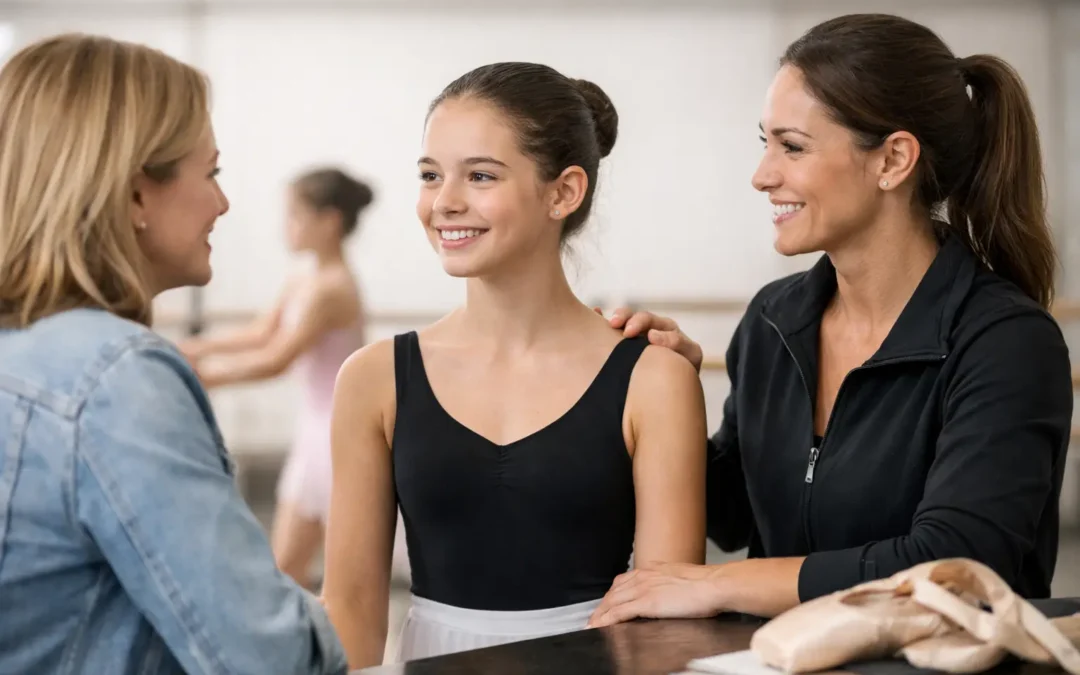
A child’s dance class should feel exciting: the first rhythm in their shoes, a new friend beside them, the pride of remembering a routine. Parents should never have to choose between that joy and their child’s safety. This dance safeguarding guide explains what good safeguarding looks like in a dance setting, what families can reasonably expect, and what to do if something does not feel right.
Safeguarding is not a single policy kept in a folder. It is the everyday culture around a class: how adults speak to dancers, how physical guidance is handled, who is present at rehearsals, and whether children know they will be listened to. At its best, safeguarding gives children the confidence to learn, perform and grow.
What safeguarding means in a dance class
Safeguarding means taking practical steps to protect children and young people from harm, abuse, neglect and exploitation. It also means creating an environment where their welfare comes first, their views are heard and concerns are acted on appropriately.
Dance has particular considerations. Teachers may need to demonstrate posture, placement or steps closely. Classes may involve changing for a performance, travelling to events, working with music and video, or communicating online with families. None of these are automatically a concern. They simply require clear, professional boundaries and sensible arrangements.
A well-run academy does not make children responsible for staying safe on their own. Adults set the standard. They use age-appropriate language, plan sessions carefully and make sure dancers know who they can talk to if they are worried.
What parents should expect from a safe academy
A trustworthy dance provider should be open about how it works. You should feel comfortable asking who teaches your child, how concerns are reported and what arrangements are in place for shows, competitions or trips.
Appropriate recruitment is a key starting point. Staff and regular volunteers working with children should be suitably checked for their role, including DBS checks where required, and should understand the academy’s safeguarding procedures. Qualifications and competitive success matter, but they do not replace safe practice, supervision and professional conduct.
You should also expect a named safeguarding lead, or clear information about who takes responsibility for concerns. Parents need to know how to raise an issue, even if it feels small. A good response is calm, respectful and focused on the child, rather than defensive.
Classroom practice matters just as much. Children should be supervised appropriately for their age and the activity. Attendance should be recorded, collection arrangements should be clear, and younger dancers should not be left waiting alone after class. If a child needs first aid or becomes upset, the academy should have a clear process for informing parents.
Photography and filming deserve particular care. Dance is a performing art, so families naturally want to celebrate progress. However, a responsible academy will seek permissions, explain where images may be used and respect a family’s decision not to consent. Children should never feel pressured to appear online.
Physical correction should be purposeful and respectful
Irish dance is technical. A teacher may need to help a dancer understand turnout, posture, arm position or safe alignment. Any physical guidance should be necessary, explained in a way the child understands and carried out professionally.
The child’s comfort matters. Teachers should avoid unnecessary contact, use verbal demonstration where possible and be attentive to a dancer who appears uneasy. Different ages, additional needs and personal experiences can affect what support feels appropriate. There is no one-size-fits-all approach, but there should always be respect, transparency and a clear learning purpose.
Changing, costumes and performances need a plan
Performances are often wonderful confidence-building moments, but they can make a day busier than a normal class. Safe arrangements include suitable changing spaces, appropriate adult supervision, clear collection details and communication with parents about timings.
Costumes should allow dancers to move safely and confidently. Children must never be made to feel embarrassed about their body, weight, appearance or ability. High standards in dance can sit comfortably alongside kindness. In fact, children usually progress further when they feel secure enough to try, make mistakes and ask for help.
Helping children speak up
Children do not always use the word “safeguarding”. They may say they do not want to go to class, that someone was unkind, or that something felt strange. Take those comments seriously without jumping to conclusions.
Try calm, open questions: “Can you tell me what happened?” “How did that make you feel?” and “What would help you feel safe next time?” Avoid leading questions or asking them to repeat their account to lots of people. Your role is to listen, reassure them that they have done the right thing by telling you, and pass the concern to the right person.
It is helpful for children to understand a few simple rules. They can say no if they feel uncomfortable. They can ask questions. They can speak to a trusted adult at home or at dance. And they will not be in trouble for raising a worry, even if they are unsure whether it is serious.
For teenagers, privacy and independence become more important. They may communicate directly with teachers about rehearsal details or training. Professional boundaries still apply. Communication should remain appropriate, transparent and connected to dance activity, with channels that the academy has agreed for its community.
Online dance spaces need the same standards
Online learning can be a brilliant way to practise steps, keep connected during holidays or support dancers who cannot attend in person. It must be managed with the same care as a studio class.
Parents should know which platform is being used, who can access the session and whether it is recorded. For younger children, it is sensible for a parent or carer to be nearby. Teachers should use professional accounts and agreed communication methods rather than informal private messaging with children.
Social media can be positive when it celebrates achievements and shares performance moments with consent. It can also create pressure. Dancers should not be expected to post, comment or share personal information to be part of the team. Any online behaviour that is bullying, sexualised, threatening or intrusive should be addressed promptly.
When competition and ambition are involved
A clear progression route can be hugely motivating, from a first trial class to displays, competitions and championship qualification. Safeguarding does not lower those aspirations. It makes sustained achievement more likely by protecting dancers’ wellbeing along the way.
Parents should be alert to language that turns healthy discipline into fear. Constructive feedback focuses on skills, preparation and effort. It does not humiliate a child, isolate them from friends or make them feel that winning is more valuable than their welfare.
Training intensity should suit the dancer’s age, experience and physical development. A child who is tired, injured or anxious may need rest, adaptation or a conversation about the right next step. Equally, a highly motivated dancer may thrive on additional training when it is planned thoughtfully and supported by their family.
What to do if you have a concern
Trust your instincts, but focus on facts. Make a note of what you saw, heard or were told, including dates, times and the names of anyone present. Keep the wording as close as possible to what your child said. Do not investigate the matter yourself or confront a person in a way that could make the situation harder to assess.
Raise the concern with the academy’s designated safeguarding lead or the person identified in its safeguarding policy. Explain what you know and ask what will happen next. A suitable response may involve listening, recording the concern, taking immediate steps to protect the child and seeking advice from the relevant agencies where needed.
If you believe a child is in immediate danger, contact the emergency services on 999. Where there is a non-emergency concern about a child’s safety, your local authority children’s services or the police on 101 can advise. You do not need proof before sharing a genuine concern. Safeguarding decisions are made by the appropriate professionals, not by parents carrying the worry alone.
It can feel uncomfortable to raise a concern in a close-knit dance community, especially when your child loves their class or has a performance approaching. A caring academy will understand that questions about safety are part of responsible partnership, not a criticism of dance itself.
A shared commitment to joyful, safe dance
At Kane Irish Dance, the aim is for every dancer to feel welcomed, challenged and known as an individual, from pre-school beginners to ambitious competitors and adult learners. That kind of progress is built through expert teaching, clear expectations and a community where respect is non-negotiable.
Before booking any class, ask the practical questions, notice how adults interact with children and listen to what your child tells you afterwards. The right dance home does more than teach steps. It gives young people a safe place to find their confidence, friendships and pride in what they can achieve.