
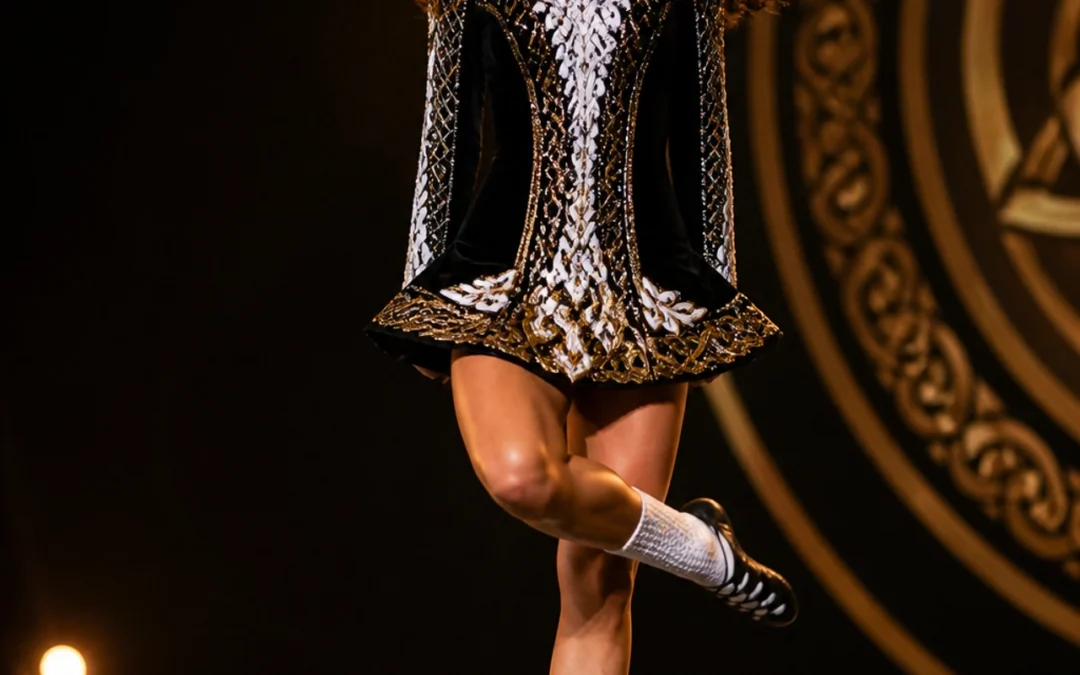
When we picture Irish dance, it’s easy to imagine a solo dancer’s quick, precise steps. But there’s another side to its story: dancing as a way for neighbours, friends and families to come together. Long before stages and spotlights, music and movement helped turn everyday gatherings into celebrations.
A dance floor in the heart of the community
For generations, dancing took place wherever people could meet. In rural Ireland, a house kitchen might become the dance floor, with furniture moved aside to make room. Music brought people in, and neighbours gathered to dance, watch, play or simply enjoy the evening together.
These were social occasions as much as performances. People learned by joining in, watching older dancers and picking up steps over time. A lively tune, a packed room and the sound of feet keeping rhythm made for an evening that could be remembered long after the music stopped.
Traditional Irish dance has many forms, from solo step dancing to group dances. Each has its own character, but the social tradition reminds us that dancing was never only about perfect steps. It was also about sharing the moment.

Dancing at the crossroads
On fine evenings, dancers sometimes met outdoors at a crossroads. With space to move and a community ready to gather, the meeting point became a natural place for music and dance. People could dance, listen to musicians and catch up with friends. A spirited mix of culture and everyday life.
The custom has lived on in community revivals. An RTÉ Archives feature on crossroads dancing in County Louth describes a summer tradition brought back by local organisers, with dancing and céilí music helping restore that shared community feeling. It’s a lovely reminder that Irish dance can connect people across generations and bring an old custom into the present.
Céilí dancing: making room for everyone
Céilí dancing is a joyful form of group dancing, often enjoyed at social gatherings and celebrations. Rather than watching one dancer at a time, everyone can take part, learning the figures and moving together to lively traditional music. It remains one of the best-loved irish cultural activities, and you don't need any previous experience to join in.
Set dancing is another much-loved social tradition. It commonly brings four couples together in a square, dancing a sequence of figures to tunes such as reels, jigs and polkas. The details can vary between dances and regions, giving each set its own flavour. Ireland’s National Inventory of Intangible Cultural Heritage recognises Irish set dancing as a valued part of the country’s living heritage.
Together, céilí and set dancing capture something special: the pleasure of moving in time with others. A shared pattern, a turn around the floor and a burst of music can make newcomers feel part of the gathering surprisingly quickly.
How dance passed between generations
Traditional dancing was often learned informally. Children watched adults, tried the steps and gradually joined in. At family occasions and community celebrations, music and movement became part of the way cultural knowledge was shared, not through a book, but through participation.
That doesn’t mean every dance stayed exactly the same. Steps and sets could vary from place to place, and dancers brought their own energy to familiar patterns. This blend of continuity and local character helped keep the tradition vibrant.
If you’d like to explore one lively example, read our post on the history of the Irish reel. And for a family-friendly introduction, our guide to learning Irish dance and connecting children with tradition shares more about getting started.

Keeping community tradition alive today
Today, traditional irish dance is enjoyed around the world: in classes, performances, competitions and community events. The settings may have changed, but the sense of connection remains. A class can be a place to make friends, build confidence and enjoy the shared rhythm of dance, while learning about a tradition shaped by generations before us.
At Kane Irish Dance in Huddersfield, pupils learn with Rebecca, the school’s owner and a World Champion. Our school is registered with CRN organisation Ireland, and pupils can work towards grades, badges and awards as they progress. Whether a child is drawn to the music, the movement, the achievement or simply the fun of dancing with others, there’s plenty to discover.

Take your first step
The story of Irish dance is not only told through famous performances. It also lives in the shared steps, joyful music and welcoming gatherings that bring people together. That community spirit is part of what makes traditional Irish dance so special, and so full of life.
If you'd like your child to learn irish dance and become part of that living tradition, we'd love to meet you. New children can book a free, non-obligatory 15-minute induction. Contact Stephanie, our secretary for induction bookings, on 01484 958726.