
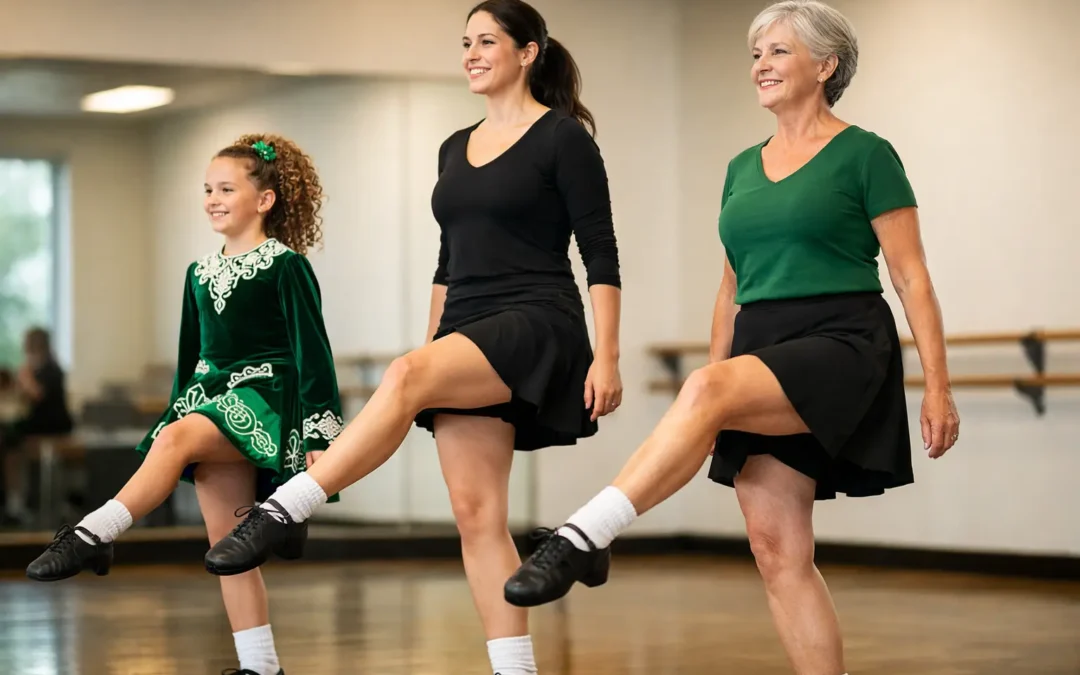
The first Irish dancing class can begin with a child gripping a parent’s hand at the studio door, a teenager wondering whether they are “too old” to start, or an adult laughing nervously at the idea of learning new steps. Within a few weeks, those same dancers are often standing taller, remembering a full routine and cheering on people who were strangers not long ago. That is the real appeal of Irish dance: it asks you to work hard, but it gives back far more than steps.
For families, it is a lively, structured activity that develops coordination, confidence and lasting friendships. For adults, it is a refreshingly sociable way to move, learn and do something that is genuinely for you. You do not need experience, natural rhythm or the right shoes on day one. You need a welcoming place to begin.
What makes Irish dancing so distinctive?
Irish dance is recognised for its upright posture, fast footwork and infectious traditional music. It includes two main styles. Soft-shoe dancing is light, graceful and controlled, with dancers wearing shoes designed to create a quiet, flowing movement. Hard-shoe dancing is more percussive, producing the crisp rhythms many people associate with a stage performance.
There is also ceilí dancing, a social form of Irish dance performed in groups. Rather than learning a solo routine, dancers work together in formations, moving around the room with partners and teams. It is energetic, friendly and particularly good for helping new dancers feel part of the group straight away.
While performances can look polished and demanding, every accomplished dancer began with the same foundations: posture, timing, basic steps and the confidence to keep trying when a sequence feels unfamiliar. Good teaching makes that process clear, encouraging and age-appropriate.
Irish dancing offers more than a weekly activity
Parents often begin by looking for an after-school class that gets their child moving. They may stay because they notice changes that are harder to measure. A child who was hesitant to join in starts practising at home. A young dancer learns to listen carefully, take correction positively and return to a tricky step without giving up.
The physical benefits matter too. Irish dance develops balance, stamina, coordination, musicality and body awareness. It is a full, active form of exercise, but the focus on music and progression means it rarely feels like a workout to the dancer. They are working towards the next step, the next dance or perhaps a chance to perform.
Just as valuable is the sense of belonging. Dance classes bring together children with a shared goal, across schools and friendship groups. In a supportive academy, dancers learn that someone else’s progress is worth celebrating. That community spirit can be especially meaningful for children who do not always enjoy team sports but still want to feel part of something.
For teenagers, dance can provide consistency during years when confidence and social pressures can shift quickly. It offers a positive space where effort is recognised, friendships are built around a shared interest and goals are personal rather than based on being the loudest or most naturally outgoing person in the room.
Starting Irish dancing at the right pace
There is no single “perfect” age to start. Pre-school children benefit from playful classes built around rhythm, movement, listening and simple routines. The emphasis should be on enjoyment, imagination and learning to take part in a group, not on creating miniature professionals.
For children aged five to twelve, a beginner class can introduce the technique and discipline that make Irish dance so rewarding. At this stage, regular attendance matters more than arriving with prior experience. Children develop at different rates, and a good teacher adjusts expectations while still giving every dancer something purposeful to work towards.
Teen beginners are often concerned about joining an established group. That is understandable, but it should not be a barrier. A dedicated teen class or carefully supported beginner route gives older starters room to learn without feeling compared to dancers who have been training for years. Many teenagers enjoy the challenge of acquiring a specialist skill and the opportunity to perform as their confidence grows.
Adults do not need to sit on the side-lines either. Adult beginner Irish dance is for people who want a welcoming challenge, whether they danced as a child, have Irish family connections or simply enjoy the music and fancy trying something different. Expect a few mistakes, plenty of concentration and a great sense of satisfaction when the rhythm starts to click.
What should a first class feel like?
A first class should feel organised, friendly and achievable. New dancers need clear demonstrations, time to repeat movements and permission to ask questions. They should leave knowing that they have learned something, even if it is only their first reel step, a basic rhythm or how to hold good posture.
For parents, the right setting also brings reassurance. Look for appropriately qualified teaching, DBS-checked staff and volunteers, clear communication, and a culture where children are known as individuals. A dance school can set high standards without making beginners feel intimidated.
There is a practical side as well. Comfortable clothing that allows free movement is usually enough for an initial session. Specialist shoes come later, once a dancer has settled in and their teacher can advise on the correct style and fit. Starting simply removes unnecessary cost and lets a family decide whether the class is the right match.
From first steps to performance and competition
One of the strengths of Irish dancing is that it can grow with the dancer. Some children love a weekly class, local displays and the chance to take part in a holiday club. Others discover a real appetite for performance, structured examinations or competition. Neither route is more valid.
Performance training teaches dancers how to present themselves, remember routines under pressure and work as a team. These are useful skills far beyond the stage. A display can be a proud first moment for a child who has never performed in public, particularly when they are surrounded by classmates who want them to succeed.
Competition brings a different kind of focus. Dancers work on technique, stamina, musical precision and presentation, then receive feedback that helps shape the next stage of training. It demands commitment from both dancers and families, including practice time, travel and patience. It is not the right goal for everyone, but for ambitious dancers it can be deeply motivating.
A strong academy offers a genuine pathway rather than pushing every child in the same direction. At Kane Irish Dance, dancers can begin with accessible classes and progress towards performances, competitions and championship qualification when they are ready. The standard should rise as a dancer’s ambitions rise, while the encouragement remains constant.
How parents can support progress without adding pressure
The most useful support is often the simplest. Help your child arrive on time, encourage them to practise the parts they have been shown, and ask what they enjoyed rather than only asking whether they got every step right. Consistency builds confidence far more effectively than pressure.
Practice at home does not need to take over family life. A short, focused session once or twice a week can help a dancer remember their routine and feel more secure in class. Make space for them to concentrate safely, and accept that early practice may involve counting aloud, stopping often and starting again.
It also helps to let progress look like progress. Some weeks, a dancer will make a visible leap. In others, they may be working hard on posture or timing with little outward change. Learning dance is not a straight line, and resilience is one of its most valuable lessons.
Choosing an Irish dance class in Huddersfield
When comparing classes, think beyond the timetable. Does the school have a clear beginner entry point? Are children grouped thoughtfully by age and experience? Is there room to progress into performances or competitive training if that becomes their ambition? Most importantly, does the atmosphere feel kind, purposeful and inclusive?
A trial class is a sensible way to find out. It gives a child or adult the chance to meet the teacher, hear the music, try the movements and see whether the group feels right. The goal is not perfection in one session. It is to find a class that makes you want to come back next week.
The first step may be small: a trial class, a pair of comfortable trainers, or the decision to try something new together. Give it that chance. The music starts, the counting begins, and before long you may find a new confidence keeping time beneath your feet.