
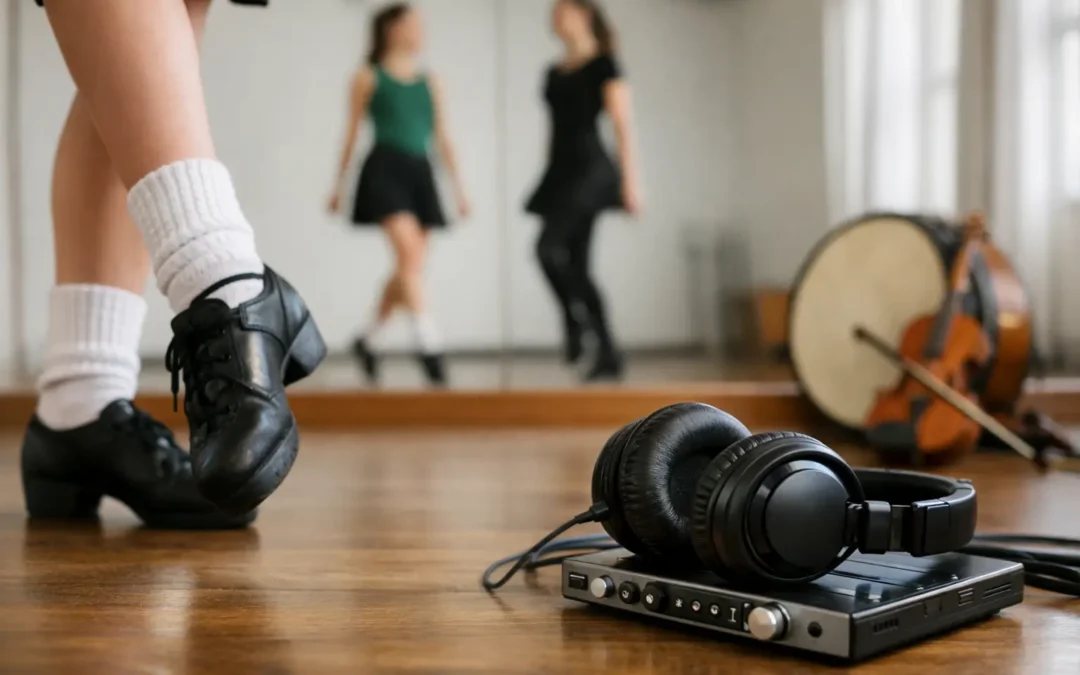
A dancer can know every step and still feel unsettled when the music begins. That is why Irish dance music for practice is not simply background sound. The right tune teaches a dancer where to place their feet, how long to hold a movement and when to finish with confidence.
For children learning their first reel, teenagers preparing for a performance, or adults returning to dance after years away, regular practice with music makes lessons feel more familiar. It turns counts into rhythm, helps technique travel across the floor and gives each dancer a stronger sense of their own progress.
Why music matters in Irish dance practice
Irish dance is closely tied to its music. In class, dancers learn to listen for the pulse as well as count the steps. At home, music gives practice a clear beginning and end, helping dancers stay focused instead of rushing through movements or repeating them without purpose.
A good practice session can reveal things that are easy to miss when practising silently. A dancer may discover that their trebles are landing ahead of the beat, that a skip 1-2 needs more lift, or that they lose energy halfway through a reel. These are useful discoveries, not mistakes to hide. They give the dancer and teacher something specific to improve.
Music also supports stamina. Soft-shoe dances often need lightness and flow, while hard-shoe work requires control, clean sounds and endurance. Working gradually towards dancing a full tune prepares children for displays and competitions without making training feel overwhelming. For adult beginners, it can make a new skill feel more enjoyable and less like a sequence of counts to memorise.
Choosing Irish dance music for practice
The best music depends on the step, the dancer’s experience and the aim of the session. Faster is not always better. In fact, practising too quickly before the feet are secure can teach a dancer to scramble rather than dance with good technique.
Start with the rhythm of the dance
A reel has a lively, even feel and is often one of the first rhythms a beginner meets. It is excellent for developing musical awareness, posture and travelling steps. Light jigs are bright and bouncy, while single jigs are commonly used for younger dancers as they build coordination and confidence.
Slip jigs have a smoother, floating quality. They ask dancers to listen carefully and maintain control, particularly in soft shoes. Hornpipes and treble jigs have a stronger, more grounded feel, making them popular for hard-shoe practice. The precise rhythm gives dancers a structure for striking the floor clearly without forcing the sound.
Using the correct dance rhythm matters more than choosing a famous tune. A child who is learning a reel does not need the busiest or quickest recording available. They need music with a steady beat that lets them hear the timing clearly.
Match the tempo to the dancer
If a step is new, begin at a slower tempo where the dancer can place every foot accurately. Once the movement is comfortable, increase the speed in small stages. This builds confidence because the dancer experiences success before being asked to work at full pace.
Parents can help by avoiding the temptation to play a tune repeatedly at competition speed. If a teacher has set a particular tempo or practice track, follow that guidance first. A slower session with excellent posture, turned-out feet and clear rhythm is more valuable than a fast session that leaves a dancer frustrated.
For experienced dancers, practising at full speed has its place. It develops fitness and prepares them for the pressure of performing. Even then, it should sit alongside slower technical work. The strongest dancers do not only practise what they can already do quickly. They give attention to the details that make their dancing look polished.
Choose clear, reliable recordings
Practice music should be easy to hear. A clear recording with a dependable pulse is generally more useful than a live recording with changing volume, crowd noise or a tempo that shifts. Traditional Irish music is wonderfully expressive, but home practice needs consistency when a dancer is trying to learn a particular sequence.
Keep a small, organised selection of tunes rather than playing anything labelled “Irish”. Film soundtracks, pop arrangements and general Celtic playlists can be enjoyable, but they may not have the rhythm or speed needed for a specific dance. If in doubt, ask the teacher which tracks suit the dancer’s current classwork.
A simple way to practise with music at home
A purposeful practice does not need to be long. Ten to fifteen concentrated minutes can be very effective for a younger dancer, especially after a busy school day. Older dancers may work for longer, but quality still comes before quantity.
Begin without music for a moment. Walk through the movement, check the arms and posture, and remind the dancer of the teacher’s key correction. Then use the music for a short section rather than immediately attempting the whole dance. This creates a calm bridge between learning the step and performing it.
Next, repeat the section with the tune until the dancer can keep the rhythm without being prompted. If timing slips, pause and return to a smaller part of the step. It is far better to correct two bars well than to repeat an entire dance with the same error five times.
Finish by dancing something familiar that feels positive. For a young child, this might be their favourite reel step. For an adult beginner, it may be a simple rhythm they have just started to recognise. Ending with success helps practice become a habit rather than a battle.
Creating a practice space that respects the music and the body
Hard-shoe practice needs particular care. Dancers should have enough room to move safely and a suitable surface that protects their feet and joints. Avoid practising vigorous hard-shoe movements on slippery floors, uneven paving or surfaces where the sound is overly harsh. If space is limited, technical drills, controlled footwork and silent marking may be more appropriate than full travelling steps.
Turn the volume up enough for the beat to be heard, but not so high that a dancer cannot listen to their own feet or hear a parent offering a simple reminder. In a shared home, headphones can work for soft-shoe marking, though they are not ideal for hard-shoe sessions where the dancer needs to hear the relationship between their sounds and the music.
For families, a regular practice time can make a real difference. It does not have to be every day. Two or three short sessions each week, alongside class attendance, often gives children enough repetition to feel more secure. Place the focus on effort, musical listening and improvement, not on getting every step perfect immediately.
When practice music becomes a confidence tool
Children often feel proud when they recognise the opening notes of a dance and know what comes next. That familiarity can calm nerves before a class demonstration, display or first competition. Music becomes a friendly cue: they have heard it before, practised with it and learned that they can keep going even if a step does not land perfectly.
This is equally true for adults. Starting Irish dance can feel daunting when the rhythms are unfamiliar and everyone else appears to know where they are going. Listening and moving to the same tunes between classes helps the patterns settle naturally. Progress is not about having a dancer’s background. It comes from showing up, practising kindly and allowing time for the music to make sense.
At Kane Irish Dance, practice is part of a wider journey that builds confidence, friendship and achievement. Teachers can help dancers choose music that fits their current level, whether they are taking their first steps, preparing for a show or working towards more ambitious competitive goals.
The most helpful tune is the one that lets a dancer hear the beat, trust their training and take the next step with a little more confidence than last time.