
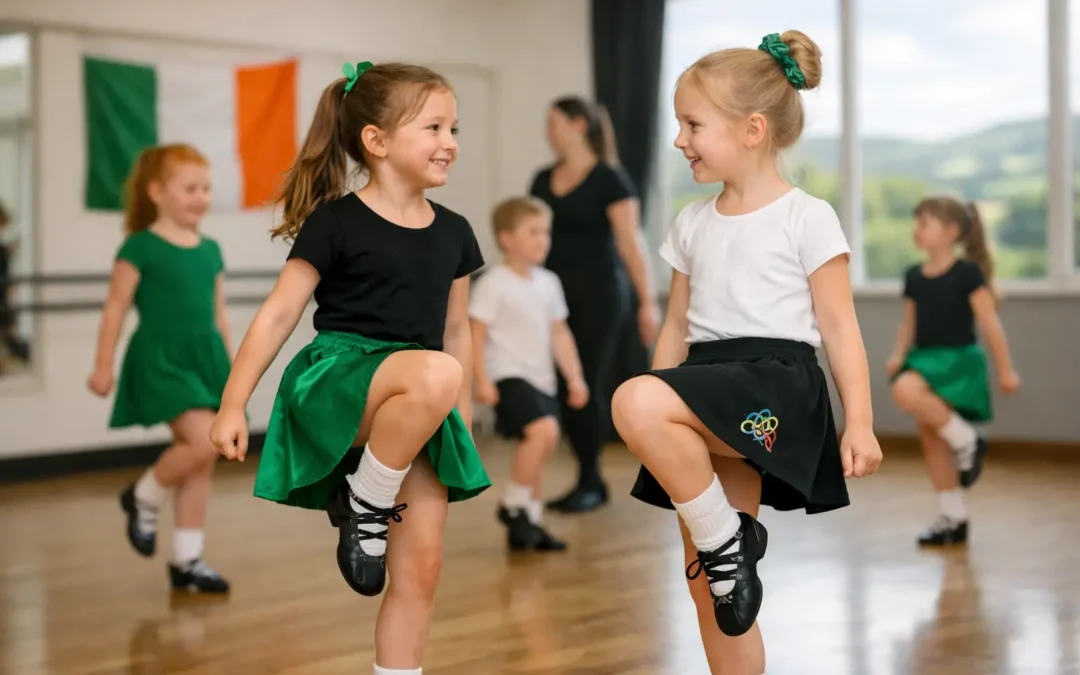
School holidays can feel very long when children are ready to move, create and see their friends, but the weather is unhelpful or screens are becoming the default. An Irish dance holiday club Huddersfield families can rely on gives children a lively, purposeful way to spend part of their break: learning steps, moving to music and growing in confidence in a welcoming group.
For many children, Irish dance has an immediate spark. The music is upbeat, the rhythm is satisfying and every new step feels like a small achievement. A holiday club offers a relaxed introduction to that experience, without asking a child to arrive knowing anything at all. It can also give existing dancers valuable time to strengthen their technique, learn fresh choreography and enjoy the social side of their dance community.
What makes an Irish dance holiday club special?
A good dance holiday club is not simply childcare in a dance studio. It is a chance for children to be active with real purpose, guided by teachers who know how to make learning feel exciting while keeping standards high. They are working towards a sequence, a rhythm, a routine or a performance moment, and that sense of progress matters.
Irish dance combines coordination, musicality, posture and concentration. Children practise listening closely, remembering patterns and trying again when a step takes more than one go. Those are useful habits far beyond the studio. The best sessions leave children pleased with what they have achieved, rather than worried about being perfect.
There is also something especially powerful about learning alongside other children. A dancer who is initially quiet may become the one counting a rhythm out loud for the group. Someone who finds sport competitive may enjoy working together on a routine. Friendships often form naturally when children are sharing a laugh over a tricky new move and then celebrating when it clicks.
Irish dance holiday club in Huddersfield: who is it for?
Holiday dance sessions can suit a wide range of children, from those taking their very first dance class to young dancers already attending regular tuition. The right group depends on age, experience and confidence, which is why a well-run academy will make sure families understand the appropriate option before booking.
For a beginner, a holiday club can be a gentle first step into Irish dance. There is no need to own specialist shoes or arrive with previous training. Children can learn the foundations, get a feel for the music and decide whether they would like to continue in a regular class afterwards. This is often less daunting than beginning with a long-term commitment, particularly for a child who needs a little time to settle.
For current dancers, the benefit is different. Extra studio time can help reinforce timing, turnout, posture and presentation, while a holiday programme may bring variety through dance games, themed activities or group choreography. It is a positive way to maintain momentum between school terms without making the break feel like more classroom work.
A holiday club is particularly helpful for children who enjoy performing but have not yet found their place in a team activity. Irish dance gives them an individual skill to develop, while group dances and shared routines create a strong sense of belonging. Some will simply come for the fun; others may discover the beginning of a pathway towards displays, competitions and more advanced training. Both ambitions deserve encouragement.
What children gain beyond the steps
Parents rightly want to know more than whether their child will be kept busy. The real value is in how a child feels when they come home. After a well-planned day of dance, they should have moved their body, used their imagination and had chances to be proud of themselves.
Confidence grows through achievable challenges. A teacher may break a sequence into manageable parts, demonstrate it clearly and give every child time to practise. When a dancer who thought, “I can’t do that”, manages the final rhythm, the result is more than a new step. They have evidence that patience and practice work.
Physical activity is another clear benefit. Irish dance develops stamina, balance, coordination and body awareness, while energetic sessions offer a welcome contrast to sitting indoors. Yet it is not one-size-fits-all. Some children flourish in a fast-paced group; others need calm reassurance, a clearer demonstration or a moment to watch before joining in. Inclusive teaching makes room for these differences without allowing anyone to feel left behind.
Holiday clubs can also support independence. Children learn to look after their belongings, listen for instructions, take turns and contribute to a group. For younger children, these small routines are a valuable part of the experience. For older children, being trusted with a more challenging routine or a leadership role can be just as meaningful.
Choosing a holiday club with confidence
When comparing a dance holiday club, look beyond a cheerful activity description. Ask who will be teaching, how children are grouped and what support is in place for those who are new or nervous. A specialist academy should be clear about its safeguarding approach and have DBS-checked adults working with children.
Teaching quality matters because first experiences shape whether a child wants to keep going. An expert teacher understands the technical building blocks of Irish dance, but they also know how to explain them in a way children can understand. They recognise when to challenge a confident dancer and when to offer a quieter child an encouraging route in.
At Kane Irish Dance, children learn with a World Irish Dance Champion in an environment designed to be friendly, inclusive and achievement-focused. That combination means youngsters can enjoy the excitement of holiday activities while receiving tuition that respects their potential.
Practical details matter too. Check the advertised age range, session length, what children should wear and whether they need to bring a packed lunch or refreshments. Comfortable clothing that allows free movement is usually the best starting point, unless specific guidance says otherwise. It is also useful to ask whether there will be a chance for parents to see what the children have been learning, as a short informal sharing can be a lovely confidence boost.
Helping your child get the most from the day
You do not need to prepare your child like they are heading for an audition. The most helpful message is simple: go along, give it a try and enjoy learning something new. Let them know that nobody gets every step immediately, including experienced dancers.
If your child is apprehensive, mention this when booking or at the start of the session. A good teacher can welcome them in, explain the plan and help them find their place. Arriving a few minutes early can also make a difference, giving them time to see the space and settle before the activity begins.
Afterwards, ask more than “Did you have fun?” Try asking which step they remember, what made them laugh or what they found easier than expected. These questions show that effort counts. If they light up when they talk about the music, their new friends or the routine they learnt, a regular trial class may be the natural next move.
A holiday activity with room to grow
Not every child who attends an Irish dance holiday club will want to compete, and they do not need to. For some, it will be a bright, active day in the school break and a new story to tell at teatime. For others, it may be the moment they find an activity that gives them confidence, friendships and a real sense of direction.
The strongest holiday experiences make space for both. They welcome the child who just wants to try something different and support the dancer who is ready to aim higher. If your child is curious about Irish dance, choosing a warm, expertly led session could be the start of a very happy next step.