
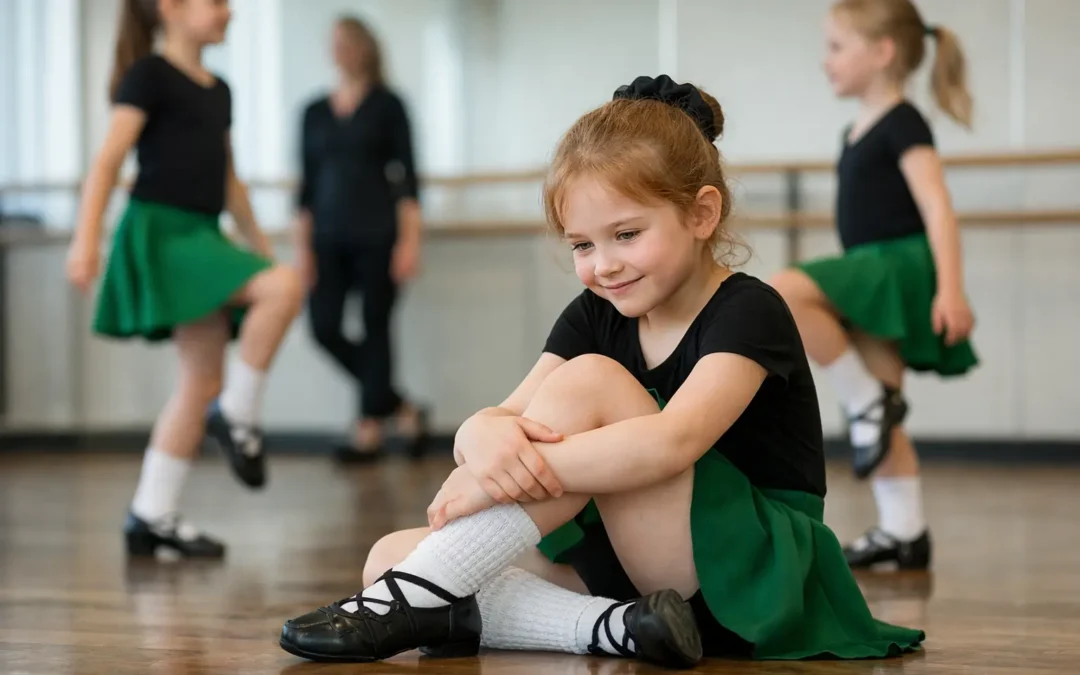
A child may happily practise a step in the kitchen, then go quiet at the thought of walking into a room full of new faces. That does not mean dance is not for them. Often, it means they need the right first experience. Irish dance classes for shy children can offer a reassuring balance of structure, movement and belonging, allowing confidence to grow at a pace that feels safe.
For many parents, the goal is not to turn their child into the loudest person in the room. It is to help them feel comfortable being themselves, joining in, trying something new and taking pride in what they can do. Irish dance can be a particularly positive place to begin.
Why Irish dance can feel easier to join
Starting any new activity takes courage, especially for a child who watches before they participate. Irish dance gives them clear steps, rhythms and routines to focus on. Rather than being asked to invent movements or perform a big character straight away, beginners learn one manageable action at a time.
That structure matters. A shy child does not have to find the words, lead the conversation or know anyone on their first day. They can stand with the group, follow the teacher, listen to the music and gradually become familiar with the rhythm of the class. Every small success – remembering a step, keeping time or finishing a short dance – gives them evidence that they belong there.
Irish dance is also wonderfully active without relying on team selection or competitive ball skills. Children work alongside one another, often moving in lines or groups, but their progress remains personal. This can suit children who enjoy company yet feel nervous about being put on the spot.
Confidence is built in small, repeatable moments
Confidence rarely arrives because a child is told to be brave. It grows when they have repeated experiences of being supported through something unfamiliar. A good beginner class makes those moments ordinary.
At first, that may mean stepping into the studio with a parent nearby, copying a teacher from the back of the group or simply joining the warm-up. In the following weeks, it could mean saying hello to another dancer, volunteering to demonstrate a step, or performing a short routine with their class. None of these moments needs to be forced.
Children develop at different speeds. Some are ready to join in fully from their first session; others need a few weeks to observe, settle and trust the people around them. Both are valid beginnings. The most effective teaching notices the child in front of it, rather than expecting every beginner to respond in the same way.
The value of a predictable class routine
Knowing what comes next can make a big difference. A familiar class might begin with a welcome and warm-up, move into simple technique, then practise a dance before finishing with a positive recap. Once that pattern is known, the studio feels less like an unknown place and more like part of the week.
Clear routines also help children see their own improvement. They may not yet describe themselves as confident, but they will notice that a step which felt difficult last month now feels natural. That quiet sense of achievement is powerful.
Friendship without pressure
Parents often hope a new class will help their child make friends. It can, but friendships should not be treated as another performance target. Shy children may take longer to connect, and a busy first day can be overwhelming rather than exciting.
Dance creates natural opportunities for connection because children share a purpose. They count together, wait for their turn, encourage one another and celebrate learning a routine. Conversation can grow from those shared moments, without a child needing to enter a room and immediately make small talk.
A kind academy culture is essential. Teachers should set the tone by learning names, noticing effort and making sure no newcomer is left feeling invisible. Older or more experienced dancers can also be positive role models, showing that every accomplished performer once had their own first class.
At Kane Irish Dance, beginner tuition is designed to make that first step approachable, with clear progression for children who later want to enjoy displays, competitions or more advanced training. There is no need for a child to arrive knowing which path they want. Their first job is simply to have a positive experience of dance.
What parents can do before a first class
The journey to confidence often starts before the music begins. Present the class as an opportunity, not a test. Instead of asking, “Are you going to make friends?” or “Will you dance in front of everyone?”, try, “Let’s go and see what the steps are like.” This keeps the focus on curiosity.
It can help to explain the practical details too: what they will wear, where you will park, whether you can wait nearby and what will happen when the class ends. For a child who worries about the unknown, these details are reassuring rather than unnecessary.
Avoid promising that they will love it straight away. A more honest message is that new things can feel a little strange at first, and that they can give themselves time. If possible, a trial class is ideal because it turns a large commitment into one manageable visit.
Afterwards, ask specific, low-pressure questions. “Which piece of music did you like?” or “Was there a step you remember?” often works better than “Did you enjoy it?” A child may be unsure whether they enjoyed every part, yet still be proud that they joined in.
Signs a class is the right fit for a shy child
Not every dance environment will suit every family. A performance-focused group may be a brilliant goal later, but the first class should feel welcoming and appropriately paced. Look for teachers who explain rather than rush, correct with encouragement and give beginners time to learn.
It is also sensible to ask how new children are introduced to the group. Can they attend a trial? Are classes organised by age or experience? Is there a clear route from beginner lessons to the next level when they are ready? These practical questions reveal whether a school understands child development as well as dance technique.
A little nervousness is normal. However, if a child is repeatedly distressed, feels ignored or comes away believing they are “bad” at dance, it may not be the right setting. The aim is not to remove every challenge. It is to offer challenge alongside genuine support.
Performing can come later
Parents sometimes worry that Irish dance automatically means a child must stand on a stage. Performance opportunities can be exciting and can become a major confidence boost, but they should be introduced thoughtfully. Some children are thrilled by a display after a few months; others prefer to build their skills in class for longer.
When the time is right, performing with a group can feel less daunting than speaking alone in front of an audience. A dancer has music, familiar steps and teammates beside them. The pride afterwards often stays with a child long after the event itself.
Competition is similar. For some dancers, working towards a feis or championship qualification becomes an inspiring goal. For others, weekly classes, new friendships and the joy of improving are more than enough. A strong academy provides both possibilities without making either route feel like the only measure of success.
Let their confidence have its own rhythm
The child who clings to your hand at the first trial may soon be the one reminding you not to be late. Or they may remain naturally quiet while becoming focused, capable and deeply happy in the studio. Confidence does not always look like being loud. It can look like standing a little taller, trying again after a mistake and walking into class without needing to be persuaded.
If your child has been watching from the side-lines, a warm beginner Irish dance class could be the gentle next step. Give them time, celebrate the small wins and let the music do some of the talking.