
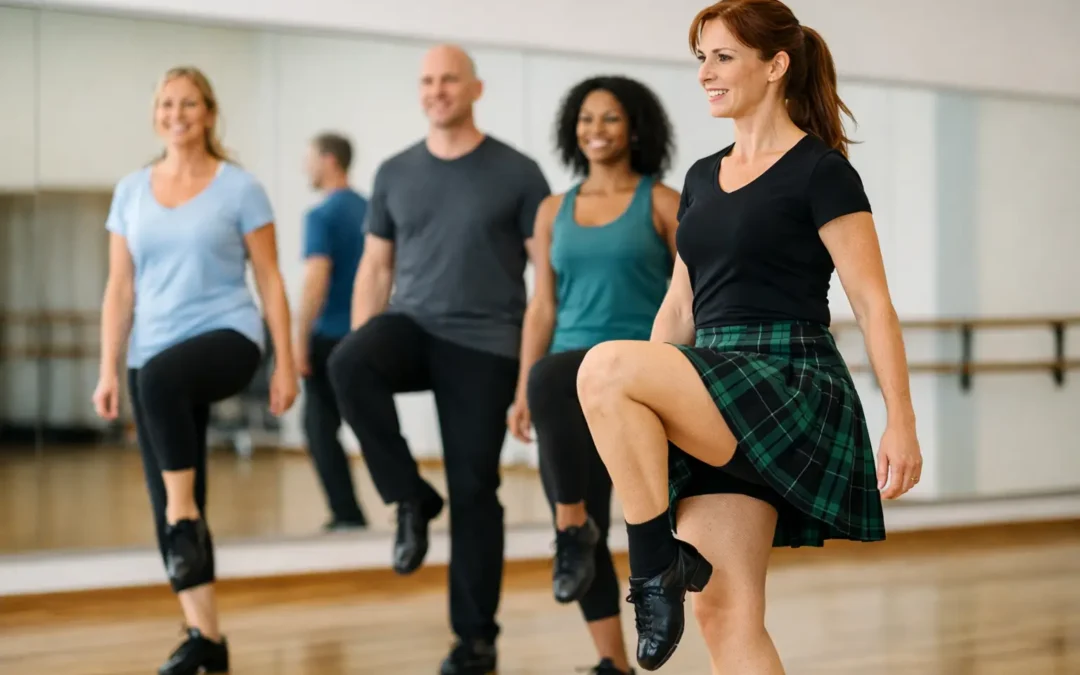
That first class can feel like the biggest step. You may have watched Irish dancing at a show, seen a reel at a wedding, or simply decided it is time to do something that is for you. Irish dance classes for adults are not reserved for people who started as children. They are a welcoming place to move, learn a new skill and enjoy the unmistakable lift of Irish music, one step at a time.
For many adult beginners, the appeal is not only the dance itself. It is the chance to be active without staring at a treadmill, to meet people beyond work and family routines, and to leave each week feeling that you have achieved something real. You do not need dance experience, flexibility worthy of a gymnast or a cupboard full of specialist kit. You need curiosity, comfortable clothes and the willingness to have a go.
Why adults are choosing Irish dance
Irish dance gives a workout a clear purpose. Each lesson builds coordination, posture, balance, rhythm and stamina, but your focus is on learning the next sequence rather than counting calories. Soft-shoe steps can feel light and flowing, while the sound and energy of hard-shoe dancing offer a satisfying challenge as confidence grows.
It is also a wonderfully social form of dance. In a beginner group, everyone is learning the terminology, remembering which foot starts the step and laughing when the music moves faster than expected. That shared experience makes it easier to settle in. Some adults come alone, while others join with a friend or partner. Both are equally welcome.
There is a mental benefit, too. Remembering patterns asks you to be fully present. For an hour, the day’s to-do list can wait while you listen for the beat, practise a new movement and celebrate the moment a step begins to click. Progress is often felt in small but meaningful ways: standing taller, recovering more quickly after a sequence, or recognising that a step which once seemed impossible now feels familiar.
Irish dance classes for adults start at beginner level
A good adult beginner course should never assume that you already know the basics. The early weeks are about creating strong foundations in a relaxed, encouraging setting. Expect to learn how to hold your posture, point your toes safely, hear the rhythm in the music and put simple steps together at a pace that allows everyone to learn.
Classes usually begin with a warm-up, followed by technique and step practice. Your teacher will demonstrate movements in manageable sections before building them into a complete dance. Repetition is part of the process, but it is not about getting everything perfect on the first attempt. It is how your body learns the shape and timing of each movement.
Adult learning comes with different strengths. You may be more patient, more focused and more appreciative of the value of steady practice than you were at school. Equally, you may need time to get used to moving in a new way. That is completely normal. The right class provides clear instruction and individual encouragement without putting anyone on the spot.
At Kane Irish Dance, adult beginners learn with teacher-led guidance from an academy built around both welcoming first steps and genuine development. The standard of teaching matters, but so does the atmosphere: a room where it is safe to make mistakes, ask questions and enjoy your own progress.
What if I have not exercised for a while?
Many people begin because they want to become more active, not because they are already at peak fitness. Irish dance can be adapted to your starting point, and stamina develops gradually as you attend regularly. Let your teacher know about any injuries, mobility concerns or health conditions before class so they can advise on appropriate participation.
There is a difference between the healthy effort of learning a physical skill and pushing through pain. Take breaks when needed, wear supportive footwear for the warm-up and allow yourself recovery time after the first few sessions. As with any new activity, consistency matters more than trying to do too much too soon.
What to wear and bring to your first lesson
You do not need to buy Irish dance shoes before you know whether the class is right for you. For a first session, wear comfortable clothes that allow you to lift your knees and move freely, such as leggings or joggers with a T-shirt. Avoid anything very loose around the feet, as your teacher needs to see your footwork.
Clean trainers are often suitable for a beginner’s first class, depending on the floor and the teacher’s guidance. Bring water and arrive a few minutes early so you can settle in, meet the teacher and ask any practical questions. Specialist soft or hard shoes can come later, when you are ready and have been advised on the correct style and fit.
This gradual approach is useful. Irish dance shoes are part of the experience, but they should support good technique rather than become an expensive barrier to trying something new.
From a weekly class to a goal you are proud of
Adults join for different reasons. One person may want a lively weekly hobby; another may hope to take part in a social ceilí, perform at a community event or reconnect with family heritage. Some discover a competitive side they did not expect. There is room for all of these aims.
Structured tuition gives you choices as you progress. You might continue enjoying beginner and improver steps, build towards more detailed soft-shoe or hard-shoe work, or take part in performance opportunities when they suit you. A supportive academy should make those options available without making competition feel compulsory.
That balance is important. Competitive Irish dance demands commitment, technical detail and regular training, and it is not the right goal for every adult. Performance also takes practice and confidence. Yet neither needs to be your starting point. The first achievement may simply be completing a full dance, keeping time with the group, or turning up after a long day because you know you will feel better for it.
Celebrating those milestones helps confidence travel beyond the studio. Learning a skill as an adult is a reminder that you can begin again, practise patiently and improve. That is valuable whether you dance for one term or make Irish dancing part of your life for years.
Choosing an adult Irish dance class in Huddersfield
The best class is not necessarily the one that promises the quickest results. Look for a clear beginner entry point, a teacher who explains technique carefully and a group culture where newcomers are genuinely included. Ask whether the course is designed for adults with no experience, what footwear is needed initially and how progression works once the first course ends.
It is also worth considering what you want from the room. If friendship matters, choose a class that creates time for dancers to connect. If you are motivated by goals, ask about performance, social dance and further training opportunities. If you are nervous, a trial class or short induction appointment can make the decision feel much easier.
A welcoming Irish dance class should challenge you without making you feel left behind. You may leave your first lesson with tired calves, a head full of new names for steps and a smile you did not expect. Book a trial, give yourself permission to be a beginner, and let the music carry you into something new.