
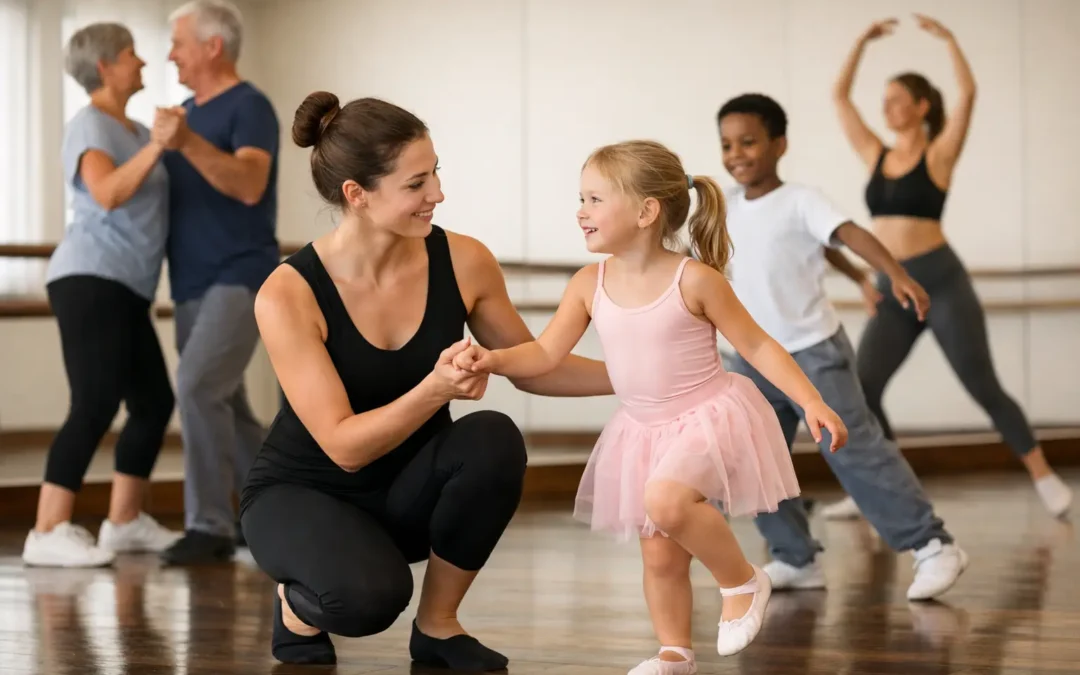
A child who spends the journey home practising a new rhythm on the back seat has already found more than an after-school activity. They are beginning to build confidence, coordination and the courage to try something unfamiliar. The best dance classes Huddersfield families choose make room for that first spark, then give it the care, structure and encouragement it needs to grow.
For some families, the aim is a cheerful weekly activity where a child can move, make friends and feel part of something. For others, it is the first step towards performances, competitions and real personal achievement. Both are valid starting points. What matters is finding a class where beginners are genuinely welcomed and every dancer has a clear, positive route forward.
What great dance classes give children
Dance is often talked about as exercise, and it certainly gets children active. Irish dance develops stamina, balance, posture, musicality and coordination through energetic footwork and carefully taught technique. Yet the benefits parents notice most are often the ones that happen away from the dance floor.
A shy child may begin to speak up, take their place in a group and smile when it is their turn to perform. A child who finds school routines challenging may respond brilliantly to the focus and satisfaction of learning a sequence step by step. Working towards a new dance, a display or a competition teaches patience too: progress is earned through regular practice, listening and trying again.
The right class also offers friendship with purpose. Dancers support one another, celebrate a new step mastered and share the nerves and excitement of performance days. That sense of belonging can be especially valuable as children grow older and look for activities that feel like their own.
Choosing dance classes in Huddersfield that feel right
A class may look lively online, but the real question is whether it will suit your child or you as an adult learner. Start with the teaching environment. New dancers need instruction that is clear, patient and age-appropriate, rather than being expected to keep up with experienced pupils from the first session.
Ask how a beginner is introduced. A good academy will explain what to wear, what to bring and what happens in the room before the class begins. There should be no pressure to arrive knowing the terminology, own specialist shoes or perform perfectly. A trial class or short induction gives families a chance to see the teaching style, meet the team and decide whether the atmosphere feels welcoming.
Safety and professionalism matter just as much as enthusiasm. Parents should feel comfortable asking about safeguarding, DBS checks, supervision and how pupils are supported. Expert teaching is not simply about impressive credentials, although they are valuable. It is also about knowing how to help a nervous five-year-old settle in, challenge a determined teenager and give each dancer useful feedback.
It is worth considering the academy’s longer-term opportunities as well. Not every dancer will want to compete, and nobody should have to. However, a structured school can offer options as confidence grows: local displays, team performances, graded development, competitions and, for dancers with bigger ambitions, championship qualification. Choice is powerful. Children do best when they can enjoy where they are while seeing what could come next.
A place to start at every age
The needs of a pre-schooler are very different from those of a teenager, so age-specific teaching is more than a convenient timetable. It helps dancers learn at a pace that feels exciting rather than overwhelming.
Pre-school children: movement, rhythm and confidence
For little ones, classes should be joyful, imaginative and carefully structured. They are learning how to join in, take turns, follow simple instructions and move with control. The focus is not on flawless technique. It is on building a happy relationship with music and movement, while laying foundations that make later learning easier.
Parents often find that a weekly class becomes a gentle confidence-builder. A child who initially stays close to the door may soon be joining the group, remembering actions and proudly showing a new step at home.
Children aged 5 to 12: skills that build week by week
This is a wonderful age to begin Irish dance. Children can learn the core positions, rhythms and dances in a way that gives them regular moments of success. Clear routines and achievable goals help them see their own improvement, whether that means stronger posture, neater footwork or remembering a longer sequence.
As skills grow, dancers may enjoy performing in front of an audience or trying a friendly competition. These opportunities can be hugely rewarding, but they are not a race. Some children thrive on the buzz of the stage, while others prefer the security of weekly classes and occasional displays. A supportive teacher will help families choose the pace that suits the dancer, not someone else’s timetable.
Teenagers: challenge, identity and achievement
Teen dance can offer a valuable space beyond school. It combines physical challenge with a strong social community, giving young people somewhere to work hard, laugh with friends and feel proud of what their bodies can do. For those who have danced before, it can renew their ambition. For complete beginners, the key is a class that removes the fear of being the newest person in the room.
Teenagers often respond well to meaningful goals. That might be refining performance skills, joining a display team, preparing for competition or simply committing to a hobby that helps them switch off from screens and schoolwork for an hour each week.
Adults: beginners belong here too
Many adults delay starting dance because they believe everyone else will be more flexible, fitter or more experienced. A properly designed adult beginner course changes that expectation. No previous dance experience is required, and the early focus should be on learning comfortably, enjoying the music and building confidence one class at a time.
Irish dance is a satisfying choice for adults because it offers both individual skill and sociable group dancing. Ceilí can bring people together in a relaxed, welcoming way, while traditional steps provide a fresh physical and mental challenge. You do not need to have danced as a child to enjoy it now.
Why Irish dance offers something distinctive
Irish dance has an infectious sense of rhythm, but its appeal runs deeper than fast feet and recognisable music. It gives dancers a discipline to work within, then plenty of room to develop character, resilience and personal style. There is always another detail to improve, another rhythm to understand and another goal to reach.
It can also suit families looking for more than a casual drop-in activity. Regular attendance creates continuity. Dancers get to know their teachers and classmates; parents see progress over time; achievements have context because they are built on previous weeks of effort. That does mean commitment matters. Like learning an instrument or joining a sports team, steady participation usually brings the greatest reward.
At Kane Irish Dance, beginner-friendly teaching sits alongside a pathway for dancers who wish to progress towards performances, competitions and championship-level goals. Led by a World Irish Dance Champion, the academy is designed to be a place where a first-timer can feel at ease and an ambitious dancer can be properly challenged.
Making the first class feel easier
The first session does not need to be a big test. Arrive a few minutes early, wear comfortable clothing that allows easy movement and encourage your child to listen, join in when ready and enjoy being new. Most beginners start in ordinary suitable footwear before deciding whether specialist shoes are needed, so there is no need to invest heavily before a trial.
It can help to talk positively but realistically beforehand. Let your child know that they may not remember every step straight away and that everyone learns differently. Ask them afterwards what they enjoyed, who they met and what they would like to try again, rather than asking whether they were “good” at it. This keeps the focus on growth and enjoyment.
For adults, the same kindness applies. You are not late to dance. You are simply at the beginning of your own learning story.
A well-chosen class can become the part of the week a dancer counts down to: a room full of music, friendly faces, focused effort and small victories that add up. Book a trial, ask the questions that matter to your family and give that first step the chance to become something lasting.