
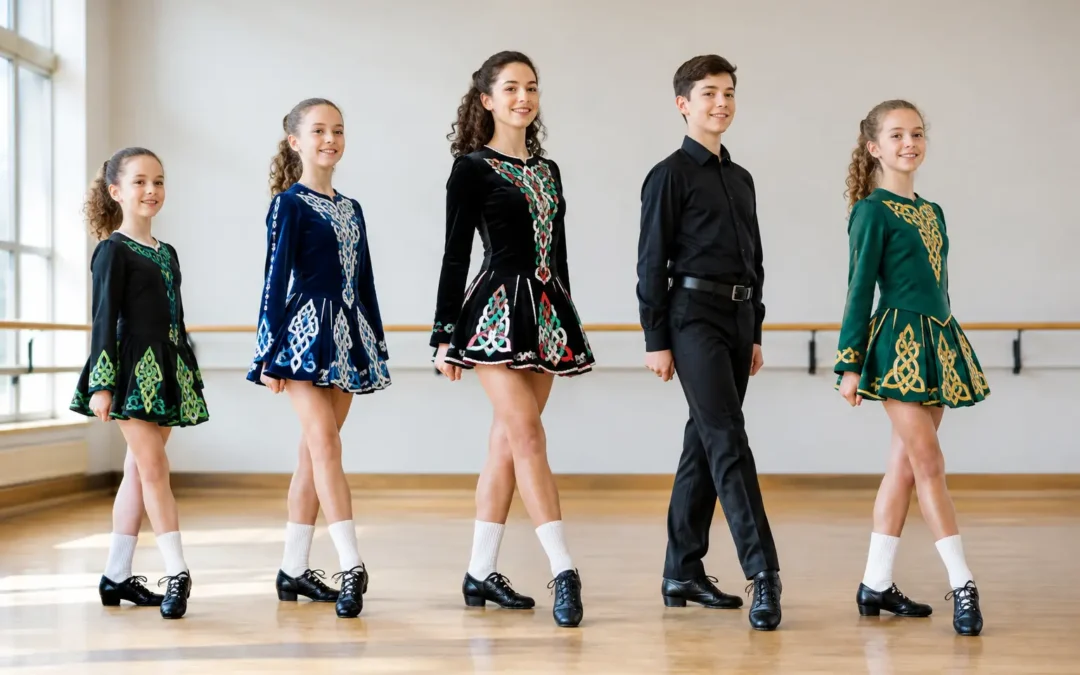
A child may begin by learning a simple reel in soft shoes, while another dancer is preparing for a championship stage in hard shoes. Both belong in Irish dance. Understanding Irish dance levels helps families see that these different starting points are part of one encouraging pathway – not a race, and never a reason to feel left behind.
For parents, the names of levels can feel unfamiliar at first. For adult beginners, they can sound more intimidating than they need to be. In reality, levels exist to give every dancer the right challenge at the right time, with clear goals, supportive teaching and plenty to celebrate along the way.
What do Irish dance levels mean?
Irish dance levels describe a dancer’s stage of development. They may apply to class groups, dance grades, performances or competitions, and they help teachers place dancers where they can build sound technique and confidence.
The exact names and rules can vary between dance schools, feiseanna (Irish dance competitions) and governing organisations. That matters because a competition level is not always the same as a weekly class level. A dancer may be working confidently in an academy class while preparing for a particular competitive category according to the rules of an event.
What does stay consistent is the principle behind progression: dancers learn the foundations first, develop control and musicality, then add more demanding steps, speed, strength and performance quality. Progress is based on readiness, not simply on age or the number of terms someone has attended.
The first levels: building confidence and foundations
For pre-school children and young beginners, Irish dance starts with movement, rhythm and enjoyment. Dancers learn how to stand tall, point their toes, listen for the beat and follow simple patterns. They also learn how to take turns, focus in a group and feel proud of trying something new.
At this stage, the most valuable progress is often not a difficult step. It might be joining in without holding a parent’s hand, remembering a sequence, or smiling through a short demonstration. These are meaningful achievements that help children feel secure before technique becomes more detailed.
As dancers become more comfortable, they usually begin to learn traditional soft-shoe dances such as reels, light jigs and slip jigs. Soft shoes allow dancers to develop turnout, crossed feet, posture, timing and light, controlled movement. The aim is not to hurry through steps. Strong basics make later learning safer, more enjoyable and far more rewarding.
For children aged 5-12, classes typically become more structured. Dancers start retaining longer routines, responding to corrections and understanding why precision matters. They may work towards class displays, academy performances or their first feis, depending on their interests and readiness.
Moving forward: when hard shoes and higher expectations arrive
Hard shoes are one of the most recognisable parts of Irish dance. Their distinctive rhythm brings a new layer of excitement, but they also require coordination, leg strength and careful technique. A teacher will introduce hard-shoe work when a dancer has the physical control and confidence to benefit from it.
Early hard-shoe learning focuses on clear beats, correct foot placement and safe rhythm. It can take time for the sound to become sharp and even. That is completely normal. Dancers are not expected to sound like experienced performers straight away, and rushing the process can make it harder to develop clean technique.
At more developed levels, dancers work on increasingly complex rhythms and longer traditional or modern set dances. They are expected to show greater stamina, stronger elevation, accurate timing and polished presentation. The discipline grows, but so does the sense of achievement when a dancer hears their hard-shoe rhythm become confident and musical.
Teenagers often thrive at this point because Irish dance offers both individual goals and a strong peer community. It provides a purposeful outlet for energy, a place to build resilience and friendships, and opportunities to perform with real pride.
Understanding Irish dance competition levels
Competition pathways can appear complicated because categories differ between events. However, many feiseanna use a progression that moves through beginner, primary and intermediate levels before open championship competition. Some competitions also include preliminary championship categories or qualification requirements.
A beginner category gives newer competitive dancers the chance to perform in an appropriate group. Primary and intermediate levels generally introduce greater technical expectations and more experienced competitors. Open championship is a significant step, where dancers perform multiple rounds and are judged against a high standard of technique, rhythm, carriage and presentation.
Moving up is not just about receiving a particular result. Rules may require qualifying placements, and those rules can differ according to the organising body or event. A good teacher will explain what applies to the dancer’s competition route and help them prepare without making results the only measure of success.
Competition can be a wonderful goal for dancers who enjoy it, but it is never the only meaningful route in Irish dance. Performing in local displays, taking part in a holiday club, learning ceilí dances or progressing through class goals can offer just as much confidence and connection. The right path depends on the dancer.
Levels are not a judgement of talent
It is easy for families to compare a new dancer with someone who has been training for years. Yet dancers develop at different speeds. One child may quickly remember choreography but need time to strengthen their timing. Another may be naturally musical but need reassurance before performing in front of others.
Attendance, age, previous dance experience, confidence, physical development and personal goals all influence progression. A dancer who takes their time learning foundations is not being held back. They are building the skills that will support them through more demanding work later on.
Adults should hear this message clearly too. Adult beginner Irish dance is not a test of whether someone should have started younger. It is an opportunity to learn something lively, challenging and social in a welcoming environment. Adults can enjoy the satisfaction of mastering a reel, developing fitness and sharing a laugh with others who are learning from the beginning.
How parents can support healthy progression
The best support is steady rather than pressured. Encourage your child to practise short sections regularly, arrive ready to learn and listen to their teacher’s feedback. Ask what they enjoyed in class, rather than only asking whether they were the best or whether they will move up soon.
It also helps to keep expectations realistic around footwear and competitions. Beginners do not need every item immediately, and a dancer does not need to compete to belong. Your teacher can advise on the right shoes, clothing and opportunities as each stage approaches.
Celebrate the small signs of progress: better posture, a remembered step, a brave performance or the determination to try again after a mistake. Irish dance develops character as well as technique, and those quieter wins often matter most.
Choosing the right starting point
A quality academy should make the entry point clear. A trial class or short induction appointment allows a teacher to understand the dancer’s age, experience, confidence and aims. From there, they can recommend a suitable group rather than expecting a new family to work it out alone.
At Kane Irish Dance, beginners are welcomed with structured teaching and the reassurance that every advanced dancer once began with their first steps. Whether your goal is a fun weekly activity, a performance opportunity, a return to dance as an adult or a route towards competitive achievement, there is value in starting where you are.
The next level is not something to chase from the sidelines. It is built one class, one correction and one proud moment at a time – and a trial class can be the first of many.