
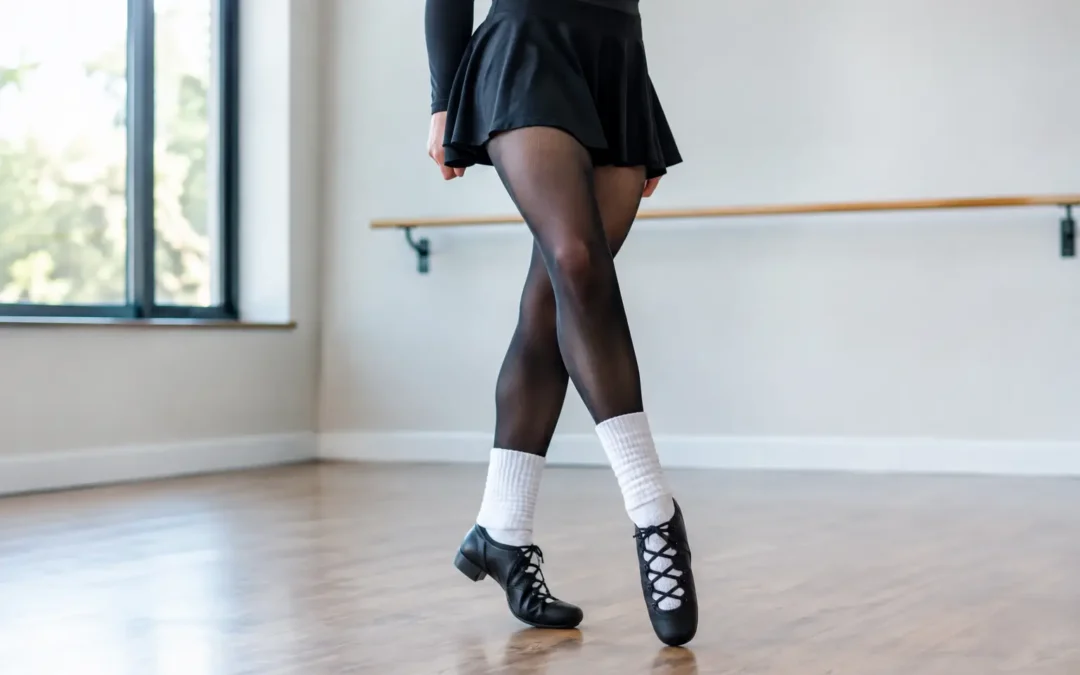
A neat, well-placed turnout can make Irish dance look light, confident and polished. Yet the quickest way to hold a dancer back is to force their feet into a position their hips cannot support. To master Irish dance turnout, dancers need patient technical coaching, growing strength and an understanding that progress looks different at every age and stage.
For a child taking their first reel, turnout is not about copying the most advanced dancer in the room. For a competitive dancer, it is not simply about turning the feet further out. In both cases, the aim is controlled alignment: turnout that begins at the hips, travels through the knees and finishes naturally at the feet.
How to master Irish dance turnout without forcing it
Turnout describes the outward rotation of the legs from the hip joints. In Irish dance, it supports clean lines, crossed positions, sharp footwork and the lifted presentation judges and audiences notice. It also helps a dancer place their feet accurately in both soft and hard shoe work.
The crucial word is naturally. Every dancer has a different hip structure and range of movement. Some will find outward rotation comes easily; others will need more time and may always work with a smaller turnout. Neither situation determines how far a dancer can progress. Strong technique, rhythm, posture and commitment matter just as much.
When turnout is pushed from the ankles or knees instead of guided by the hips, the feet may look turned out while the body is under strain. Knees can roll in, arches may collapse and balance becomes harder. This is why an experienced teacher will ask a dancer to work within their current range, rather than chase a dramatic position before they are ready.
Start with posture, not the feet
A dancer cannot create reliable turnout from the feet alone. Begin by standing tall through the spine, with the head lifted and the ribs comfortably stacked over the pelvis. Weight should feel even through both feet, rather than tipped forward into the toes or back into the heels.
From there, imagine the legs gently rotating out from high in the hips. The kneecaps and toes should point in the same direction. If the toes turn out but the knees stay facing forwards, reduce the turnout until the whole leg can work together.
This may feel less impressive at first, particularly for a dancer used to forcing their stance. But it is the stronger starting point. Good turnout is something the body can repeat at speed, while crossing, hopping and landing cleanly. A position that only works when standing still is not yet useful dance technique.
Build turnout in small, repeatable moments
Turnout develops during class through careful attention to positions, drills and corrections. It also improves when dancers practise a few short, purposeful movements at home. Five focused minutes on most days is more valuable than a long session done with tired muscles and poor alignment.
A simple exercise is to stand in a comfortable turned-out position, lightly holding the back of a chair for balance if needed. Slowly rise through the feet and lower with control, keeping the knees tracking over the toes. The range should be modest enough that the arches stay supported and the body remains tall.
Single-leg balance is another useful building block. Standing on one leg with a relaxed, lifted posture teaches the hip and foot to work together. Younger dancers can make it playful by balancing while counting a rhythm or holding a favourite Irish dance pose. Older dancers can practise a controlled balance before adding more demanding footwork.
Gentle hip-strengthening work can help too, but it should support dance training rather than become a punishment. If a dancer feels pain, pinching in the hip, repeated knee discomfort or soreness that does not settle, they should stop and speak to a qualified health professional. Stretching through pain is never the route to better turnout.
Turnout in Irish dance changes with the step
A common misunderstanding is that dancers should hold the same amount of turnout in every movement. Irish dance is more dynamic than that. The position needed for a clean starting stance may differ from what is possible during fast skips, trebles, clicks or a powerful hard shoe sequence.
In soft shoe dancing, turnout helps create the elegant, open lines associated with reels, light jigs and slip jigs. The dancer still needs enough freedom in the hips and ankles to point, jump and land softly. If they grip tightly in an attempt to keep their feet turned out, their movement can become heavy.
In hard shoe, clear placement and safe landings are especially important. Dancers need to maintain alignment as they strike the floor, travel and perform fast rhythms. A smaller turnout that stays controlled is far more valuable than a wide stance that causes the knees to twist inward on landing.
For competitive dancers, the details matter. Judges notice whether turnout remains present through transitions, not just in posed moments. They also notice whether the dancer looks comfortable. The best presentation combines discipline with ease: strong feet, lifted body, accurate rhythm and a face that shows they are enjoying the stage.
What parents should look for at home
Parents do not need to become dance teachers, and constant corrections can make practice feel stressful. The most helpful role is to encourage consistency and praise effort, listening and progress.
Look for a dancer who is standing tall, keeping knees and toes in the same direction, and working with control rather than forcing their feet. If they are practising a step, remind them of one cue their teacher has already given, such as tall posture or soft landings. One clear focus is usually enough.
It is also worth remembering that children grow quickly. A child who looked very flexible one term may feel awkward or tighter the next as their body changes. This is normal. Their teacher can adapt technical goals so the dancer keeps building confidence without comparing themselves unfairly to others.
Turnout should grow alongside confidence
For beginners, turnout is introduced as part of learning how to stand, move and listen in class. The priority is enjoyment, coordination and a positive relationship with dance. Children who feel safe to try, make mistakes and try again are more likely to develop the patience technique requires.
As dancers move into more structured training, their turnout becomes part of a bigger technical picture. They learn to connect posture, core control, crossed feet, pointed toes and musical timing. This takes time, especially when new steps or shoes are introduced, but every small improvement creates a stronger foundation for performances and competitions.
At Kane Irish Dance, dancers are taught to aim high without losing sight of their individual development. Whether a child hopes to perform for family and friends, make new friends in class or work towards championship qualification, safe technical habits give them a better chance to enjoy the journey and feel proud of what they achieve.
Adults can benefit from the same approach. Starting Irish dance later in life does not require perfect flexibility or previous dance experience. Adult beginners often make excellent progress when they focus on their own alignment, listen to their body and allow strength to build gradually. The goal is not to recreate someone else’s turnout. It is to develop a position that feels secure, expressive and ready for the next step.
If your dancer is new to Irish dance, a trial class is a reassuring place to begin. A good teacher can assess their starting point, explain the basics clearly and help them discover that progress is built one well-practised step at a time.