
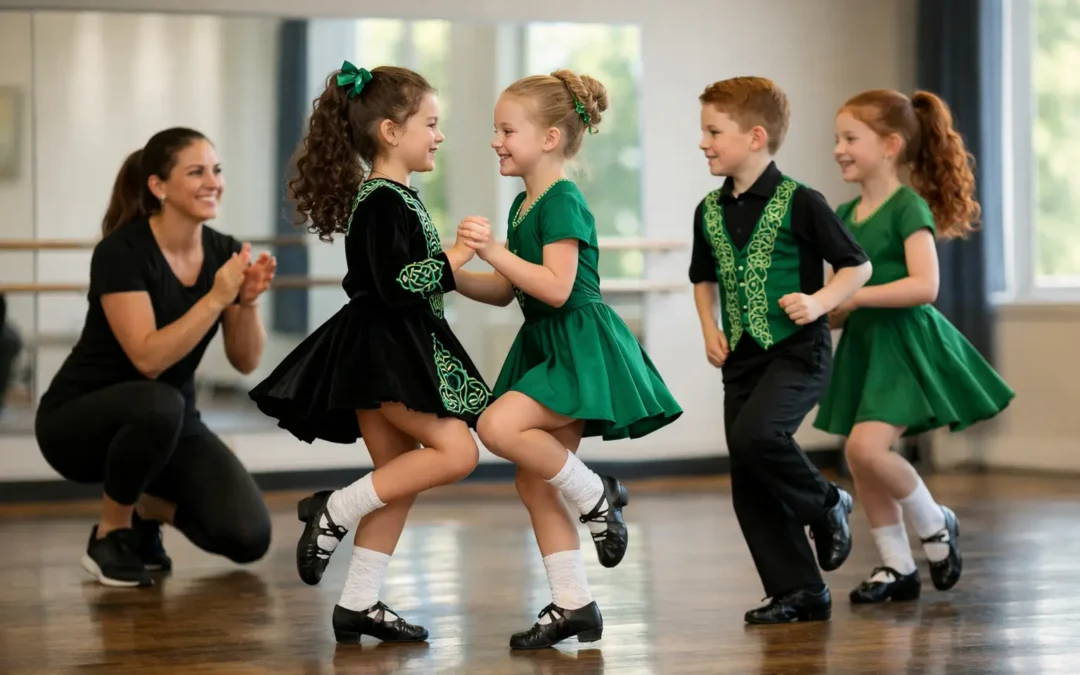
The moment dancers step into formation, listen for the first beat and move as one, something changes. An Irish dance display team is not simply a group learning routines for an audience. For children and teenagers, it is a chance to feel part of something purposeful: practising together, encouraging friends and proudly showing what they have achieved.
For parents, displays can be one of the most rewarding parts of a child’s Irish dance journey. They offer a clear goal beyond the weekly class, while developing confidence, fitness, focus and friendships along the way. At the same time, every dancer’s route should be personal. Some will enjoy performing at local events; others may go on to compete. Both are valuable, and both begin with strong, supportive teaching.
What is an Irish dance display team?
An Irish dance display team performs choreographed Irish dance routines at community events, celebrations, festivals, care homes, corporate occasions and stage shows. Dancers work together on timing, spacing, presentation and musicality, creating an energetic performance that audiences can enjoy whether they know Irish dance well or are seeing it for the first time.
Unlike a solo competition, a display is about the group as well as the individual. Each dancer has a role in the routine. A neat line, a well-timed turn or a confident entrance helps the whole team look its best. That shared responsibility is one reason display work can be so powerful for young people.
Displays may include lively reel and jig rhythms, traditional steps, modern choreography, soft shoe dancing and, for dancers who are ready, hard shoe rhythms. The content should always match the age, experience and confidence of the group. A beginner does not need to be an advanced dancer to contribute meaningfully to a team performance.
Why displays build confidence beyond the dance floor
A child who is quiet at their first class may not immediately want to perform in front of a room full of people. That is completely normal. Confidence is built gradually: learning a few steps, joining a small section of a routine, practising with familiar classmates, then experiencing the warm applause that follows a performance.
Display training gives dancers repeated opportunities to manage those nerves in a positive setting. They learn how to stand tall, focus when something goes wrong and carry on with the group. These are useful skills far beyond Irish dance, whether a child is speaking in assembly, joining a new club or facing an exam room later on.
There is also a particular kind of reassurance in performing as part of a team. The focus is not on one child standing alone. Dancers have friends beside them, a teacher guiding them and a routine they have prepared together. For many children, that makes their first performance feel exciting rather than intimidating.
Teamwork is taught, not assumed
Good group dancing requires more than knowing the steps. Dancers need to notice their spacing, listen to the music, wait for cues and respect the effort everyone else has put into rehearsal. They learn that arriving ready, wearing the correct kit and practising their part matters because other people are depending on them.
That does not mean every rehearsal must feel intense. The best display teams combine clear standards with encouragement, laughter and a real sense of belonging. Children should feel safe to ask questions and make mistakes while learning the discipline that makes a performance polished.
The right pathway for beginners and ambitious dancers
Parents sometimes assume that display teams are only for experienced dancers. In reality, the right opportunity depends on the team, the event and the child’s readiness. Beginner-friendly routines can introduce young dancers to performing without expecting complicated steps or expensive commitments from the outset.
As dancers progress, displays can become more challenging. They may learn sharper formations, faster footwork, longer routines and the stamina needed to perform with energy from start to finish. Teen dancers often enjoy the increased responsibility too, including supporting younger teammates and setting a positive example at rehearsals.
For those with competitive ambitions, display work can sit brilliantly alongside competition training. It strengthens performance quality, rhythm, stage awareness and the ability to dance confidently under pressure. However, displays and competitions have different purposes. Competition preparation is highly individual and focused on technical criteria, while a display team is designed to create a memorable group performance. A thoughtful teacher will help each dancer balance these goals without making their timetable overwhelming.
What parents should look for in a display team
A good performance opportunity should feel exciting for the dancer and reassuring for the family. Before committing, ask how rehearsals are organised, what level of attendance is expected and whether the routine is suitable for your child’s age and experience. Clear communication around dates, costumes, travel and performance timings makes a great difference to busy family life.
Teaching quality matters just as much. Children need a teacher who can develop strong Irish dance technique while keeping the atmosphere inclusive and encouraging. Safeguarding, DBS-checked staff and volunteers, appropriate supervision and realistic expectations should never be afterthoughts.
It is also worth looking at the culture around performances. Are dancers praised for effort and progress as well as a perfect result? Is there room for a nervous child to build up gradually? Does the academy value teamwork and kindness? A display team can become a treasured part of childhood when children feel seen, supported and proud of their contribution.
Preparing for a performance without pressure
The weeks before a display are often filled with anticipation. A simple routine at home can help children feel ready: make sure dance shoes and uniform are prepared, check the event details in advance and encourage plenty of rest before the day. Try to keep the message calm. The aim is to enjoy sharing their hard work, not to put them under pressure to be flawless.
It helps to talk through what will happen. Explain where you will arrive, who will be there and when they will perform. Younger children especially benefit from knowing the order of the day. If they are worried, remind them that nerves are a normal sign that something matters. Their teacher and teammates will be there with them from the first count to the final bow.
Afterwards, celebrate the experience rather than picking apart every step. Ask what they enjoyed, who made them laugh or what part felt most exciting. This helps a child associate performance with achievement, connection and courage.
A place to belong, perform and grow
At Kane Irish Dance, performance training is part of a wider journey that starts with welcoming, beginner-focused tuition and grows with each dancer. Some children begin with a trial class and find a new hobby; others discover a passion for displays, competitions and championship goals. The important thing is that progress is earned at a pace that feels right for them.
A display team gives dancers a reason to practise, friends to share the journey with and a moment to stand a little taller. If your child is curious about Irish dance, a trial class is a gentle first step towards finding the confidence, community and achievement that can follow.