
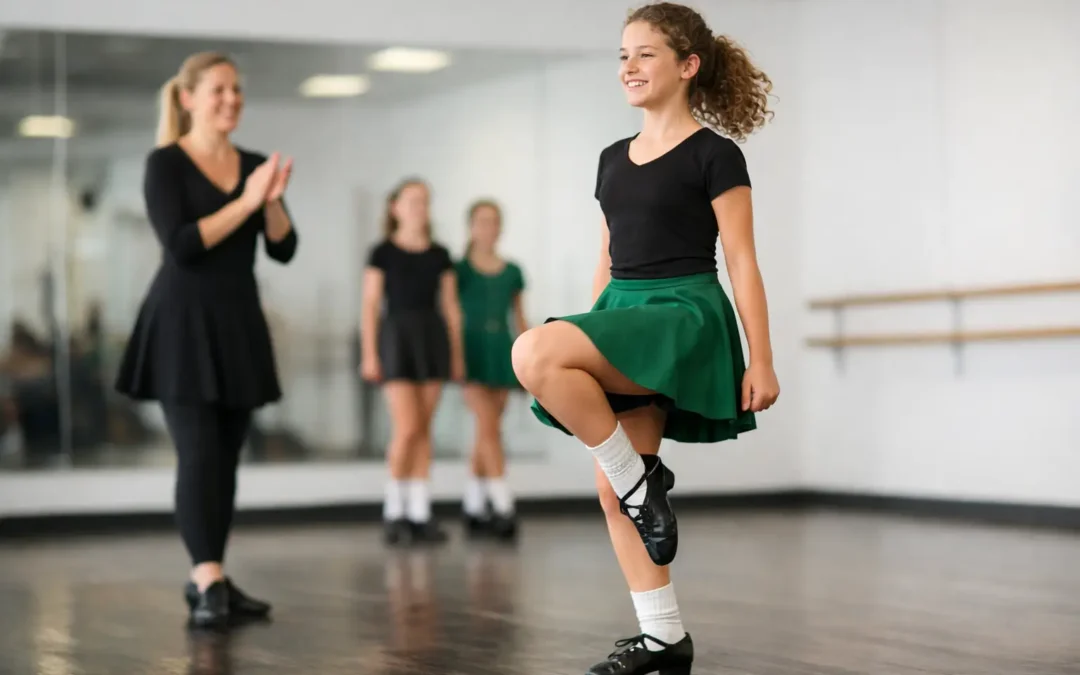
The first Irish dance class often begins with something wonderfully simple: standing tall, feeling the beat and learning that you do not have to know a single step before you arrive. If you are wondering how to start Irish dancing, the best answer is not to wait until you feel ready. Find a welcoming beginner class, wear comfortable clothes and let an experienced teacher guide those first steps.
Irish dancing can be energetic, precise and ambitious, but it is also sociable, confidence-building and great fun. Children can begin with playful movement and rhythm before progressing at their own pace. Teenagers and adults can start as complete beginners too, without needing a dance background or childhood experience.
Start Irish dancing with a beginner class
A proper beginner class is the most valuable first step. Videos can give you a feel for the music and style, but they cannot correct posture, help you hear the timing or make sure you are learning safely. Irish dance has its own technique, from the way dancers hold their arms to the turnout and controlled placement of the feet. Good foundations make every step that follows more enjoyable.
Look for a class that clearly welcomes beginners and groups dancers by age or experience where possible. For young children, lessons should feel imaginative and encouraging, with games, music and achievable goals alongside the early dance skills. Older children and teens benefit from a class where they can learn without feeling behind, build friendships and see a clear path towards performance or competition if that becomes their goal.
For adults, the right atmosphere matters just as much. A beginner course should remove the pressure to already be fit, flexible or coordinated. You may be surprised by how quickly the rhythm starts to make sense once you are in the room with other learners.
At Kane Irish Dance, beginner pathways are available from pre-school age through to adult classes, helping every dancer take a first step in a supportive, professionally taught setting.
What happens in a first Irish dance lesson?
Expect a warm welcome, an introduction to the teacher and plenty of reassurance that nobody expects perfection. A first lesson will usually begin with a gentle warm-up, followed by simple movements to help dancers find their balance, posture and rhythm.
Beginners generally start with soft shoe dancing. These are the lighter Irish dance shoes that allow dancers to learn the basics of movement and control. You might practise skips, points, sevens, side steps or a simple beginner reel. The names may sound unfamiliar at first, but teachers break them into manageable sections before putting them together with music.
The class may also include basic Irish dance positions, counting beats and learning how to travel across the floor. Children often enjoy working towards a short routine, while adult beginners may appreciate the satisfaction of recognising a step by the end of the session. No one needs to pick everything up immediately. Repetition is part of learning, and each class builds naturally on the last.
What to wear and bring to your trial class
You do not need a full Irish dance outfit to begin. In fact, it is usually better not to buy specialist shoes before you have tried a class and received advice from your teacher.
For a first lesson, choose clothes that allow comfortable movement, such as leggings, joggers, shorts or a T-shirt. Avoid very loose clothing that could catch under the feet. Trainers are often suitable for an initial trial, although your teacher will confirm the best option for their class. Bring a water bottle and tie long hair back so your child can move freely and focus on the lesson.
Once you decide to continue, the teacher can advise on soft shoes, including the right fit and style. Irish dance shoes need to be secure without being painfully tight. As dancers progress, they may move into hard shoes, which create the distinctive rhythmic sounds many people associate with Irish dancing. There is no rush to get there. Soft shoe technique comes first.
Choose the right starting point for your age and goals
Irish dancing is not one fixed journey. A four-year-old who loves music and movement needs something different from a ten-year-old seeking a new hobby, or an adult returning to dance after decades away.
Pre-school and younger children
For pre-school dancers, the focus should be on enjoyment, listening, coordination and confidence. They learn to take turns, follow instruction and move to music, all while developing physical skills that support school life and other activities. Small achievements matter here: joining in, remembering a short sequence or performing for a parent at the end of term can feel enormous.
Children and teenagers
School-age beginners often enjoy the combination of structure and friendship. They can work towards dances, performances and, where appropriate, competitions. A good academy will not assume every child wants the same outcome. Some dancers thrive on appearing in a display team; others become motivated by competition goals and championship qualification. Both routes require commitment, and both can build resilience, discipline and pride.
Adult beginners
Adults often worry that they have left it too late. They have not. Irish dancing is an excellent way to improve fitness, memory and coordination while being part of a friendly group. Start at your own level, take breaks when needed and allow yourself to be a learner. The goal may be social dancing, learning a new skill or simply enjoying a weekly hour that is entirely your own.
How often should a beginner practise?
One weekly class is enough to start. Consistency matters more than long, exhausting practice sessions. For most beginners, five or ten minutes at home a few times a week can help steps settle into the body, especially if you practise what your teacher has already shown you.
For children, keep home practice positive and brief. A tired child does not need a battle over dance steps after school. Try practising before tea, using a favourite piece of music or asking them to teach you one movement from class. Praise effort, concentration and courage as much as accuracy.
As a dancer becomes more committed to performances or competition, practice may increase. That is a gradual change, not an expectation on day one. Strong teaching protects enthusiasm by matching the workload to the dancer’s age, ability and ambitions.
Understanding the pathway from first steps to achievement
One reason families choose Irish dancing is that it offers a genuine sense of progress. Beginners can see and feel improvement: a clearer rhythm, stronger balance, a new dance remembered from start to finish. Over time, dancers may have opportunities to perform at community events, take part in shows or prepare for feiseanna, the competitions that celebrate Irish dance skill.
Competition can be rewarding, but it is not the only measure of success. It asks for extra practice, commitment and readiness to perform under pressure, so it suits some dancers more than others. A supportive teacher will be honest about what is involved and help families make informed choices. Performance training can be equally purposeful, giving dancers the thrill of working together and sharing what they have learned with an audience.
The strongest academies combine high standards with care for the individual. Look for qualified, experienced teachers; clear safeguarding practices; age-appropriate progression; and a culture where dancers are encouraged rather than compared. Technical excellence and kindness belong in the same studio.
Helping a nervous beginner feel at home
It is completely normal for a child, teenager or adult to feel anxious before the first class. Arriving a little early can help, particularly for younger dancers. It gives them time to see the room, meet the teacher and watch others arrive without feeling rushed.
Parents can support children by treating the trial as an adventure rather than a test. There is no need to promise they will love every moment. Instead, encourage them to try, listen and tell you afterwards what they enjoyed. If a child is quiet in the first session, that does not mean Irish dancing is not for them. Some need a few weeks to settle before their confidence appears.
Adults deserve the same patience. You may laugh at getting your feet in a muddle, and that is often part of the fun. Keep coming back. Skills that look effortless on stage are built through hundreds of small attempts.
Book a trial class or arrange a short induction conversation, ask which group is right for your age and experience, and give yourself permission to begin exactly where you are. The first step may be a simple one, but it can lead to stronger confidence, lasting friendships and achievements you never expected.