
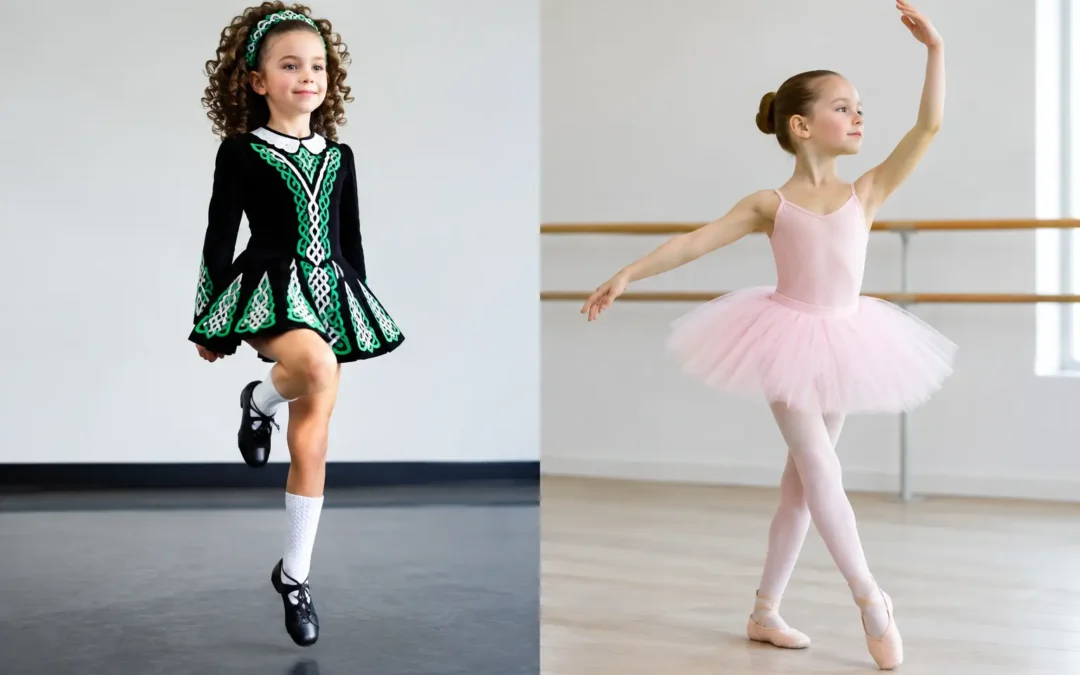
A child hears fast Irish music, starts tapping their feet and wants to have a go. Another watches a ballet dancer turn with effortless-looking control and dreams of wearing ballet shoes. When considering Irish dance versus ballet, that first spark matters. The best class is not simply the one that looks impressive from the audience – it is the one your child will feel excited to attend, supported to learn and proud to grow in.
Both styles offer far more than an after-school activity. They build physical strength, musicality, discipline and confidence, while giving children a positive place to belong. Yet they feel very different in the studio, on stage and as a long-term pathway. Understanding those differences can help families choose well, especially when a child is new to dance.
Irish Dance Versus Ballet: The Main Difference
Ballet is a highly codified theatrical dance form. It develops turnout, posture, flexibility, balance and flowing movement through the whole body. Dancers learn positions, barre work, travelling steps, jumps and, as they progress, more complex turns and performance technique. It is often associated with classical music and story ballets, though modern ballet training can be wonderfully varied.
Irish dance is driven by rhythm, precision and energetic footwork. Traditional soft shoe dancing is light, graceful and controlled, with an upright upper body and intricate steps performed to lively Irish music. Hard shoe dancing adds the unmistakable sound of beats and rhythms, creating something close to a dancer playing percussion with their feet.
Neither is automatically harder than the other. They ask for different things. Ballet places particular emphasis on line, turnout and sustained control. Irish dance demands quick footwork, timing, stamina and the ability to keep the upper body poised while the feet work at speed. A child who enjoys movement that feels musical and rhythmic may be drawn to Irish dance; a child who loves expressive arms, storytelling and long lines may be more naturally attracted to ballet.
What Your Child Will Experience in Class
A good beginner class in either style should feel encouraging, well structured and age-appropriate. Children need clear instruction, safe progression and plenty of moments where they can recognise their own improvement.
In a ballet class
Beginners often start with simple positions and exercises that develop body awareness. They may work at the barre, practise skips and jumps across the room, and learn short routines. Ballet can be especially helpful for children who enjoy careful detail and learning how each part of the body works together.
For some young dancers, however, ballet’s technical foundations can initially feel slower than they expected. Progress is built patiently. This is a strength of the form, but it means children who want fast-paced steps and immediate musical excitement may need time to settle into it.
In an Irish dance class
Beginners typically learn basic posture, counts, skips and simple steps, building towards a short routine they can perform with confidence. Classes often have an infectious energy: music starts, everyone moves together, and children quickly hear how their feet connect with the rhythm.
Irish dance also offers a social side that surprises many parents. Alongside solo steps, dancers can enjoy ceilí – traditional group dancing that involves patterns, teamwork and plenty of laughter. It is a lovely option for children who want to make friends as well as learn a performance skill.
At Kane Irish Dance, beginner teaching is designed to make those first steps feel achievable, whether a child is trying dance for the first time or arriving with experience in another style.
Shoes, Clothing and Practical Considerations
For a first ballet class, children usually need simple, comfortable dancewear and ballet shoes. Requirements vary between schools, but there is often a clear uniform for tidiness and ease of movement. As dancers advance, they may need additional items, although pointe work is only introduced at the appropriate age and stage of physical development.
Irish dancers normally begin in soft shoes, with practical clothing that allows them to move freely. Hard shoes come later, once basic technique, strength and confidence are in place. This gradual approach means families do not need to buy every item before they know their child wants to continue.
Cost is worth discussing openly with any dance school. Ask what is needed for a trial, what equipment may be required during the first term, and whether there are optional performance or competition costs further down the line. A reputable academy will explain the route clearly and will not make a beginner feel they need to commit to the most advanced pathway straight away.
Performance, Exams and Competition Opportunities
Both ballet and Irish dance can lead to meaningful performance opportunities. Ballet schools may offer annual shows, examinations and auditions for youth dance programmes. It can be an excellent route for a child who is captivated by theatre, ensemble work and classical repertoire.
Irish dance offers displays, stage performances, graded development and competitive events known as feiseanna. For dancers who enjoy a personal challenge, competitions provide a clear way to set goals, receive feedback and see progress over time. Ambitious dancers can work towards higher-level qualification and championship opportunities.
Competition is never the only measure of success. Some children thrive on the excitement of preparing a solo for the stage; others gain just as much from taking part in a local display, joining a ceilí team or simply mastering a step they once found difficult. The strongest dance experience gives families choices rather than pressure.
Which Style Builds Confidence?
Both can. Confidence does not come from a particular shoe or costume. It comes from being welcomed, learning in manageable stages, being corrected kindly and discovering that effort leads to progress.
Ballet confidence often grows through control and patience. A child may notice their balance improving, their posture becoming stronger or a difficult movement beginning to feel natural. Irish dance confidence can arrive in a different way: through hearing their footwork become sharper, keeping up with a fast tune, joining in with a group or performing a powerful hard-shoe rhythm.
The teacher and class culture matter as much as the style. Look for qualified instruction, safeguarding practices, realistic group sizes and a setting where children are encouraged without being compared unhelpfully. A nervous beginner needs a teacher who can challenge them while still making them feel safe to make mistakes.
Choosing Between Irish Dance and Ballet
Rather than asking which is better, ask what will suit your child now. Think about what catches their attention when music comes on. Do they enjoy fast beats and a clear rhythm? Are they drawn to storytelling and graceful movement? Do they prefer working independently, or does a social group dance appeal to them?
Age also makes a difference. Pre-school children usually benefit most from playful foundations, imaginative teaching and an environment where they can build listening skills and coordination. School-age children may start to enjoy structured routines, performance goals and friendships within a regular class. Teenagers and adults often value a welcoming beginner route where they can learn without feeling behind everyone else.
Trying a class is often more useful than weeks of research. One child may assume ballet is too formal and then love its calm concentration. Another may not know anything about Irish dance but light up the moment they hear the music and start learning a reel. A trial lets them experience the atmosphere, meet the teacher and decide based on how the class makes them feel.
There Is No Wrong First Dance Class
Children do not have to choose a lifelong identity at their first lesson. Some dancers begin with ballet and later discover Irish dance; others use Irish dance to complement training in another style. The skills can sit happily alongside one another, particularly balance, coordination, musical awareness and performance confidence.
What matters is finding a class with standards, warmth and room to progress. Give your child permission to try, listen to their reaction afterwards, and look for the small but significant sign that they are already asking when they can go back.