
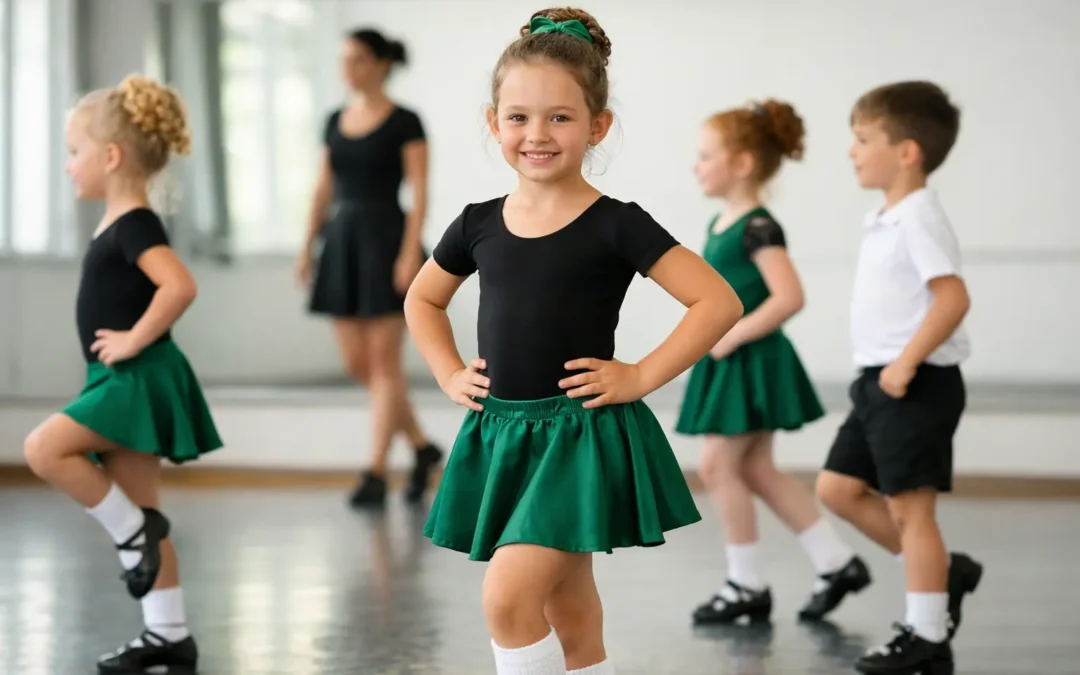
The first time a child hears the rhythm of Irish dance shoes on the floor, something often changes. A shy child may stand taller. A child with plenty of energy has a positive place to direct it. And children who have not yet found their favourite activity can discover that they belong in the room. Children’s Irish dance classes offer much more than steps and music: they give young dancers a structured, encouraging space to grow.
For families in Huddersfield and West Yorkshire, the best start is not about arriving with experience or buying every piece of kit straight away. It is about finding a class where beginners are welcomed properly, teaching is clear and every child can make progress at their own pace.
What children gain from Irish dance lessons
Irish dance is a lively, disciplined and expressive activity. Children learn to listen carefully, remember sequences, move with musical timing and work towards personal goals. Because the technique develops over time, each new skill brings a real sense of achievement.
Confidence is often one of the first changes parents notice. At the beginning, a dancer may be unsure about joining in, practising in front of others or making a mistake. With patient coaching and familiar routines, they begin to trust themselves. Learning a new reel, performing with their class or simply remembering the steps they found difficult last week can make a meaningful difference.
The physical benefits matter too. Irish dance supports coordination, posture, balance, stamina and strength, while giving children a fun alternative to more traditional team sports. It is active without requiring a child to be the loudest, fastest or most competitive person in the group. Some children love the individual focus of improving their own technique; others thrive on the friendship and shared excitement of learning alongside classmates.
There is also value in the discipline behind the sparkle. Dancers learn that progress comes from attending regularly, listening to feedback and trying again. These are habits that can support them at school, on stage and in everyday life.
What to expect from children’s Irish dance classes
A good beginner class should feel purposeful but never intimidating. Children need enough structure to learn safely and make visible progress, balanced with warmth, encouragement and plenty of enjoyment. They should not be expected to know the terminology, own specialist shoes or have a background in dance before they walk through the door.
Lessons commonly begin with a warm-up and simple movement work, helping dancers prepare their bodies and practise good posture. From there, children learn the foundations of soft-shoe Irish dance, including basic positions, rhythm, skipping and their first traditional steps. Teachers build combinations gradually, revisiting skills so that dancers can feel secure before moving on.
As confidence grows, lessons can introduce more detailed technique, stronger musical awareness and choreography for displays. Older or more experienced dancers may work towards hard-shoe rhythms, performance pieces and competitive training. The route should be clear, but the pace should suit the child. Not every dancer wants to compete, and that is absolutely fine. Performing for family, taking part in a local display or enjoying weekly lessons can be just as rewarding.
At Kane Irish Dance, tuition is led with beginners in mind while giving committed dancers a credible route towards performance, competitions and championship qualification. That balance is valuable: children can start for fun without being limited if their ambition grows.
The right class for their age and stage
Age-specific teaching makes a genuine difference. Pre-school Irish dance should use imaginative, playful activities that develop rhythm, listening and movement confidence. Young children are still learning how to take turns, follow instructions and participate in a group, so the atmosphere needs to be especially supportive.
For children aged around five to twelve, classes can become more structured. This is often an ideal stage to learn core technique, build friendships and enjoy the satisfaction of working towards a routine. Teen dancers may benefit from training that respects their growing strength, independence and performance goals, whether they are starting fresh or returning after a break.
The most suitable group depends on more than a birth date. A confident five-year-old and a cautious seven-year-old may need different levels of reassurance, while a child who has danced elsewhere may be ready for an assessment of their current skills. A short induction or trial class gives a teacher the chance to guide your family towards the right starting point.
Choosing a class parents can trust
Parents are not only choosing an activity. They are choosing the adults, standards and community around their child. A quality academy should be open about how it supports children, from safeguarding and DBS-checked staff to clear communication about classes, fees and progression.
Look for teachers with recognised Irish dance expertise and a proven ability to teach children, not simply perform themselves. Great teaching makes a complex skill feel possible. Instructions should be broken down clearly, corrections should be constructive and children should leave knowing what they did well as well as what to practise next.
Community matters just as much. A child is more likely to stay with dance when they feel known, included and encouraged. Notice how new dancers are greeted. Are questions welcomed? Do older dancers set a positive example? Is effort praised alongside achievement? The answer to these small details often tells you what the experience will be like week after week.
It is sensible to ask about the practical side too. Find out what clothing is needed for a first lesson, whether a trial pass is available, how courses are organised and what opportunities exist beyond regular classes. A reassuring academy will make the first step straightforward rather than make families feel pressured to commit before they are ready.
Starting without expensive kit or prior experience
One common worry is whether children need the full Irish dance look before they begin. For most beginners, comfortable clothing that allows movement and suitable footwear is enough for an initial class. Your teacher can explain when, or if, specialist shoes are needed. There is no benefit in investing in hard shoes before a child has learned the basics and decided that Irish dance is right for them.
The same applies to experience. Children do not need flexibility, perfect rhythm or a friend already in the group. They need curiosity and a willingness to have a go. Some will pick up steps quickly; others will need more repetition. Both can become confident dancers when they receive consistent teaching and encouragement.
Parents can help by keeping the first few weeks low-pressure. Ask what they enjoyed, rather than asking whether they were the best. Celebrate attendance, persistence and small improvements. If they want to practise at home, a short, positive session is usually more useful than repeatedly drilling a step until everyone is frustrated.
Performance and competition: opportunities, not pressure
Irish dance has a wonderful tradition of performance. Taking part in a display can give children a memorable chance to share what they have learnt, work as a team and feel proud of their effort. For some, the bright lights and applause become a favourite part of dancing. For others, performing takes time and gentle preparation.
Competition offers a different kind of goal. It can teach dancers how to prepare, receive feedback and handle nerves with grace. It also requires commitment from the child and family, including extra practice, travel and suitable costume arrangements as they advance. It is an exciting pathway, but it is not the only measure of success.
The healthiest approach is to let a child’s interest lead. A well-run academy can offer performance and competition training to those who want it, while still making regular recreational classes feel worthwhile. Children should understand that medals and placements are moments to celebrate, not a condition of belonging.
Helping your child settle into their first term
The first term is a time for routines to form. Arriving a few minutes early helps a child enter calmly, especially if they are nervous. Regular attendance gives them the repetition needed to remember steps and feel part of the group. If they miss a class, there is no need for panic – speak to the teacher about the best way to catch up.
It also helps to expect a few wobbles. A child may be excited after one lesson and uncertain before the next, particularly when new steps become challenging. This does not mean the class is a poor fit. Give them time, listen to any specific concerns and keep communication open with their teacher. If anxiety continues, a supportive academy should work with you to find a comfortable way forward.
The greatest gift you can give a new dancer is permission to begin as they are. Book a trial, let them hear the music, and see whether those first steps become the start of a confidence they carry far beyond the dance floor.