
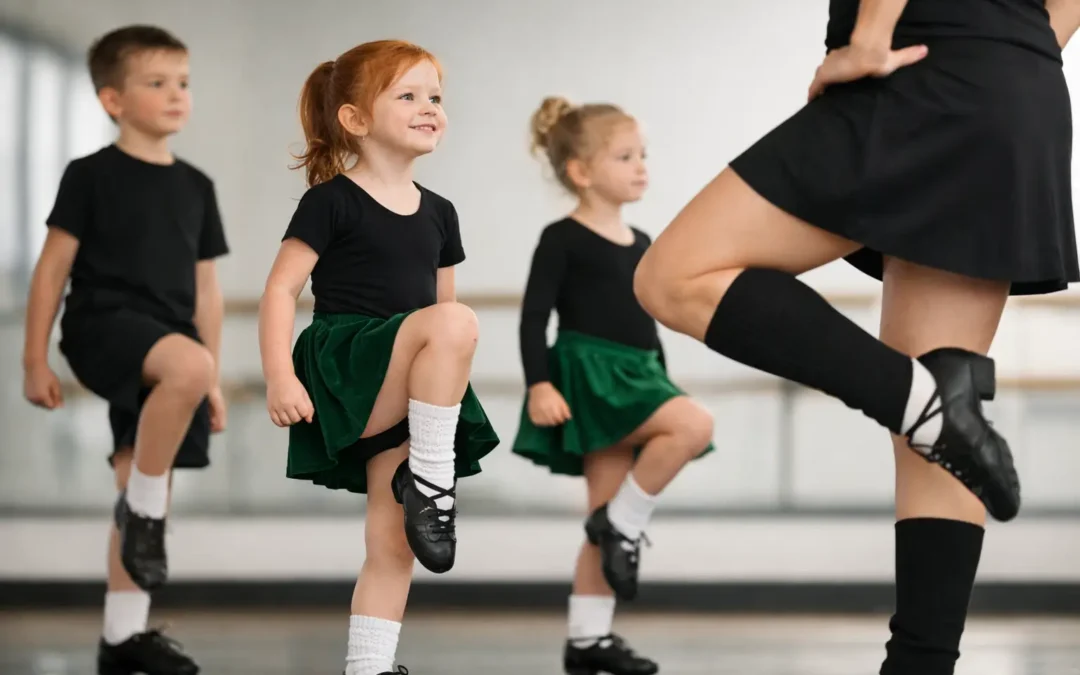
A child does not need to be able to point a perfect toe, remember a long routine or own a sparkly dress to begin. For parents asking what age can children start Irish dancing, the reassuring answer is that there is an enjoyable starting point for most children – from playful pre-school movement through to structured beginner classes for school-age children.
The best age is less about finding one magic birthday and more about matching the class to your child’s stage of development. A well-taught first experience should feel welcoming, active and achievable. It should give children room to build coordination, listening skills and confidence, while introducing the unmistakable rhythm, music and joy of Irish dance.
What age can children start Irish dancing?
Many children can begin a pre-school Irish dance class at around age three or four. At this stage, lessons are not about competition steps or demanding technique. They are about moving to music, learning how to join in with a group, developing balance and discovering that dance can be enormous fun.
From around age five, children are usually ready for a more structured Irish dance beginner class. They can start learning the foundations of light shoe dancing: posture, timing, skips, basic reels and the simple sequences that lead to recognisable Irish dance steps. This is the age when many families choose to begin regular tuition.
Children can also start later with no disadvantage to their enjoyment. A seven-, nine- or twelve-year-old can make an excellent beginner, particularly when they join a class designed for new starters rather than being expected to keep up with experienced dancers. Teenagers can begin too, and often bring focus, musical awareness and a real appetite for a new challenge.
There is no need to wait until a child is already a confident dancer. Irish dance is where many children gain that confidence in the first place.
Pre-school Irish dance: learning through movement
For younger children, the priority is creating positive associations with being active and taking part. A thoughtful pre-school class uses games, songs, imagination and simple dance patterns to help little ones practise important early skills without making the session feel like a test.
They will learn to take turns, follow short instructions, move safely in a shared space and recognise musical changes. Those small wins matter. A child who begins by copying a rhythm, standing proudly in a line or remembering a short sequence is already developing the building blocks needed for later dance learning.
Parents should expect some variation at this age. One week, a child may be eager to take centre stage; the next, they may prefer to watch closely from the side before joining in. That is entirely normal. Gentle encouragement works far better than pressure, and a good teacher knows how to make each child feel included.
Pre-school dance is particularly useful for children who have lots of energy, enjoy music or would benefit from practising independence in a supportive setting. It is also a lovely introduction to making friends beyond nursery or home.
From five onwards: building real Irish dance foundations
At five and above, children are generally able to take on a clearer class structure. They can learn a warm-up routine, listen for corrections, repeat steps and understand that progress comes through practice. This is when Irish dance begins to offer its satisfying blend of discipline and achievement.
Beginner dancers normally start in light shoes. These allow them to focus on posture, turnout, rhythm and clean footwork before adding the extra challenge of hard shoes. There is no rush to buy everything at once. Children should first have the chance to try the style, feel comfortable in class and receive guidance on what they genuinely need.
The early months are often full of visible progress. A child who initially watches their feet may soon dance a complete reel with music. They may begin to remember step names, take pride in practising at home and look forward to seeing familiar faces each week. Those milestones can be especially powerful for children who have not yet found an activity that feels like theirs.
At Kane Irish Dance, age-appropriate classes give children a clear route from their first steps towards performances, competitions and, for those who want it, more ambitious training. The route is there, but no child needs to begin with a competitive goal. Enjoyment and sound foundations come first.
How to tell if your child is ready
Readiness does not mean a child must be naturally coordinated or exceptionally outgoing. Most children develop those qualities through regular participation. Instead, look for a few practical signs: they can manage a class without needing a parent beside them throughout, follow simple instructions, and are willing to have a go even when something feels new.
Some children are ready for structured classes at five; others benefit from another term of playful movement first. A child’s birthday is only one part of the picture. Their confidence, attention span and previous experience of groups all play a role.
If your child is shy, Irish dance can still be an excellent choice. They do not have to perform alone on day one. Group dancing gives children a sense of belonging while allowing confidence to grow gradually. Equally, lively children often enjoy the focus of learning precise rhythms and having a positive outlet for their energy.
It can help to speak openly with the teacher before booking. Explain your child’s age, any additional needs, previous dance experience and what you hope they will gain. A short induction or trial class can remove uncertainty for both parent and child.
Why starting at the right level matters more than starting early
Beginning very young can be wonderful, but only if the teaching is suited to young bodies and minds. Children should not be pushed into complex choreography, lengthy sessions or hard shoe work before they are ready. Early success should feel attainable, not exhausting.
Starting later has advantages too. Older beginners often understand corrections quickly, retain choreography well and set themselves clear goals. They may progress rapidly because they can practise independently and appreciate the detail behind the steps.
The key is placement in a genuinely beginner-friendly group. Joining a class at the right level protects confidence and helps children enjoy the learning process. It also means teachers can introduce correct technique from the outset, rather than asking a new dancer to unlearn habits they have picked up elsewhere.
What parents can expect from a first class
A first Irish dance class should be friendly, organised and active. Children will usually be welcomed, shown where to stand and introduced to simple movements at a pace they can manage. They may begin with a warm-up, explore basic steps to traditional music and finish feeling pleasantly tired and proud.
Comfortable clothing that allows free movement is usually enough for a trial. Trainers or suitable soft footwear may be recommended depending on the class, but parents should check before attending rather than investing in specialist shoes too soon. Hair, uniform and performance wear can all come later if and when a child decides to continue.
It is worth remembering that learning Irish dance is physical. Children may need time to strengthen their legs, improve stamina and coordinate arms and feet. Regular attendance makes a noticeable difference, but progress will not look identical for every dancer. Celebrate effort, courage and consistency alongside the steps themselves.
A dance journey that can grow with your child
Irish dance offers more than an after-school activity. For a younger child, it may be their first experience of being part of a class. For a primary-aged beginner, it may become a weekly place to build resilience and friendships. For an older child, it can provide a fresh challenge, a performance goal or a pathway towards competition.
The first step does not have to be perfect. It simply needs to be a class where your child feels safe to try, supported to improve and excited to come back next week. If they leave with rosy cheeks, a new rhythm in their feet and a little more belief in themselves, they have started at exactly the right time.