
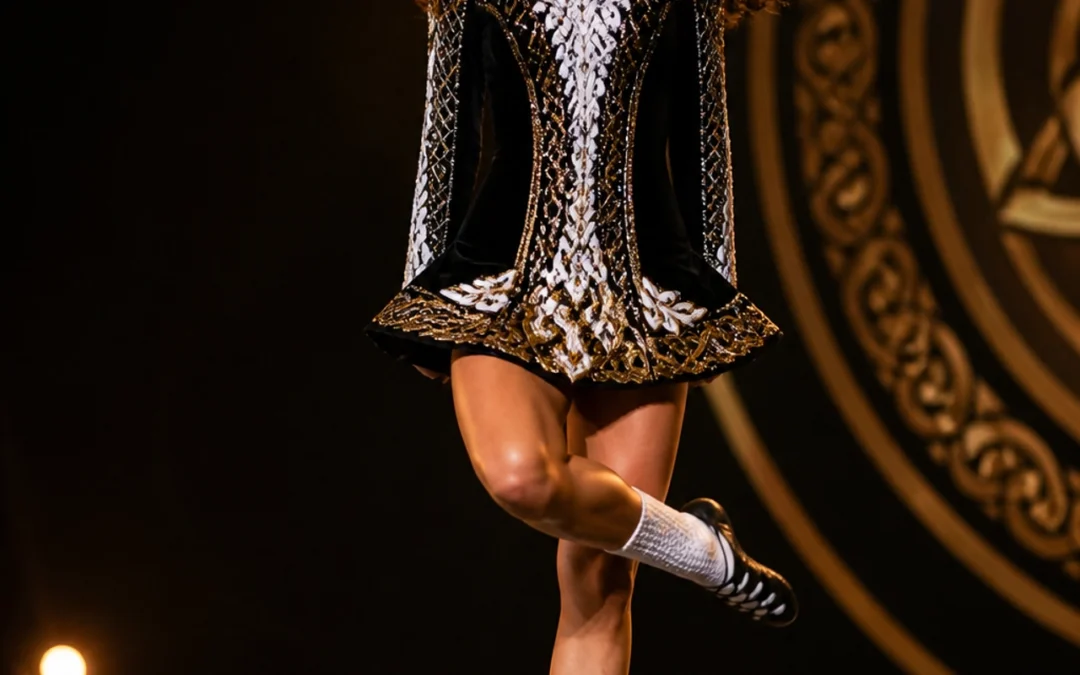
The quick, precise footwork of Irish dance can stop you in your tracks. But behind every lively jig and rhythmic tap is a story of music, community and change. Today, children in Huddersfield can be part of that story too: learning steps, building confidence and discovering a vibrant cultural tradition.
A tradition with a long, evolving story
Irish dance is often linked with ancient Ireland, but it’s difficult to trace today’s styles directly back to one ancient practice. Written records are limited, and the dance forms we recognise have developed over many generations. What we can say is that dancing has long been part of Irish social and cultural life.
From the 18th century, travelling dance masters helped shape the solo steps that became a familiar part of Irish dance. They moved between communities, teaching jigs, reels and other dances. Their work helped pass on local styles and brought new steps to eager dancers.
For a useful introduction to the background and rhythms, read Traditional Irish Dance 101: A Beginner's Guide to Mastering History and Rhythm. It’s a wonderful reminder that each step belongs to a tradition that has continued to grow.
From local gatherings to a worldwide stage
Irish dance has never been just about solo performance. Group and social dances bring people together, with dancers moving in time to traditional music. In the late 19th and early 20th centuries, interest in Irish language and culture grew, and organised céilí events helped bring Irish dancing to wider audiences. The first event described as a céilí took place in London in 1897, showing how the tradition was already travelling beyond Ireland.
Later, stage performances introduced Irish dance to audiences around the world. The styles may look different from a village gathering or a first class, but the rhythmic footwork and musical spirit remain a recognisable thread connecting dancers across generations.
The history is still being written: Irish dance continues to be shared in communities around the world, including right here in Huddersfield.
What makes the dancing so distinctive?
Part of the appeal is the way dancers create lively rhythms with their feet. Soft shoes bring light, springing movements, while hard shoes add crisp, percussive sounds. Together with the pulse of jigs and reels, they make Irish dance both athletic and expressive.

For children, it can also be a joyful way to explore music, movement and irish cultural activities. They don’t need to know the history before they begin. They can discover it gradually, one rhythm and one new step at a time.
Keeping the tradition alive in Huddersfield
At Kane Irish Dance, pupils learn with Rebecca, the school’s owner and a World Champion. Her experience brings a special perspective to each class, while lessons give children room to practise, improve and celebrate their progress.
Kane Irish Dance is registered with CRN organisation Ireland. Pupils can work towards grades, badges and awards, and may also choose to compete. These milestones give children clear goals, while the shared experience of learning helps build teamwork and friendships.

There’s no single reason families choose to learn irish dance. Some children are drawn to the music; others love performing or want an active, screen-free hobby. Along the way, regular practice can help develop coordination, fitness, focus and confidence.
If you’re wondering what a first class might involve, take a look at How to Learn Irish Dance and Connect Your Child with Centuries of Tradition. It offers a friendly starting point for families curious about the journey.

Your child’s first step
Starting something new can feel daunting, so Kane Irish Dance offers new children a free, non-obligatory 15-minute induction. It’s a relaxed opportunity to meet Rebecca, ask questions and try a few steps before deciding whether to join.
To book, contact Stephanie, our secretary for induction bookings, on 01484 958726.
Irish dance has travelled through generations and across borders, while remaining rooted in music, movement and community. In Huddersfield, every new dancer gets the chance to add their own steps to that living tradition. We’d love to welcome your child and help them begin.