
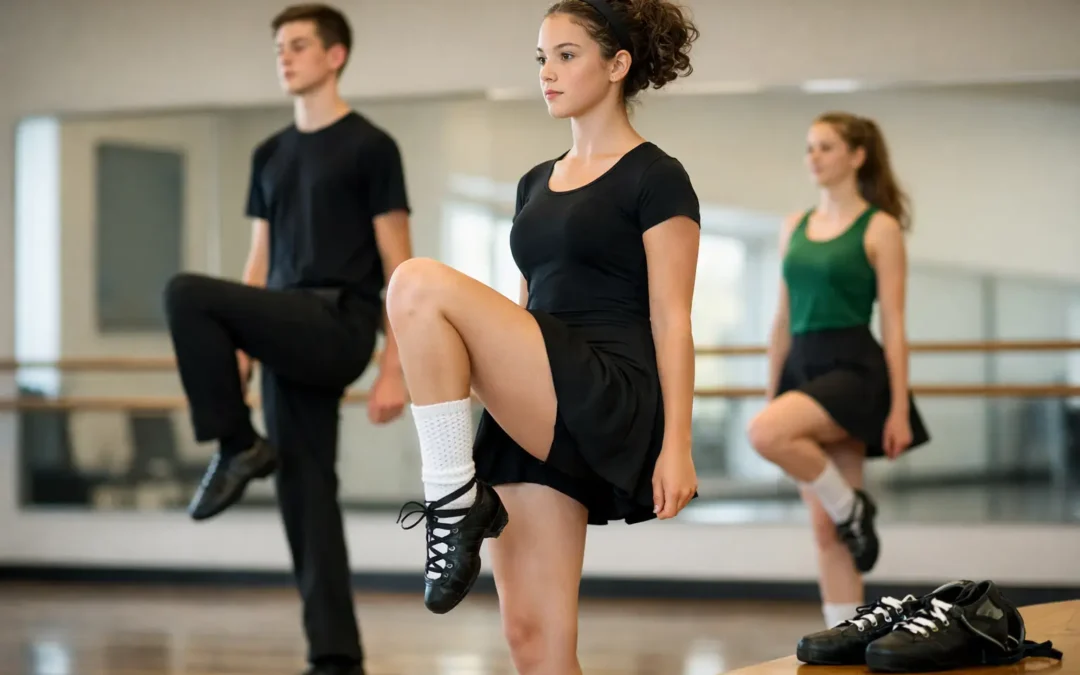
A teenager may arrive at Irish dance for very different reasons: a love of music, a friend’s recommendation, a wish to perform, or the challenge of working towards competition. Whatever brings them through the studio door, this teen dance training guide is built around one reassuring truth: progress does not require a dancer to be perfect on day one. It asks for patience, good teaching and a willingness to keep showing up.
The teenage years can be a brilliant time to begin or develop Irish dance. Young people have the strength, focus and growing independence to take real ownership of their training, while still benefiting from the encouragement of a positive dance community. With the right balance of structure and enjoyment, Irish dance can become a place to build fitness, friendship, resilience and genuine pride.
What teen dance training should feel like
A worthwhile teen dance class should feel purposeful without being intimidating. Dancers need clear goals, correction that helps rather than discourages, and the space to ask questions when a step, rhythm or movement does not yet make sense.
Irish dance is wonderfully detailed. Posture, turnout, timing, arm position, foot placement and musicality all matter. That can feel like a lot at first, particularly for a teenager joining a class where others may have previous experience. A skilled teacher breaks those elements into manageable stages, so dancers can understand not only what to do, but why it improves the dance.
At Kane Irish Dance, teens can train in an environment where achievement is celebrated at every level. For one dancer, success may mean confidently completing a full reel. For another, it may be preparing for a display, progressing into hard shoe, or working towards competition and championship qualification. Both deserve recognition.
Starting as a beginner teenager
Beginning Irish dance as a teen is not “too late”. Some dancers start young and continue through their teenage years; others find the style later and bring fresh enthusiasm, sporting fitness or experience from another dance discipline. The starting point is less important than choosing a class that gives beginners proper foundations.
Early training should focus on rhythm, coordination, posture and the core steps used across soft and hard shoe dancing. It is tempting to measure progress by how quickly a dancer learns a difficult routine, but secure basics make later progress far more enjoyable. Rushing ahead can lead to poor habits that take longer to correct.
Parents can help by keeping the first goal simple: attend regularly, enjoy the challenge and allow time for confidence to grow. A trial class or short induction is often the best way to see whether the group, teaching approach and timetable feel right. Teenagers are more likely to commit when they feel welcomed as individuals, not judged against an imaginary standard.
Soft shoe and hard shoe: when does each begin?
Most dancers begin by learning soft shoe technique. These lighter shoes allow them to develop lift, control and clean footwork while becoming familiar with Irish dance rhythms. Hard shoe dancing introduces the distinctive percussion sounds that many people associate with the art form, but it requires control, ankle strength and careful instruction.
There is no benefit in rushing into hard shoes before a dancer is ready. The right time depends on their technique, consistency and teacher’s assessment. Starting at the appropriate stage protects confidence and helps a teen enjoy the excitement of hard shoe without feeling overwhelmed.
A practical teen dance training guide for weekly progress
For most teenagers, consistent weekly classes are the foundation of improvement. Training once a week can produce excellent progress when dancers listen carefully, practise sensibly and give their bodies time to recover. Those preparing for performances or competitions may gradually add further sessions as their goals develop.
Home practice is useful, but it does not need to take over family life. Short, focused practice is often more effective than repeating a step for an hour while tired or frustrated. Ten to twenty minutes spent revising a section of a dance, checking posture and practising rhythm can make the next class feel much more productive.
A good practice routine starts with space. Dancers should have a safe, clear area with an appropriate floor, particularly when using hard shoes. They should avoid practising energetic movements on slippery surfaces or in cramped rooms. If noise is a concern, soft shoe technique, marking steps gently or working through counts can still be valuable.
It also helps to practise with a specific purpose. Rather than saying, “I need to do my dance,” a teen might choose one aim: hold arms correctly through the first eight bars, land more quietly, remember a transition or keep a steady rhythm. Small targets create visible wins, and visible wins build motivation.
Strength and mobility matter
Irish dance asks a great deal of the body, especially as steps become faster and more athletic. Dancers benefit from sensible strength and mobility work alongside class training. This does not need to be complicated. Gentle calf and ankle exercises, core strength, balance work and careful stretching can support technique and help reduce the risk of avoidable strain.
The key word is sensible. Teenagers are still growing, and more training is not always better training. Persistent pain, swelling or discomfort should not be ignored or pushed through. Parents should speak to the teacher, and seek appropriate medical advice where needed. Rest is part of training, not a sign of falling behind.
Balancing dance with school, friends and family life
Teen life can become busy quickly, especially during exam years. Dance should add a positive rhythm to the week, not become another source of pressure. The best approach is to plan ahead where possible and be honest about capacity.
During a quieter school term, a dancer may enjoy committing to a performance, competition or extra workshop. During revision periods, the goal might be maintaining technique and attending their regular class. Progress is rarely a straight line. A supportive academy understands that school commitments matter, while helping dancers return to their training with confidence.
Friendship also plays a meaningful role. Teen classes can offer a social circle beyond school, brought together by a shared goal and plenty of laughter between exercises. These connections are especially valuable for teenagers who are shy, new to the area or looking for a healthier, more encouraging activity.
Performance and competition: choosing the right next step
Performing is a powerful way for young dancers to see what their work can become. It develops stage presence, teamwork and the ability to keep going when nerves appear. A local display may be the ideal first opportunity, offering the excitement of an audience without the intensity of a major competition.
Competition can be equally rewarding for dancers who enjoy setting technical goals and receiving formal feedback. It demands preparation, discipline and resilience. Not every result will go as hoped, which is why a healthy perspective matters. A placing can be exciting, but the deeper achievement is learning to prepare well, perform bravely and respond constructively to feedback.
It depends on the individual dancer. Some thrive on competition; others find their happiest route through classes, displays and social dance. Neither path is lesser. The right programme is the one that keeps a teenager engaged and proud of their own development.
How parents can give the right support
The most helpful support is steady rather than intense. Make attendance possible, encourage practice without policing it, and let the teacher lead on technical correction. After a class or event, try asking, “What felt better today?” rather than only asking whether they won or learned a new step.
Teenagers also need room to take responsibility. Packing their dance bag, checking performance details and setting a practice target are small habits that build independence. When a difficult step causes frustration, remind them that every accomplished dancer has worked through awkward early attempts.
Irish dance gives teenagers more than routines and recital memories. It gives them a constructive place to work hard, belong, make mistakes safely and discover that improvement is earned one class at a time. The next step can be as simple as coming along, meeting the teacher and allowing that first lesson to become the beginning of something they are genuinely proud of.