
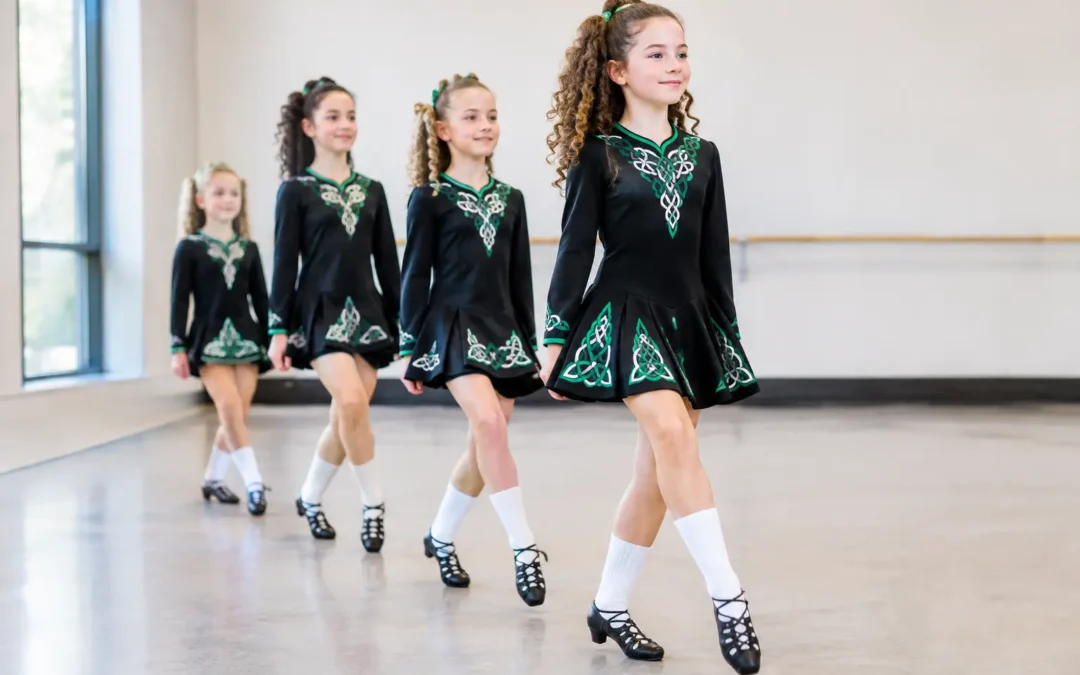
The first time a child hears the sharp sound of hard shoes or watches quick feet flying across a stage, it is natural for a parent to ask: is Irish dance safe? The reassuring answer is yes, when it is taught properly, introduced at the right pace and supported by sensible habits at home and in class.
Irish dance is an active, disciplined form of dance. Like football, gymnastics, running or any activity that asks growing bodies to learn new movements, it carries some risk of bumps, strains and overuse if technique, rest or supervision are overlooked. A well-run class does not ignore that reality. It gives dancers the skills, confidence and gradual progression that make the activity enjoyable for the long term.
Is Irish dance safe for children?
For most children, Irish dance is a safe and rewarding way to be active. It develops coordination, posture, musicality, balance and fitness while giving children the satisfaction of learning a skill step by step. It can also be a wonderful confidence builder, particularly for children who are not drawn to team sports but still need a positive outlet for energy and ambition.
Safety begins with age-appropriate teaching. A pre-school dancer does not need demanding choreography or hours of repetition. Their classes should centre on rhythm, listening, simple movement patterns, imagination and enjoyment. As children grow in strength, concentration and body awareness, they can gradually take on more technical work.
For school-age beginners, good teaching means learning the foundations before speed. Dancers need to understand how to stand tall, land softly, use turnout appropriately and control their feet. The aim is not to make a child look advanced in their first few weeks. The aim is to help them build a strong base that supports every reel, jig and performance opportunity to come.
At Kane Irish Dance, children are taught within a structured pathway, from their first class towards displays, competitions and, for those who want it, higher-level achievement. That progression matters because ability is earned in stages, rather than rushed.
What makes an Irish dance class safe?
A safe experience is about much more than the dance steps. Parents should feel confident that the teacher is qualified, attentive and prepared to adapt work for the dancers in front of them. Children learn at different rates, and a supportive academy makes room for that without making anyone feel left behind.
Expert instruction and clear technique
Irish dance involves precise footwork, upright posture and repeated movement. Those details are what make it exciting to watch, but they also need careful coaching. A knowledgeable teacher will break steps into manageable sections, correct technique kindly and avoid pushing dancers into movements they are not ready to perform.
In soft shoe dancing, children learn lightness, control and rhythm. In hard shoes, they gradually learn how to create sound safely and clearly. Beginners should not be expected to force height, speed or turnout. Progress comes from regular practice, patient correction and confidence in the basics.
Suitable floors, footwear and space
The dance environment plays a real part in injury prevention. Classes need enough clear space for dancers to move without collisions, and flooring should be suitable for dance activity rather than slippery, uneven or overly hard where possible. A teacher should also organise lines, travelling steps and turns so children have room to work safely.
Correct footwear is equally helpful. Soft shoes should fit securely without pinching, while hard shoes should be properly fitted and introduced at the appropriate point in a dancer’s development. Shoes that are too large, too tight or badly worn can affect balance and technique. If you are unsure what your child needs, ask before buying. The right first pair is not necessarily the most expensive pair.
Warm-ups, cool-downs and sensible repetition
A proper warm-up prepares muscles and joints for activity. It should be a normal part of class, not an optional extra squeezed in before the music starts. Cool-downs, stretching and calm movement afterwards can also help dancers finish well, especially after energetic hard shoe work or performance rehearsals.
Repetition helps dancers remember steps, but too much repetition without a break can lead to tired technique. When children are fatigued, they may land heavily, lose posture or stop listening to their bodies. Good teachers watch for this and balance focused practice with rest, feedback and variety.
The risks to understand without being alarmed
Most Irish dance injuries are minor, such as a bruised toe, a blister, a rolled ankle or temporary muscle soreness after learning something new. More commonly, problems develop when a dancer trains intensely for long periods, ignores pain or increases their workload too quickly.
Feet, ankles, shins, knees and hips all work hard in Irish dance. Growing dancers may occasionally experience aches related to growth as well as training. This does not mean they must give up dance, but it does mean adults should pay attention. Pain that changes the way a child walks, jumps or dances is a signal to pause and seek appropriate advice rather than simply carrying on.
There is also a difference between normal effort and pain. Feeling warm, slightly out of breath or aware that muscles have worked is part of physical activity. Sharp pain, swelling, persistent limping, dizziness or pain that continues after rest needs a more cautious response. Parents should speak to a healthcare professional where needed, and let the teacher know so classwork can be adjusted.
How parents can support safe progress
You do not need dance experience to help your child thrive. The most useful support is often simple: make sure they arrive in comfortable clothing, with a drink, the right shoes and enough time not to rush. Encourage them to tell their teacher if something hurts or if they are worried about a movement.
At home, regular sleep, nourishing meals and time away from training all support healthy development. A child preparing for a show or competition may be excited to practise constantly, but rest is part of training too. It gives the body time to recover and keeps enthusiasm fresh.
It also helps to keep expectations realistic. Some children will love performance, some will enjoy the friendships and weekly routine, and others will set their sights on competitions. All of those reasons for dancing are valid. The safest and happiest path is one that matches the child’s age, goals and enjoyment, rather than an adult’s timetable.
Is Irish dance safe for adults starting later?
Yes. Adult beginners can enjoy Irish dance safely, even if they have never danced before or have not exercised regularly for a while. The key is choosing a genuine beginner course where the pace is welcoming and the teacher understands that adult bodies, confidence levels and life commitments vary.
Adults often worry that they need flexibility, childhood training or instant fitness before joining. They do not. A good class starts with achievable steps and builds gradually. It may take time for feet to remember patterns and for stamina to develop, but that is part of the fun. Irish dance can offer a lively alternative to the gym, a social evening and a new personal challenge in one class.
Anyone with an existing injury, a medical condition, recent surgery or concerns about returning to exercise should seek individual medical guidance first. Tell the teacher about relevant limitations too. Modifying a movement is not falling behind – it is training intelligently.
Competition and performance: where balance matters most
Performances and competitions can be brilliant milestones. They teach preparation, resilience, teamwork and pride in a dancer’s progress. They can also bring longer rehearsals, nerves and a desire to perfect every detail. This is where a healthy academy culture matters.
Ambitious dancers need clear training plans, gradual increases in workload and permission to rest when they are unwell or injured. They also need encouragement that reaches beyond results. A placing can feel wonderful, but good coaching helps dancers value their courage, commitment and improvement as well.
For parents, the best question is not simply, “How quickly can my child move up?” Ask whether they are learning well, enjoying the community and recovering properly between classes. Sustainable progress usually produces stronger dancers than pressure ever will.
The right first class should feel exciting, not intimidating. Whether your child is taking their first small steps or you are considering an adult beginner course, choose a teacher who welcomes questions, values safe development and gives every dancer room to grow. A trial class is a lovely way to see whether the music, movement and community feel like the right fit.