
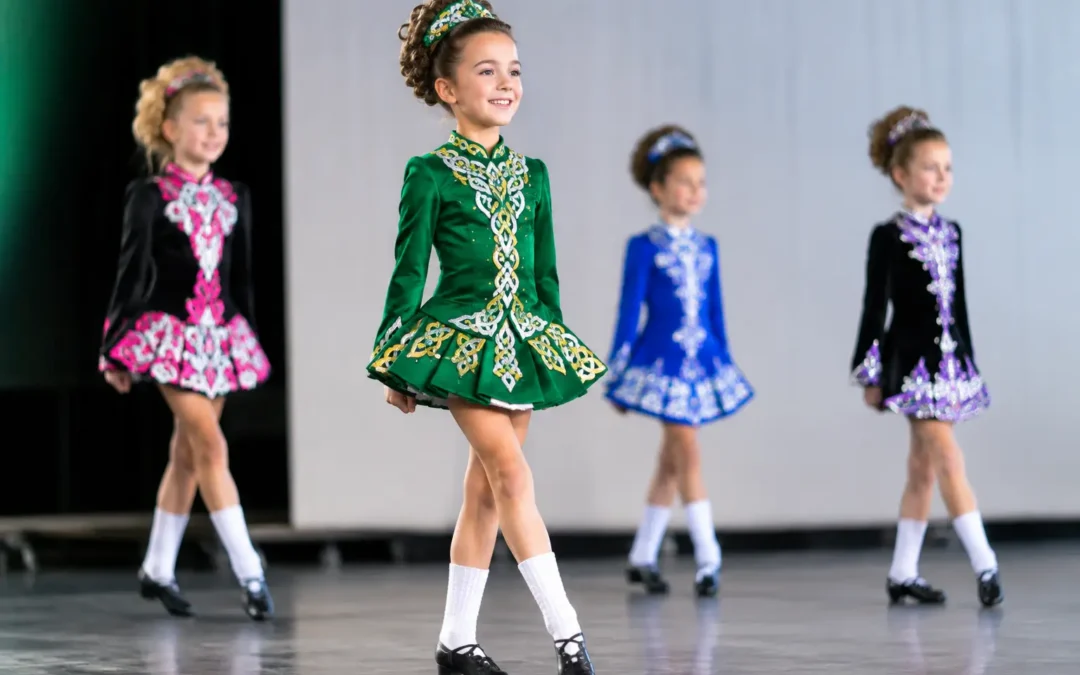
A championship is not simply a bigger competition with brighter costumes and a busier timetable. For a young dancer, it is a chance to show the progress built patiently in class: stronger technique, musical timing, resilience and pride in performing. This Irish dance championship guide is for families who want to understand what the step up involves, without losing sight of the enjoyment that brought their child to Irish dance in the first place.
A good championship experience is built over time. The goal is not to rush a dancer towards a result, but to help them arrive prepared, supported and ready to enjoy the occasion.
What makes an Irish dance championship different?
Championship competitions usually ask more of a dancer than a beginner or primary-level event. Dancers may perform multiple rounds, including hard shoe and soft shoe dances, and are assessed on both their dancing and their ability to maintain quality under pressure. Depending on the competition and the dancer’s age or grade, there may also be a recall round for dancers selected to perform again.
The atmosphere can feel exciting and unfamiliar. There are families travelling from different areas, detailed running orders, formal adjudication and plenty of anticipation around the stage. For some children, that buzz brings out their best. For others, it takes a little longer to feel settled. Both responses are completely normal.
Rules, age groups, entry requirements and qualification routes vary between governing bodies and individual events. Your teacher should always be your first point of contact for guidance on whether a championship is the right next step and what a particular competition requires.
When is a dancer ready for a championship?
Readiness is about more than knowing the steps. A dancer needs consistent attendance, secure technique, enough stamina to complete their dances with control, and the maturity to listen, practise and recover from mistakes. They also need to want the challenge. Encouragement matters, but competition should never feel like something being done to a child rather than with them.
A dancer does not have to be fearless. In fact, very few are. Being ready can mean feeling nervous but still able to take the stage, focus on the music and try again after a wobble. Confidence grows through these small brave moments.
For families, it helps to think of championship entry as part of a pathway, not a deadline. Some dancers progress quickly and enjoy the competitive focus early. Others thrive in class, displays and local feiseanna before deciding they want more. Neither route is better. The right pace protects a child’s confidence and keeps their relationship with dance positive.
Signs that the timing is right
Your child may be ready to work towards a championship when they can perform their dances reliably in class, respond well to corrections and practise independently for short periods at home. They should understand that a result cannot be guaranteed, even with excellent preparation, and be able to treat feedback as a way to improve rather than a judgement of their worth.
It is equally useful to notice when the timing is not right. A new school term, an injury, anxiety around performing or simply too many family commitments can make a competition season feel overwhelming. Pausing or choosing a smaller event is sensible planning, not a lack of ambition.
Building a training plan that suits your child
Championship preparation works best when it is steady. Last-minute intensive practice often creates tired feet, frustration and avoidable pressure. A teacher-led plan gives dancers time to improve the details that make a difference: posture, turnout, rhythm, lift, clarity of sound and finishing every dance with purpose.
At home, quality matters more than length. Younger dancers may benefit from a short, focused practice of particular sections, while older or more experienced dancers can gradually build full-round stamina. Practise should reinforce what has been taught in class, not become a battle in the kitchen.
Rest belongs in the plan too. Growing bodies need recovery, especially when children are balancing school, homework and other activities. Good sleep, regular meals and sensible hydration support concentration as much as any extra run-through. If a dancer reports persistent pain, they should stop and speak to their teacher and an appropriate health professional. Dancing through pain is not a badge of commitment.
Preparing the practical details
Competition mornings feel much calmer when the organisation is done ahead of time. Check the event information carefully, including venue, registration arrangements, running order, required footwear, costume expectations and any rules around changing areas or photography. Leave extra travel time, particularly for a venue your family has not visited before.
Pack together the night before. This gives a young dancer some ownership of their preparation and avoids a frantic search for a hairband or the second hard shoe just before leaving. Keep essentials in one clearly labelled bag, and make sure shoes are clean, secure and comfortable enough to dance in.
For championship dancers, presentation is part of being competition-ready, but it should never eclipse the dancing. Hair, costume and accessories need to meet the relevant rules and allow the dancer to move confidently. The most polished look in the room cannot replace clean rhythm, strong posture and a dancer who enjoys performing.
What to expect on competition day
Arrive early enough to find your way around, use the facilities and let your child settle before their section. The timetable may move more slowly or quickly than expected, so bring patience as well as snacks and water. It is wise to choose food that is familiar, easy to eat and unlikely to upset a nervous stomach.
Nerves often show up physically. A dancer might become quiet, need the toilet repeatedly, feel unusually chatty or say they do not want to go on stage. Your calm response can make a real difference. Avoid filling the final minutes with technical corrections. Instead, remind them of one simple focus their teacher has given them, such as tall posture, strong arms or listening for the music.
After the dance, lead with warmth rather than analysis. Ask whether they enjoyed a particular section or how it felt to perform. Let the teacher provide detailed feedback at the appropriate time. A child who hears only what went wrong can forget the courage it took to step on stage at all.
Results, recalls and keeping perspective
A recall or placement can be a wonderful moment, and dancers should be proud of every achievement. Yet championships are judged on the performance given that day, alongside a field of other hard-working dancers. A result does not measure a child’s potential, effort, kindness or love of dance.
There will be days when a dancer performs brilliantly and does not place, and days when they receive a result while knowing they can dance better. This is part of competitive sport. The healthiest question is not only, “What place did I get?” but also, “What did I improve, and what shall I work on next?”
Parents can model this perspective by praising preparation, composure and good sportsmanship. Celebrate fellow dancers, respect the adjudicators’ decisions and resist comparisons in the car journey home. Children learn how to handle success and disappointment by watching the adults around them.
Choosing the right support
A strong Irish dance school gives championship dancers more than choreography. They need expert technical teaching, clear expectations, age-appropriate goal setting and a community that celebrates progress at every level. They also need teachers who can be honest when a dancer needs more time before entering a higher-level event.
At Kane Irish Dance, progression is approached as an individual journey. From a first trial class through performances, local competitions and championship ambitions, dancers are encouraged to build real skills and self-belief step by step. Families should feel able to ask questions about commitment, costs, practice expectations and the opportunities available at each stage.
Irish dance championship guide: the goal beyond the stage
The finest outcome of a championship season is not a trophy alone. It is a young person who has learnt to prepare carefully, perform with courage, cope with setbacks and support their teammates. Those qualities travel far beyond a competition hall.
If your child is curious about where Irish dance could take them, begin with the next achievable step: a class where they feel welcome, challenged and proud to learn. With patient training and the right encouragement, the championship stage can become an exciting part of their story rather than something to fear.