
If you’re looking at Irish dance classes for your child in Huddersfield or West Yorkshire, you might wonder why dancers wear two very different kinds of shoes. One helps them glide, leap and land lightly; the other turns every step into part of the music. Both are at the heart of traditional Irish dance, and each has its own story.
Soft shoes: light, graceful and full of lift
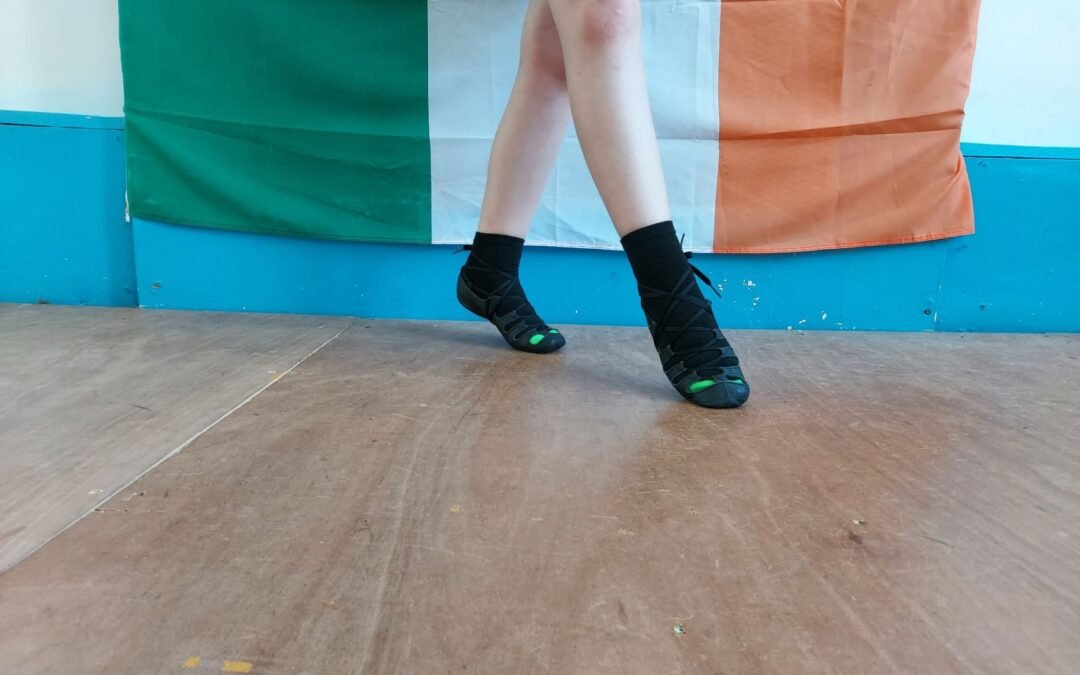
For many girls, the first Irish dance shoes are soft leather ghillies, with their distinctive laces crossing over the foot. Light and flexible, they let dancers point their toes, rise onto the balls of their feet and travel with a graceful, floating quality.
Soft shoes are worn for dances such as reels and light jigs. The challenge is to make movement look effortless while keeping excellent posture and control. The feet move quickly, but the upper body stays poised: that contrast is one of the most captivating features of the style.
The reel is a lovely example of this bright, buoyant energy. You can explore its story in our history of the Irish reel. For young dancers, learning reel steps helps develop balance, coordination and a feel for musical phrasing. Soft shoes teach an important lesson: lightness takes focus.
Heavy shoes: when the feet become percussion
Then comes the thrilling moment when the dancer’s feet don’t just move with the music. They help make it. Hard shoes, also called heavy shoes, have firm tips and heels that allow dancers to strike the floor and create crisp rhythms.
They’re used for dances such as treble jigs and hornpipes. Listen closely and you’ll hear patterns of taps, trebles and beats answering the melody. The dancer is both moving to the music and adding another layer to it.

The story behind that sound reaches back to the era of travelling dance masters in the 18th and 19th centuries. Dancers performed for audiences in homes and communities, and accounts describe people adapting sturdy everyday footwear, sometimes adding nails to the soles, to make their steps ring out more clearly. These early improvisations were a way to show rhythm and skill, long before modern tap shoes became familiar on stage.
The footwear and techniques changed over time, but the idea remains wonderfully vivid: the floor becomes an instrument. If your child is curious about how Irish dance combines movement and rhythm, our beginner’s guide to traditional Irish dance is a helpful next step.
Two shoes, two kinds of learning
Soft and hard shoes may sound very different, but the skills they build work beautifully together. In soft shoes, dancers practise:
- Lightness and balance through quick steps and small jumps.
- Posture and control while keeping movements tidy and poised.
- Musical awareness as they follow the melody and beat.
Heavy shoes bring a different set of challenges:
- Rhythm and timing as dancers fit precise sounds to the music.
- Strength and stamina through energetic footwork.
- Listening skills to keep the steps clear and in time.
At Kane Irish Dance, pupils progress through both traditions under Rebecca, the owner and World Champion instructor. They learn to listen carefully, not only for the tune, but for the rhythms beneath it. That musical understanding helps each dancer grow in confidence, whether they’re practising a soft-shoe reel or mastering their first treble.
A first pair of heavy shoes: a proud milestone
Getting heavy shoes for the first time is a special moment for a pupil. The new sound can feel exciting and a little surprising: suddenly, every step has a voice of its own. Learning to control that sound takes patience, practice and plenty of encouragement.
It’s also a brilliant moment for parents to celebrate. Their child is building on the balance and technique learned in soft shoes and adding a new layer of skill. At class, progress happens step by step, and that first confident, clear rhythm is a memory many families treasure.

Discover the sound for yourself
From the airy lift of ghillies to the vibrant beat of heavy shoes, Irish dance offers children a joyful way to learn movement, music and tradition. It’s one of the most engaging Irish cultural activities for families who want their children to build confidence, make friends and enjoy an active, screen-free hobby.
If your child would like to learn Irish dance, Kane Irish Dance welcomes new families from Huddersfield and across West Yorkshire to book a free, non-obligatory 15-minute induction. To arrange a visit, contact Stephanie, secretary for induction bookings, on 01484 958726. We’d love to help your child take their first step.