
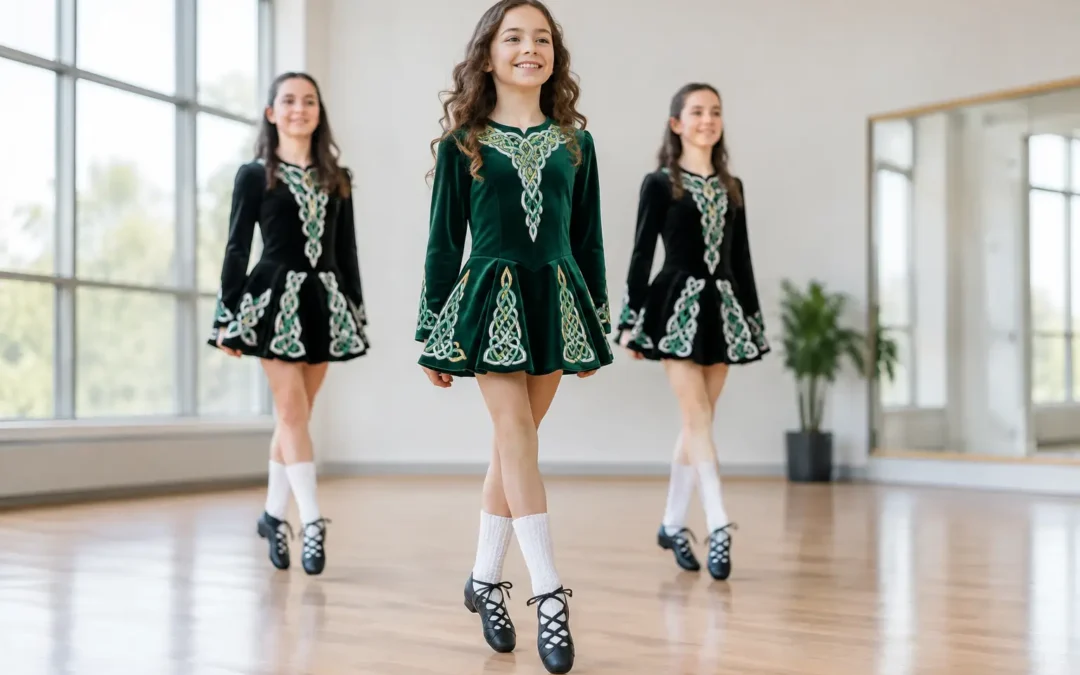
A child walks into their first class knowing nobody, hears the music begin and, a few weeks later, proudly shows a new step at home. An adult arrives convinced they have two left feet, then leaves smiling after learning their first reel. These are the moments behind the question: why learn Irish dancing? It is lively, skilful and rooted in a rich tradition, but it also gives people something that lasts well beyond the studio – belief in what they can do.
Irish dance is not only for children who already love performing, or for families with Irish heritage, or for people who have seen spectacular championship dancers on stage. It can begin with one trial class, comfortable clothes and a willingness to have a go. From pre-school age to adulthood, there is room to start at your own level and grow from there.
Why learn Irish dancing at any age?
Irish dancing brings music, movement and purpose together. Dancers learn to listen closely, remember patterns, work as part of a group and keep trying when a step takes more than one attempt. That combination makes classes feel exciting while quietly building valuable life skills.
For younger children, learning to follow a rhythm and take turns can be as meaningful as mastering the steps themselves. For school-age dancers, the structure of a class offers a positive goal outside the school day. Teenagers often value the chance to be active with friends and to work towards performances or competitions. Adults can enjoy a fresh challenge, a sociable evening and the satisfaction of learning a skill simply because they want to.
The right reason to start depends on the person. Some families are looking for a regular activity that gets their child moving. Others want a creative outlet, a route towards competitive dance, or a welcoming way to meet people. Irish dance can meet each of those aims, but its greatest strength is that it gives every dancer a clear next step.
Confidence grows one step at a time
Nobody needs to be naturally outgoing to enjoy dance. Confidence is often built through small, repeatable wins: remembering a sequence, joining in without being prompted, standing tall in a line or performing a step for family members. A good beginner class makes those wins feel achievable.
Irish dance is particularly helpful because progress is visible. At first, dancers may focus on posture, timing and simple foot patterns. Before long, they can recognise how much more controlled, musical and assured their movement has become. Children learn that effort matters, while adults rediscover that being a beginner can be enjoyable rather than embarrassing.
Performance opportunities can take that confidence further. Stepping onto a stage is a big moment, especially for a shy child, but it should never feel like a pressure-filled test. With patient preparation and encouragement from teachers and classmates, dancers learn to manage nerves, support one another and feel proud of showing what they have practised.
Discipline without losing the fun
Irish dancing asks dancers to concentrate. There are positions to remember, rhythms to hear and techniques to practise carefully. That discipline is part of what makes achievement feel so rewarding.
Yet structured training should still be enjoyable. For a five-year-old, that might mean learning through games, music and imagination. For a teenager preparing for a competition, it may mean setting more focused targets and refining detail. For adult beginners, it might mean a friendly class where everyone can laugh at a missed step and try again. Good teaching adapts the challenge without lowering the sense of accomplishment.
A joyful way to be active
Children and teenagers spend plenty of time sitting at school, travelling and using screens. Irish dance gives them a regular reason to move with energy and intention. It develops coordination, balance, stamina and body awareness, while the music makes exercise feel less like a chore.
For adults, it can be a welcome alternative to the gym. You do not need previous dance experience or a certain fitness level to begin. Starting gently is sensible, particularly after a long break from activity or where there are injuries to consider, and an experienced teacher can help learners work at an appropriate pace. As technique and confidence build, so does the enjoyment of moving more freely.
There is a practical side, too. Dance requires commitment, but it does not have to take over family life. A weekly class can offer a valuable routine, while dancers who want more can add holiday programmes, displays, extra training or competitive preparation when the time is right.
Friendship matters as much as footwork
Many people first come to dance for the steps and stay for the community. Learning alongside others creates a natural connection. Dancers encourage each other when a routine is tricky, celebrate a new pair of shoes or a competition result, and share the nervous excitement before a performance.
This matters for parents as well. A dance class should be a safe, positive environment where children are known as individuals and welcomed at their level. They should not need to prove themselves before they belong. When children feel secure, they are far more willing to take creative risks, ask for help and persevere.
Ceilí dance brings another side of Irish tradition to life. Rather than concentrating only on individual technique, dancers move in pairs and groups, learning formations and enjoying the shared energy of social dance. It is a wonderful reminder that Irish dance can be both ambitious and inclusive.
A pathway for performers and competitors
For some dancers, weekly classes are exactly what they need: a fun, meaningful hobby with a steady sense of progress. Others discover a real appetite for performance or competition. Irish dance offers both routes, and neither is more valid than the other.
A well-planned academy gives dancers a clear progression from beginner steps to more advanced technique, hard shoe rhythms, team dancing, displays and competitive opportunities. That clarity reassures families. You do not have to decide on day one whether your child will compete. They can begin by enjoying the class, then choose further goals as their interest and readiness develop.
Competition can teach resilience when it is approached healthily. A result is feedback, not a measure of a dancer’s worth. Dancers learn to prepare carefully, respect fellow competitors and return to class ready to improve. For ambitious dancers, expert coaching can lead towards major events and championship qualification. For everyone else, the same high standards of teaching help each student make the most of their own potential.
Starting is less daunting than it looks
The costumes, fast feet and polished performances associated with Irish dancing can make beginners think they need special knowledge before they walk through the door. They do not. Beginners start with the basics, usually in comfortable clothing and suitable footwear advised by their teacher. The focus is on learning safely, enjoying the music and settling into the group.
Parents may wonder whether their child is too young, too quiet or too busy. Adults may worry that they are too old or not flexible enough. These are understandable concerns, but age and experience do not decide whether someone can enjoy Irish dance. The better question is whether the class offers patient instruction, appropriate grouping and a kind atmosphere where progress is recognised.
At Kane Irish Dance, beginner-focused teaching gives dancers that first step into a wider journey. Families in Huddersfield and across West Yorkshire can choose an age-appropriate class, while teens and adults can start without needing any previous experience. A trial is a simple way to see whether the music, movement and community feel right.
Irish dance will challenge you, and that is part of its value. The first steps may feel unfamiliar; a new rhythm may take time; a performance can bring butterflies. But each class offers another chance to become stronger, more confident and more connected. Sometimes the most useful thing you can do is book that first class and let the first beat of the music do the rest.