
A child stands at the edge of the studio, listening to the music, watching older dancers move in time and wondering whether they will be able to do it too. That first feeling matters. When families compare group versus private dance lessons, they are often really asking a bigger question: where will my child feel confident enough to begin, keep trying and grow?
Both settings can be valuable. The right choice depends on your dancer’s age, personality, goals and experience, as well as what you hope dance will bring to family life. For many children, a welcoming group class is where friendships and confidence begin. For others, a little one-to-one attention can make the first steps feel far less daunting.
Group versus private dance lessons: the key difference
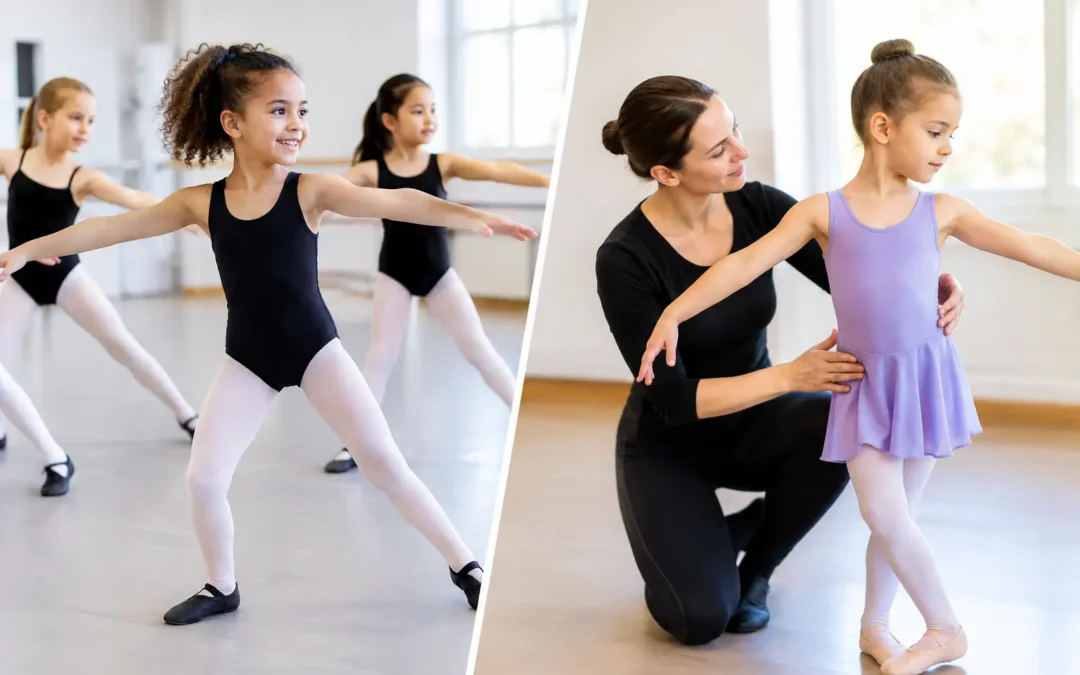
Group lessons bring dancers together at a similar stage of learning. They work through technique, rhythm, routines and dances as a team, learning not only from the teacher but from the people around them. In Irish dance, this shared energy is a real part of the experience. Children hear the beat, practise travelling steps together and celebrate when a class routine starts to look polished.
Private lessons offer individual attention. The teacher can focus closely on one dancer’s posture, timing, foot placement, strength and personal goals. This can be particularly useful where a dancer is preparing for a performance, working towards competition, returning after time away or needing extra help with a specific skill.
Neither option is automatically better. Group classes and private tuition solve different problems, and many dancers benefit from both at different points in their journey.
Why group dance lessons suit most beginners
For a complete beginner, a group class often removes pressure rather than adding it. Nobody is expected to arrive knowing the steps. Everyone is learning the language of the dance together: how to listen for the count, follow instructions, take turns and recover when something goes wrong.
Friendship makes commitment easier
Children are much more likely to look forward to a weekly activity when they recognise friendly faces at the door. Group Irish dance lessons create regular opportunities to build friendships across a shared challenge. They encourage dancers to support one another, practise together and feel proud of the class as well as themselves.
That sense of belonging is especially powerful for quieter children. A dancer who may not want to perform alone on their first day can still enjoy being part of a group routine. Over time, they often become more willing to put their hand up, take a lead position or perform in front of an audience.
Children learn by watching
Watching other dancers is a useful part of learning. In a well-taught class, beginners can see what a step should look like, hear how the rhythm fits the music and notice that everyone needs practice. Older or more experienced dancers can provide positive examples without making younger children feel left behind.
Group learning also builds important skills beyond dance. Dancers learn focus, patience, spatial awareness and how to work respectfully in a team. These are valuable habits for school, sport, performances and everyday confidence.
A structured route forward
A good group programme should not feel like a room full of children doing different things. It should have clear levels, achievable goals and age-appropriate teaching. Pre-school dancers need imaginative movement, coordination and fun. Primary-age beginners need simple technique, routine-building and encouragement. Teenagers and adults need a welcoming space where they can learn without feeling judged.
At Kane Irish Dance, group courses are designed to give new dancers that structured beginning while keeping the atmosphere upbeat, inclusive and enjoyable. As confidence grows, dancers can work towards displays, examinations, competitions or championship-level goals.
When private dance lessons can be the right choice
Private tuition offers something group classes cannot always provide: uninterrupted focus on one dancer. A teacher can slow down, repeat a movement several times, adjust technique straight away and set goals that are specific to that individual.
This can help a child who is enthusiastic but finding one aspect of dance difficult. Perhaps they understand a routine but struggle to keep their arms still, hear a particular rhythm or remember the order of steps. A short block of private lessons can help them make sense of the problem without feeling rushed.
Private lessons are also useful for ambitious dancers. As standards rise, tiny technical details make a difference. Dancers preparing for a competition may need detailed feedback on turnout, timing, presentation, stamina or how cleanly they finish a step. Individual coaching creates space for that precision.
For an adult beginner, private tuition can be an appealing first step too. Some adults feel more comfortable learning the basics before joining a course, especially if they have not exercised or danced for a long time. Others prefer the sociable atmosphere of a group from day one. There is no wrong answer, only the setting that helps you enjoy coming back.
The trade-offs families should consider
Private lessons are highly personalised, but they can be more expensive than learning in a class and do not naturally provide the same social experience. A dancer may improve a particular skill quickly, yet still need group practice to feel comfortable moving with others, following formations or performing as part of a team.
Group lessons are usually a more accessible way to begin and can offer excellent teaching, regular movement and a strong sense of community. However, the teacher’s attention is shared across the class. A child who needs extra repetition or has a very specific target may benefit from occasional individual support alongside their weekly group session.
It is also worth thinking about the child’s temperament. Some children thrive when they are one of many, absorbing the energy around them. Others initially prefer a quieter, more focused setting. A confident child is not always ready for private coaching, and a shy child does not always need it. Gentle encouragement, rather than labels, usually reveals what will help most.
Choosing by age and dance goal
Pre-school and younger children
For younger children, group dance is usually the strongest starting point. At this age, the priority is developing coordination, musicality, listening and a love of movement. Playing, copying, travelling across the room and joining in with friends make learning feel natural.
A private lesson may be appropriate in particular circumstances, but it is rarely necessary for a young beginner whose main goal is to have fun and build confidence. Look for a class that is calm, age-appropriate and led by teachers who understand how young children learn.
Children aged 5 to 12
A structured beginners’ group is often ideal for this age range. Children can learn the foundations of Irish dance in clear stages, develop fitness and enjoy the excitement of working towards a routine or display together. They also gain the reassurance of seeing other children make mistakes, improve and succeed.
If a child later shows a strong interest in performance or competition, private lessons may become a helpful addition. They do not need to replace the group class. In fact, continuing with peers can protect the friendships and enjoyment that first made dance special.
Teen dancers
Teenagers can benefit from both formats, depending on their aims. A group gives them community, shared motivation and opportunities to work on performance pieces together. Private coaching can support more advanced technique, competition preparation or individual targets.
For a teenager joining for the first time, the most important factor is a class culture that feels welcoming. Starting something new can feel brave at any age, particularly when school life is already busy. A supportive academy should make the first session feel achievable, not intimidating.
Adults starting Irish dance
Adults do not need previous dance experience, special fitness or the confidence to perform to begin. A friendly beginner group can be a brilliant way to meet people, move more and enjoy a new challenge. It often feels less formal than people expect.
Private tuition can suit adults with a specific goal, an unpredictable timetable or a wish to build confidence before joining others. But if friendship, laughter and regular motivation are part of what you want, a group course may offer far more than steps alone.
Questions to ask before you book
Before deciding, consider what you want dance to achieve over the next few months. Is the priority confidence, fitness, friendship, a new hobby, performance opportunities or competition progress? Then think honestly about what will make attendance sustainable for your family.
Ask how beginners are introduced, whether classes are grouped by age and ability, and how dancers progress when they are ready for more challenge. Find out whether the academy offers trial sessions or an induction appointment. A first visit can tell you far more than a timetable ever could: does your child relax, join in and leave wanting to return?
For parents, it is also sensible to ask about teaching experience, safeguarding and the standards expected in class. Warmth and high expectations belong together. Children flourish when they know they are safe, supported and capable of improving.
Let the first step be simple
The best choice is the one that gives your dancer a positive start and a reason to keep going. A group class may offer the friendship and shared excitement they need. A private lesson may provide the reassurance or focused coaching that helps them take that first step. Begin where they can feel comfortable, then let their confidence and ambitions guide what comes next.