
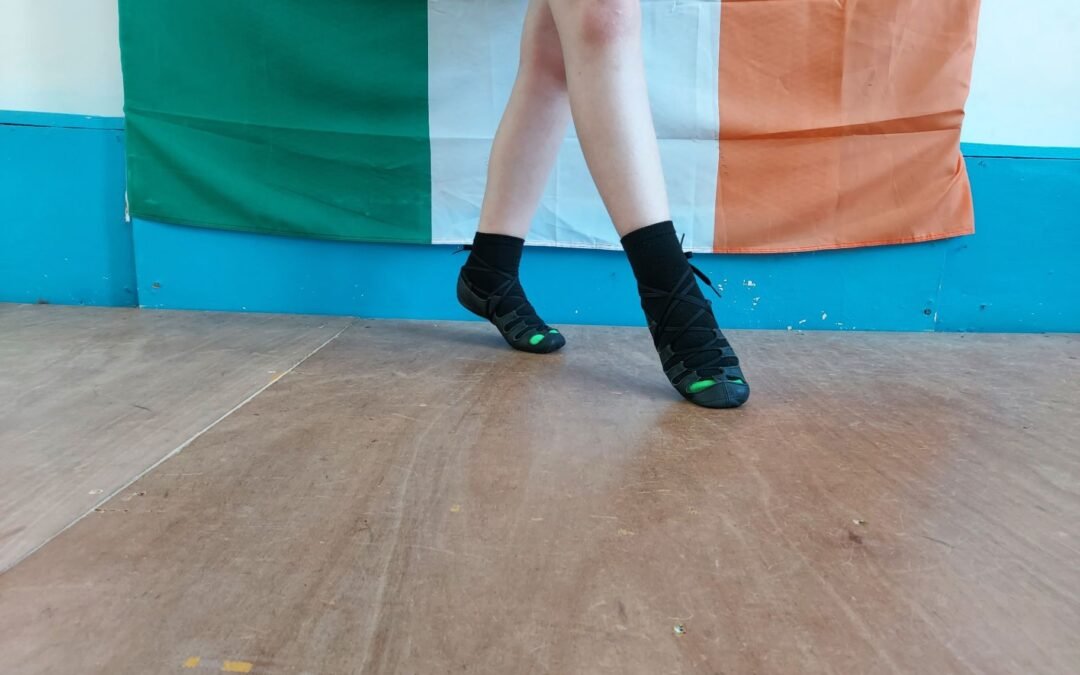
Before the first step, there’s a sound: a fiddle tune lifting into the room, a lively pulse taking hold, and feet ready to answer. In Irish dance, music isn’t simply a background track. It shapes the movement, sets the pace and brings every dancer into the same joyful conversation.
A melody made for movement
For generations, dancers and musicians shared the same spaces and responded to one another in real time. A musician could repeat a phrase or adjust the tempo; dancers listened, found the beat and made it visible through their steps. That close relationship helped traditional Irish dance grow as a vibrant musical tradition as much as a dance form.
Tune structures also give dancers a musical map. Many tunes have two parts, each repeated, creating familiar landmarks in the melody. Once dancers recognise those phrases, they can anticipate what comes next and settle into the rhythm with greater confidence.
Historical accounts and collections help show just how closely tunes and dancing were linked. The Irish Traditional Music Archive shares P. W. Joyce’s writing on dance, including observations that connect music with the steps and forms people danced.
The sound of fiddle, pipes and whistle
The melody is often carried by instruments with wonderfully distinct voices:
- Fiddle: Bright, expressive and full of possibilities, the fiddle can carry a tune while adding ornaments and little flourishes that make it sparkle.
- Uilleann pipes: This uniquely Irish bagpipe has a warm, distinctive sound. Its melody, drones and regulators can create a richly layered musical texture.
- Tin whistle: Clear, nimble and portable, the whistle brings a light, ringing tone to familiar dance tunes.
These instruments can all make the melody dance, though musicians don’t need to play as a fixed group. The combination changes from setting to setting. What matters is that the tune gives dancers something to hear, feel and respond to.
Jig, reel and hornpipe: hearing the difference
Different rhythms bring different qualities to the floor. A jig is commonly in 6/8, with a lilting, skipping feel. A reel is usually in 4/4, with a more continuous, propulsive flow. A hornpipe is also generally in 4/4, but often has a more measured, swung character. Tempo and style can vary, so listening closely is part of the fun.
Those rhythmic differences are not just details for musicians. They help dancers understand how to shape their steps: whether the music feels light and lilting, quick and driving, or steady and emphatic. For another look at the reel’s distinctive place in dance, explore The History of the Irish Reel: Dance Through the Ages.
When the floor becomes part of the music
In heavy shoes, a dancer doesn’t only follow the rhythm: they add to it. Clicks, taps and beats answer the tune, turning the floor into a percussion partner. The music leads, the feet respond, and together they create a sound that’s unmistakably exciting.

A bodhrán can add another layer of pulse in some traditional music settings. It’s worth noting that its place in Irish music evolved over time; it wasn’t always the standard accompaniment for dance tunes. Today, when it is played alongside the melody, its lively beat can reinforce the rhythm without taking the tune’s place.
That blend of instruments and footwork makes Irish dance music so captivating. Even a beginner can start to hear how a rhythm invites movement, and how a confident dancer can make that movement ring out.
Learning to listen at Kane Irish Dance
At Kane Irish Dance, pupils don’t just practise steps; they learn to listen for the rhythm that makes each dance come alive. Rebecca, the owner and World Champion instructor, helps dancers notice the beat, follow the phrasing and connect their movements to the music.
That skill grows with practice. A pupil might begin by finding the pulse, then learn to recognise how a jig feels different from a reel, or how heavy-shoe beats fit with a tune. Listening closely supports timing, focus and musical confidence, and it makes every step feel more connected.
If you’re new to all of this, our beginner’s guide is a lovely place to start: Traditional Irish Dance 101: A Beginner’s Guide to Mastering History and Rhythm introduces the core rhythms and where they came from.
The school is registered with CRN organisation Ireland, where pupils can work towards grades and badges as well as awards and competition opportunities. For families exploring irish cultural activities, it’s a lovely way to experience Irish tradition through music, movement and personal progress.

If your child would like to learn irish dance, they’ll discover more than steps: they’ll begin to hear the music differently. A tune’s pulse becomes a guide, a phrase becomes a cue, and the floor becomes a place to express what the ears have found.
Come and hear the rhythm for yourself
The music of Irish dance has travelled through generations, carried by instruments, dancers and listeners who share a love of its lively rhythms. That’s the magic: the tune may begin with a musician, but it comes fully alive when dancers answer.
Kane Irish Dance welcomes families to book a free, non-obligatory 15-minute induction and see how pupils begin learning to move with the music. Contact Stephanie, the secretary for induction bookings, on 01484 958726 to arrange a visit.