
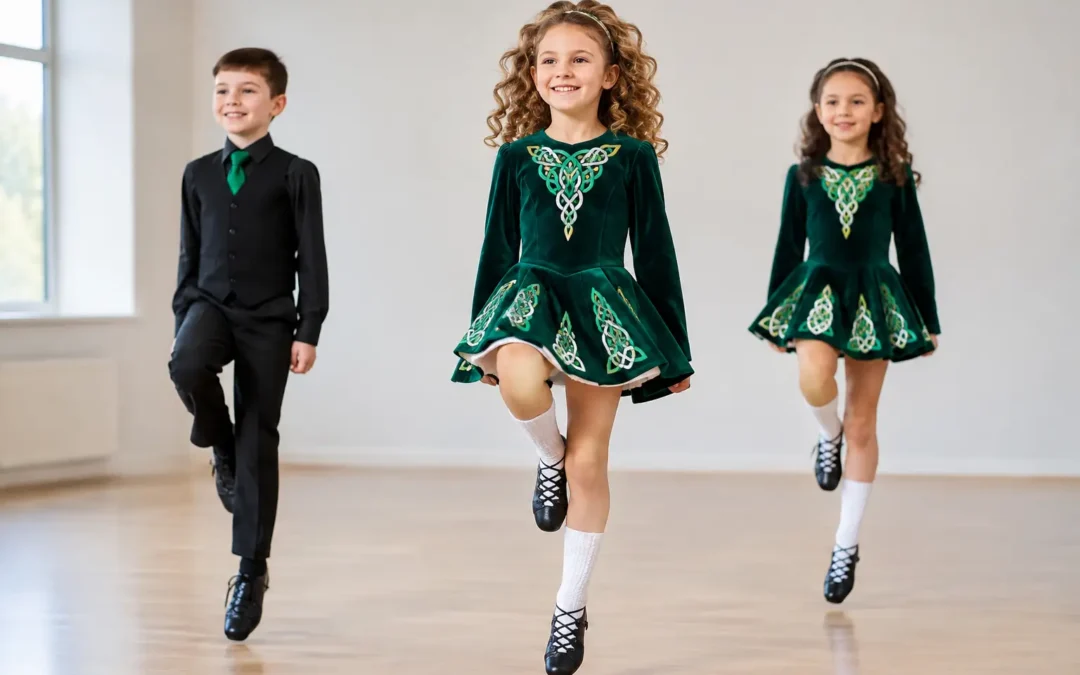
A child who arrives at class with energy to spare will often leave happily tired, standing taller and talking about the step they have learned. That is one reason parents ask, is Irish dancing good exercise? Yes – when it is taught progressively and enjoyed regularly, it is a lively whole-body activity that can support fitness, coordination and confidence at the same time.
Irish dance is not simply a way to burn off steam. Children learn to listen closely, remember patterns, work towards a goal and become part of a team. For adults, it offers a welcoming route back into movement without needing previous dance experience. The pace can be adapted for beginners, while experienced dancers can keep challenging themselves through performance and competition training.
Is Irish Dancing Good Exercise? The Short Answer
Irish dancing can be excellent exercise because it asks the body to move with purpose. Soft-shoe dancing develops light, quick footwork and control, while hard-shoe dancing adds rhythmic precision and a stronger impact through the feet. Classes also include posture, balance, travelling steps, turns and repeated practice, so dancers are rarely standing still for long.
How demanding a class feels depends on the dancer’s age, experience and the style of work being practised. A first lesson should feel achievable, not overwhelming. As technique improves, longer routines, faster music and more detailed footwork naturally increase the physical challenge.
For children, this matters because activity is more likely to become a habit when it feels exciting rather than like a chore. They may be concentrating so hard on the music and the next step that they do not realise how much they are moving.
What Fitness Does Irish Dance Build?
Cardiovascular fitness and stamina
Many Irish dance routines are energetic. Repeating steps to music can raise the heart rate, particularly when dancers practise a full reel, jig or hard-shoe routine without long pauses. Over time, regular classes can help dancers develop the stamina to keep their timing and technique steady even when they are tired.
This is especially useful for children who do not naturally enjoy team sports. Dance gives them a structured way to be active, but the focus is on rhythm, individual progress and shared achievement rather than scoring goals or being picked for a side.
Stronger legs, feet and core control
Irish dancing makes the legs work hard. Hops, skips, jumps and controlled landings engage the calves, thighs and glutes, while precise foot placement strengthens awareness through the ankles and feet. Good teaching also places real emphasis on posture. Dancers learn to support themselves through their core instead of letting their upper body wobble as their feet move quickly underneath them.
Strength in dance is not about lifting the heaviest weight. It is about control: holding a position, landing softly, maintaining turnout safely and repeating movements with care. This type of body awareness can benefit everyday movement as well as dance.
Balance, coordination and agility
Fast footwork asks the brain and body to work together. A dancer may need to remember a sequence, keep in time with the music, hold their posture and travel across the room, all within a few seconds. That combination develops coordination in a practical, enjoyable way.
Balance is built gradually. Younger dancers might begin with simple skips and shapes; older or more experienced dancers may work on leaps, turns and more complex rhythmic steps. Progress comes from learning sound foundations, not rushing to the hardest movement.
Mobility and body awareness
Irish dance classes should include a suitable warm-up and cool-down. These help prepare the body for movement and give dancers a chance to notice how they feel. Mobility, flexibility and good alignment can support cleaner technique, although dancers do not need to be naturally bendy to begin.
Parents are sometimes surprised by how much concentration this involves. Learning where to place a foot, how to land and when to move can help children understand their bodies with greater confidence and care.
Exercise That Builds More Than Fitness
The benefits of Irish dance extend beyond physical activity. A new beginner may start by copying simple steps, but soon they are learning to persevere when something feels unfamiliar. That small moment of getting a rhythm right or completing a routine can make a real difference to self-belief.
Classes also create positive social connection. Children share the nervous excitement of their first performance, celebrate each other’s progress and form friendships around a common interest. For teenagers, a dance community can offer a valuable place to keep moving, work towards goals and feel known.
For adults, Irish dance can be a refreshing change from exercise that feels repetitive or intimidating. A beginner course allows people to learn at their own pace, laugh at the inevitable muddles and enjoy the satisfaction of making music with their feet. You do not need to have danced as a child to belong in the room.
Is Irish Dancing Enough Exercise on Its Own?
It can be a valuable part of an active week, but the answer depends on how often a dancer attends, how active the sessions are and their wider lifestyle. A child who dances once a week may gain fitness, coordination and enjoyment, while also benefiting from active play, walking, cycling, swimming or another activity on other days.
For dancers attending multiple classes or training towards displays and competitions, Irish dance may form a larger part of their exercise routine. Even then, variety remains helpful. Rest, sleep, nourishing food and time away from intense training all support healthy development.
The goal is not to turn every child into an athlete. It is to help them find movement they enjoy enough to continue. A child who loves dancing is far more likely to practise, participate and build a positive relationship with exercise over time.
Starting Safely as a Beginner
The best first step is a class that understands beginners. Young children need clear demonstrations, encouragement and short, engaging activities. Older beginners often need reassurance that nobody expects them to know the steps already. Adult learners need the same welcome, with teaching that respects different fitness levels and gives everyone time to learn.
A good teacher will build skills in stages, correct technique kindly and make sure dancers warm up before more energetic work. Comfortable clothing that allows movement is usually enough for a first class. Specialist dance shoes can come later, once a dancer has had the chance to see whether Irish dance is right for them.
If a child has an injury, recurring pain or a health concern, it is sensible to seek appropriate medical advice and tell the teacher before class. Pushing through pain is not a badge of commitment. Strong dancers learn when to work hard and when to rest.
From First Steps to Real Achievement
One of the joys of Irish dance is that it gives dancers somewhere to go. A first class might be about trying a skip or keeping the beat. Later, dancers can work towards new grades, displays, team dances or competition opportunities if that is what motivates them. Others may simply enjoy a weekly class and the friendships that come with it.
At Kane Irish Dance, that pathway is designed to feel welcoming from the start, with expert teaching and room for every dancer to grow in their own direction. Progress is not only measured by medals or difficult steps. It can also be seen in the child who walks into class independently, the teenager who performs with pride, or the adult who decides it is never too late to try something new.
The most helpful way to judge whether Irish dance is good exercise is to watch what happens after a few classes: a stronger step, a brighter mood, new friends and a dancer who cannot wait to come back next week.