
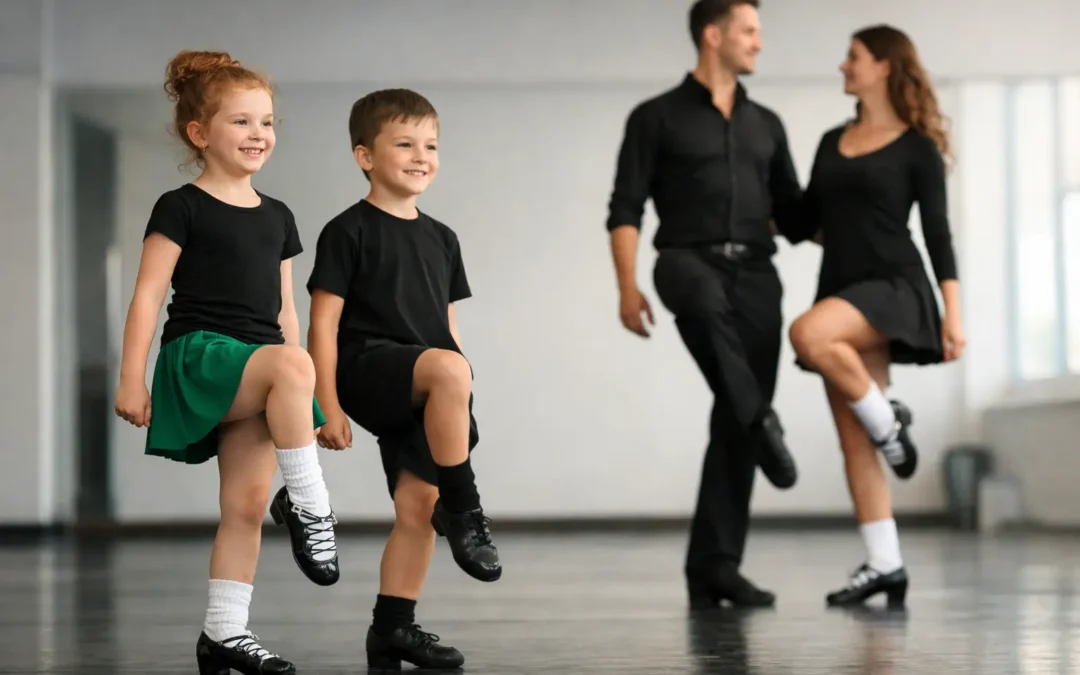
A child stands a little taller after learning their first reel. An adult who expected to feel nervous finds themselves laughing through a new step with the group. Those moments are part of the top benefits Irish dance brings: it asks dancers to work hard, gives them something tangible to improve, and makes room for real connection along the way.
Irish dance is known for its fast footwork, musical precision and unmistakable energy, but its value reaches far beyond a performance costume or competition result. For children, teenagers and adults alike, it can become a steady, enjoyable part of the week that supports physical health, confidence and a genuine sense of belonging.
Top benefits of Irish dance for body and mind
Irish dance is active from the very first class. Whether dancers are practising the light, springy movements of soft shoe or learning the rhythms of hard shoe, they are developing stamina, balance, coordination and strength. It is a whole-body activity, even though the feet often take centre stage.
For younger children, repeated steps and patterns improve body awareness in a way that feels like play. They learn how to listen, move safely through a space and control their energy. As dancers grow, training can support stronger posture, flexibility and cardiovascular fitness. Teenagers often appreciate having an activity that feels purposeful as well as social, particularly when schoolwork and screen time compete for attention.
Irish dance also gives the brain plenty to do. Dancers remember sequences, respond to music, count rhythms and make small adjustments when a step is not quite right. This combination helps develop concentration and listening skills. It is not a shortcut to effortless focus – dancers still need encouragement and practice – but the structure of a class gives them a positive reason to keep trying.
For adults, the mental lift can be just as meaningful. Learning something unfamiliar creates a welcome break from routine, while movement and music can help people leave the pressures of the day at the door. Beginner classes should feel accessible, not intimidating. No previous dance experience is needed to enjoy the satisfaction of making progress one class at a time.
Confidence grows through achievable progress
Confidence in dance rarely arrives because someone is told they are brilliant. It grows when they realise they can do something that once felt difficult. A child who could not remember a sequence learns to dance it independently. A beginner who felt unsure of the rhythm starts to hear where their feet should land. Those are earned wins, and they carry weight.
Irish dance has clear stages of development, which makes progress easier to see. Dancers can begin with fundamental posture, timing and basic steps before moving towards more detailed technique, harder rhythms, displays or competition preparation. Some will enjoy working towards medals and championship qualification; others will be proud simply to perform at a school event or in front of family. Both goals matter.
This is one reason expert teaching is so valuable. Good instruction sets high standards while making the next step feel possible. It also recognises that dancers learn differently. One may need more repetition, another may respond to a clear technical correction, and another may need time to build confidence before performing. Progress should be encouraged without turning every class into a comparison.
A place to make positive friendships
Children do not only attend dance lessons to learn steps. They come to be part of a group. Over time, they share the nerves before a display, celebrate mastered routines and encourage one another when training feels challenging. These shared experiences can create friendships that extend well beyond the studio.
Irish dance is especially good at balancing individual development with group spirit. Each dancer works on their own timing and technique, but they also learn to take turns, watch others respectfully and contribute to a team performance. In ceilí dancing, the social side becomes even more visible. Dancers work together in sets and formations, learning how their own movement supports everyone else.
For parents, a welcoming dance community offers reassurance too. It matters that a child joins an environment where they are known, supported and safely guided by adults who understand their development. A friendly atmosphere should never mean low expectations. Children often thrive when kindness and clear boundaries sit side by side.
Discipline without losing the joy
Irish dance teaches commitment in a practical, age-appropriate way. Dancers need to arrive ready, practise key points between classes and keep going when a new routine takes longer than expected. They learn that improvement is built through consistent effort rather than luck.
That discipline can be particularly helpful for children who enjoy having a goal. Preparing for a performance or competition gives practice a purpose, while regular feedback helps dancers understand what to work on next. They may learn to manage disappointment too. Not every competition brings the result they hoped for, and not every class feels easy. With the right support, those experiences build resilience rather than reducing confidence.
There is a trade-off to consider. Performance and competitive pathways require extra commitment, particularly as dancers advance. Families need to decide what suits their child and their timetable. Irish dance does not have to lead to competition to be worthwhile, however. Recreational dancers receive the same benefits of movement, friendships and achievement, with the freedom to enjoy classes at a pace that works for them.
Performance gives dancers a voice
Performing can be a powerful confidence-builder because it gives practice a visible outcome. Standing with a group at a local event, dancing at a celebration or taking part in a showcase asks dancers to be brave in a very specific way. They learn how to manage nerves, stay focused and recover if a small mistake happens.
Not every child will rush towards the front at first, and that is perfectly normal. A supportive academy introduces performance opportunities thoughtfully, allowing confidence to build through rehearsals and shared experiences. Some dancers will love the spotlight. Others may prefer the security of a group routine before considering a solo. Both are valid starting points.
The skills developed through performance can travel into other areas of life. Speaking in class, joining a new club or taking part in a school presentation may feel less daunting when a young person has already experienced the pride of doing something they once found scary.
An activity with room to grow
One of the lasting benefits of Irish dance is that it can meet dancers where they are. Pre-school children can enjoy music, movement and simple routines. Primary-age dancers can build solid foundations while making friends. Teens can pursue ambitious technical goals or stay active in a familiar community. Adults can start from scratch, return after years away or enjoy the social energy of ceilí.
A clear pathway matters because interests change. The child who joins for fun may later want to perform. The dancer who begins with a trial class may discover a passion for competitions. Equally, someone who wants a weekly hobby should not feel pressured into a route that does not suit them. The best dance experience combines opportunity with choice.
At Kane Irish Dance, that means beginner-friendly teaching alongside the standards and encouragement needed for dancers who want to progress. From a first class to performance training, each stage should feel like a place to belong and a chance to achieve something meaningful.
If Irish dance has caught your child’s attention, or you have been thinking about trying it yourself, the first step does not need to be a big one. A trial class is simply an opportunity to hear the music, meet the group and see how good it feels to start.