
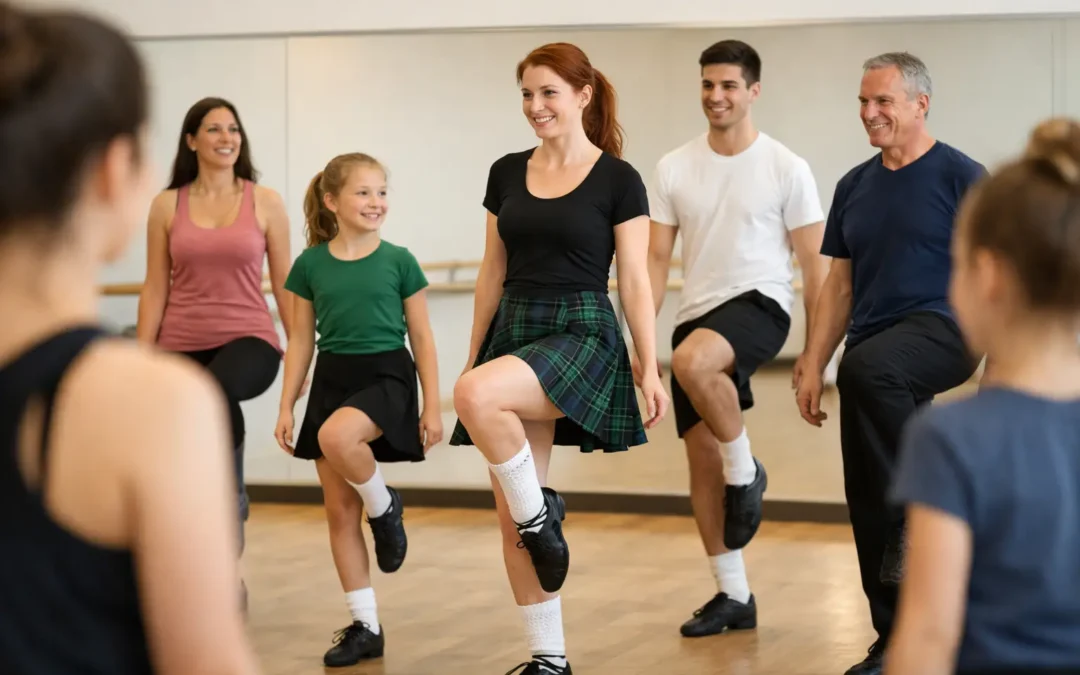
A child who is shy at the school gate can be the one proudly counting steps at home within a few weeks. An adult who has admired Irish dancing for years can finally stop watching from the sidelines and give it a go. Irish dance classes for beginners are not about arriving with perfect timing, expensive shoes or previous dance experience. They are about taking a first step in a friendly room, learning at your own pace and finding out what you can achieve.
At Kane Irish Dance, beginners are welcomed as future dancers, whether their goal is a cheerful weekly activity, a new circle of friends, a performance opportunity or a longer journey towards competition. Every confident dancer starts by learning the basics.
What happens in Irish dance classes for beginners?
Your first class should feel encouraging, well organised and active. Beginners are introduced to the rhythm, posture and simple foot patterns that sit at the heart of Irish dance. Rather than being expected to remember everything immediately, dancers repeat short sequences, practise counting the music and build coordination one step at a time.
For children, the lesson is designed to hold attention and make movement enjoyable. They learn how to listen, take turns, follow instructions and celebrate their progress alongside others. These small moments matter. Dance can give children a positive place to channel energy, develop resilience and feel proud of working towards a new skill.
Adult beginners are taught with the same care and respect. Starting later in life is not a disadvantage, and there is no need to feel embarrassed about being new. A well-led adult class breaks down each movement clearly, allowing time to practise before adding more speed or complexity. You may be surprised how quickly familiar rhythms begin to feel natural.
You do not need to arrive ready for a performance
One of the biggest worries for new families is whether their child needs the right outfit, the right shoes or a background in dance. The simple answer is no. Comfortable clothing that allows easy movement is ideal for a first session, along with a drink of water. Many beginners start in suitable trainers or soft footwear before deciding whether they would like to continue and purchase Irish dance shoes.
Irish dance includes both soft shoe and hard shoe styles, but beginners do not need to tackle everything at once. Soft shoe work helps dancers learn lightness, posture, turnout and travelling steps. Hard shoe dancing brings the distinctive sound and percussion that many people recognise from stage shows, but it is introduced when a dancer is ready for it.
This gradual approach is especially helpful for young children. It gives them time to develop safe technique and confidence without feeling rushed. For adults, it means enjoying the satisfaction of learning something new without the pressure of keeping up with experienced dancers.
The benefits reach beyond the dance floor
Irish dance is energetic, musical and wonderfully focused. It can improve fitness, balance, coordination and stamina, but its value is not limited to physical activity. Dancers learn to keep trying when a step feels difficult, to concentrate through a full routine and to support classmates who are learning beside them.
For parents, these benefits often show up outside class too. A child may become more comfortable speaking up, more willing to practise independently or more confident joining new activities. The structure of dance provides clear goals, while the community element gives children a real sense of belonging.
Teenagers can find a valuable outlet in a class that combines challenge, friendship and achievement. Irish dance is individual enough for dancers to develop their own strengths, yet social enough to create strong bonds through shared routines, displays and ceilí dancing. It can be a refreshing change from activities centred on screens or academic results alone.
Adults often come for the exercise and stay for the enjoyment. Irish dance offers a lively way to move, laugh and meet people, particularly for those who do not feel drawn to a conventional gym session. Progress is personal. Some learners love the social side of ceilí dance, while others enjoy setting themselves the challenge of mastering a new rhythm.
Choosing the right beginner class
The best starting point depends on age, confidence and what you hope to gain. Pre-school dance classes should be playful, imaginative and carefully paced, with teachers who understand early-years development. Children aged five to 12 benefit from clear routines, supportive correction and opportunities to grow through achievable goals.
For teens, it helps to choose a class where being a beginner is normal. Joining a new activity can feel daunting at this age, so a welcoming group and teacher-led support make a genuine difference. Adult beginner courses should similarly be designed for complete beginners, not simply adapted from an advanced class.
When comparing Irish dance schools, look beyond the timetable. Ask whether teachers are experienced, whether staff and volunteers are appropriately checked, and how new dancers are introduced. A good academy will explain what to wear, where to go and what to expect, so the first visit feels exciting rather than uncertain.
It is also worth considering the pathway available. Not every beginner wants to compete, and nobody should feel pushed into it. However, it is reassuring to know that a school can offer the next opportunity when a dancer is ready, from displays and local events to competitions and championship-level training.
Progress should feel exciting, not pressured
Irish dance rewards regular attendance and gentle practice at home, but progress does not look identical for every dancer. One child may quickly remember routines but need time to build confidence in front of others. Another may love performing from day one yet need extra repetition to refine technique. Both are progressing.
A supportive teacher notices these differences and gives feedback that is specific and kind. The aim is not simply to learn more steps. It is to help dancers understand how to improve, take pride in effort and enjoy the process. Achievement can mean performing at a community event, completing a first full dance, earning a place in a team or deciding to work towards a competition.
There are trade-offs to consider if your family is interested in competitive Irish dance. It brings exciting goals, performance experience and a strong sense of accomplishment, but it also requires commitment to regular classes, practice and, at certain levels, travel. The right time to explore competition is when a dancer is enthusiastic and technically ready, not because they feel they have to prove themselves.
Making the first class easier
A trial class is often the simplest way to begin. Arrive a little early, wear comfortable clothes and let the teacher know if your child is nervous or if you have any questions. It is perfectly normal for young dancers to watch for a few minutes before joining in. The goal of the first session is not to get every step right. It is to leave feeling pleased they tried.
Parents can help by keeping the conversation positive afterwards. Instead of asking whether every move was correct, ask what music they liked, which step they remember or whether anyone made them laugh. This keeps attention on enjoyment and effort, which is where confidence grows.
Adults deserve the same patience. Your feet may not do exactly what you ask them to on week one, and that is part of the fun. With regular tuition, the counts become clearer, the movements more familiar and the music increasingly impossible to resist.
The first step into Irish dance can lead to far more than a new hobby. It can become a weekly source of energy, friendship and pride, with a place for every beginner to grow at their own pace. Book a trial class when you are ready, and let the first few steps be the start of something meaningful.