
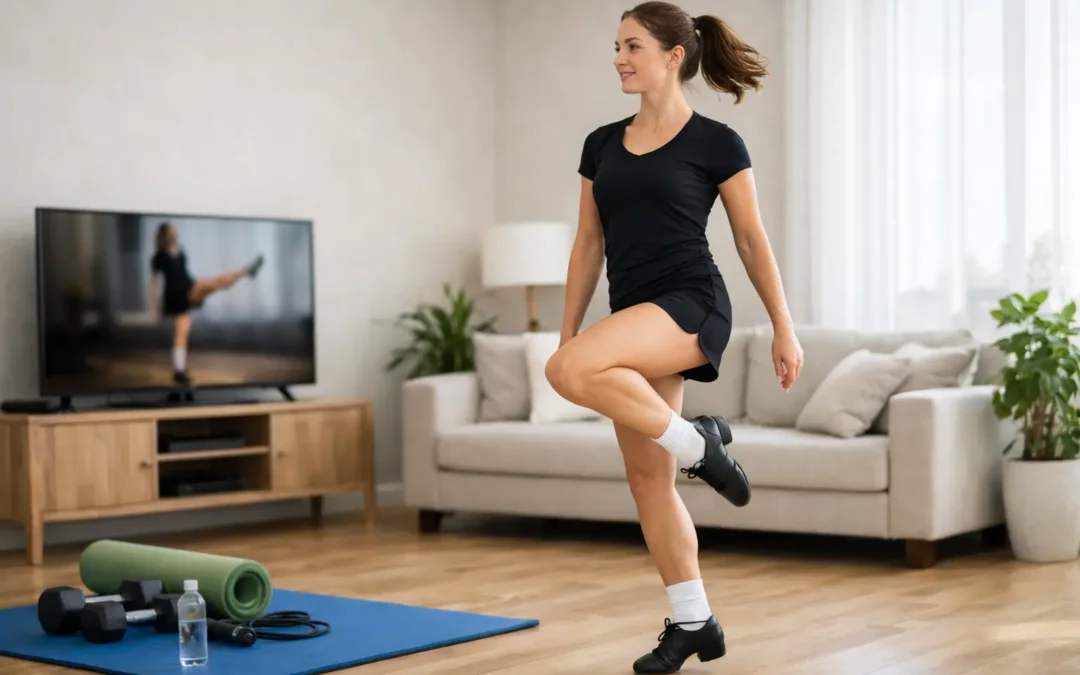
A lively reel can turn a quiet living room into a proper energy boost – but Irish dance fitness at home is not about copying advanced championship steps at speed. It is about finding the bounce, posture, rhythm and enjoyment that make Irish dance such a brilliant way to move. With a little clear floor space and a supportive approach, Irish dance fitness exercises at home can help children, teens and adults feel stronger, more confident and more connected to music.
For families, these short sessions can be a cheerful after-school reset. For adults who have always wanted to try Irish dance, they are a friendly first step without the pressure of getting everything right. The aim is progress, not perfection.
Why Irish dance makes a brilliant home workout
Irish dance asks the whole body to work together. The feet move quickly and precisely, while the core supports balance, the legs build stamina and the arms stay controlled. Even beginner movements can raise the heart rate and develop coordination.
It also gives exercise a purpose. Rather than counting repetitions in silence, dancers can listen for the beat, practise a pattern and enjoy the satisfaction of feeling a movement become cleaner. Children often respond especially well to that challenge: they are not simply exercising, they are learning a skill.
There is a trade-off, though. Home practice is excellent for building fitness and reinforcing basic movement, but it cannot fully replace teacher-led tuition. Irish dance technique is detailed. Small adjustments to turnout, posture, ankle placement and timing make a significant difference to both confidence and safety. Think of home sessions as useful preparation and enjoyable practice, then use classes to learn the foundations properly.
Set up a safe place to move
Before the music starts, choose the surface carefully. A clear, non-slip area is far more important than a large room. Move rugs, toys, low tables and anything that could catch a foot. Trainers with a light grip are often a sensible option for fitness sessions, particularly on laminate, tiles or wooden floors. Avoid socks on a slippery surface.
Keep jumps low if you live in a flat, have sensitive knees or are returning to exercise after a break. A gentle bounce and controlled stepping can still feel wonderfully Irish without placing unnecessary impact through the joints. Younger children should have an adult nearby, especially where furniture or hard flooring is involved.
Start with five minutes of easy movement. March on the spot, circle the shoulders, roll through the ankles and gently lift each knee. The goal is to feel warm, not exhausted. If anyone feels pain, dizzy or unusually short of breath, stop and rest.
Irish dance fitness exercises at home
The following ideas focus on rhythm, strength and control. They are deliberately beginner-friendly, so they suit a first-timer, a dancer revisiting classwork or a family wanting to move together.
Find your tall Irish dance posture
Stand with your feet comfortably under your hips, knees soft and your weight even. Imagine a string lifting the crown of your head towards the ceiling. Keep your chest open, shoulders relaxed and tummy gently engaged.
Irish dance is known for a beautifully held upper body. For a fitness version, place your hands lightly by your sides or behind your back if that feels comfortable. March slowly for eight counts, then pause and check: are you leaning forwards, gripping your shoulders or letting your knees collapse inwards? Reset and repeat.
This may look simple, but it teaches body awareness. Good posture gives the legs a stronger base for every faster exercise that follows.
Build rhythm with toe taps
Tap one toe gently in front, return it beneath you, then change feet. Start slowly and aim to land quietly and accurately. Try four taps on the right, four on the left, then alternate right and left for eight counts.
Once the pattern feels steady, add a small knee lift between each tap. Keep the movement compact. The challenge is not how high the leg goes, but whether you can hold your balance and stay on the beat.
For younger children, turn this into a rhythm game. Clap a simple count of eight and ask them to match it with their feet. For adults, use the same exercise as a low-impact cardio interval for 30 seconds, followed by 30 seconds of easy marching.
Try controlled knee lifts
Knee lifts develop the leg strength needed for lively Irish dance movement. Stand tall, lift the right knee to a comfortable height, lower with control, then lift the left. Keep the supporting foot grounded and avoid twisting through the hips.
Begin with sixteen alternating lifts. If balance is tricky, place one hand on the back of a sturdy chair. As confidence grows, add a gentle hop on the supporting foot before switching sides. That small change will quickly increase the heart rate, so take it at your own pace.
A dancer does not need to leap high to work hard. Clean, controlled lifts are more valuable than rushed movement, particularly for beginners.
Practise a soft-shoe reel bounce
The reel has a bright, driving feel that makes it ideal for a short fitness burst. Begin by bouncing lightly through the knees with tiny, springy steps on the spot. Keep the heels close to the floor at first and let the ankles do some of the work.
Try eight gentle bounces, then eight alternating toe taps. Repeat the sequence three or four times with a short rest between rounds. If you know a suitable reel, use it. If not, count aloud: one, two, three, four, five, six, seven, eight. Clear counting helps dancers develop musical awareness before they worry about complicated steps.
Children may enjoy giving each round a performance focus: tall posture for one round, quiet feet for the next, then a big confident smile. These details build stage presence as well as fitness.
Strengthen balance with single-leg holds
Irish dance requires dancers to move quickly while staying beautifully placed. Single-leg balance helps create that control. Stand on one foot for ten seconds, with the other toe resting lightly in front. Change sides, then repeat.
To progress, lift the resting toe slightly away from the floor or make small circles with the free ankle. Keep a chair, wall or adult close by if needed. A wobble is not failure – it is the body learning how to make tiny corrections.
For older dancers and adults, add eight slow calf raises on each leg. Rise through the ball of the foot, pause at the top, then lower gently. This supports ankle strength, but it should never be forced. Quality matters more than height.
Finish with a calm cool-down
Bring the energy down gradually with a slow walk around the room. Stretch the calves by stepping one foot back and keeping the heel down, then swap sides. Gently stretch the front of each thigh while holding a chair or wall for balance, and loosen the shoulders with slow circles.
A cool-down is a useful moment to ask children what felt easiest and what they would like to try again. That conversation helps them see improvement as part of learning, rather than judging themselves against someone more experienced.
Make practice feel achievable
A ten to fifteen minute session is plenty for most beginners. A good rhythm might be two or three home sessions across the week, leaving time for rest, school, family life and other activities. Long, exhausting practices can make children lose enthusiasm and can encourage adults to push through fatigue with poor technique.
Keep one small goal for each session. It could be holding tall posture for a full eight count, matching toe taps to the music or completing three rounds of knee lifts with control. Specific goals give dancers something to celebrate. They are also easier for parents to encourage than a vague instruction to “practise more”.
If your child is already taking lessons, ask them to show you a movement their teacher has approved for home practice. Let them be the expert for a few minutes. Teaching a parent or sibling can be a lovely confidence boost, and it reinforces what they have learned in class.
When a class helps you move forward
Home fitness can spark a real love of Irish dance, but the magic often grows when dancers share the experience with others. In a class, children make friends, learn formations and ceilí work, perform as part of a team and receive feedback that helps them improve safely. Adults gain the same encouragement, with the added reassurance that everyone starts somewhere.
At Kane Irish Dance, beginner teaching gives dancers a clear route from their first steps towards displays, competitions or simply the pleasure of a weekly class they look forward to. A trial class is a relaxed way to see how expert guidance, music and a welcoming group can bring those home exercises to life.
Put on one favourite tune, clear a little space and start with eight counts. The first toe tap may be small, but it can be the beginning of stronger movement, brighter confidence and a dance habit the whole family can enjoy.