
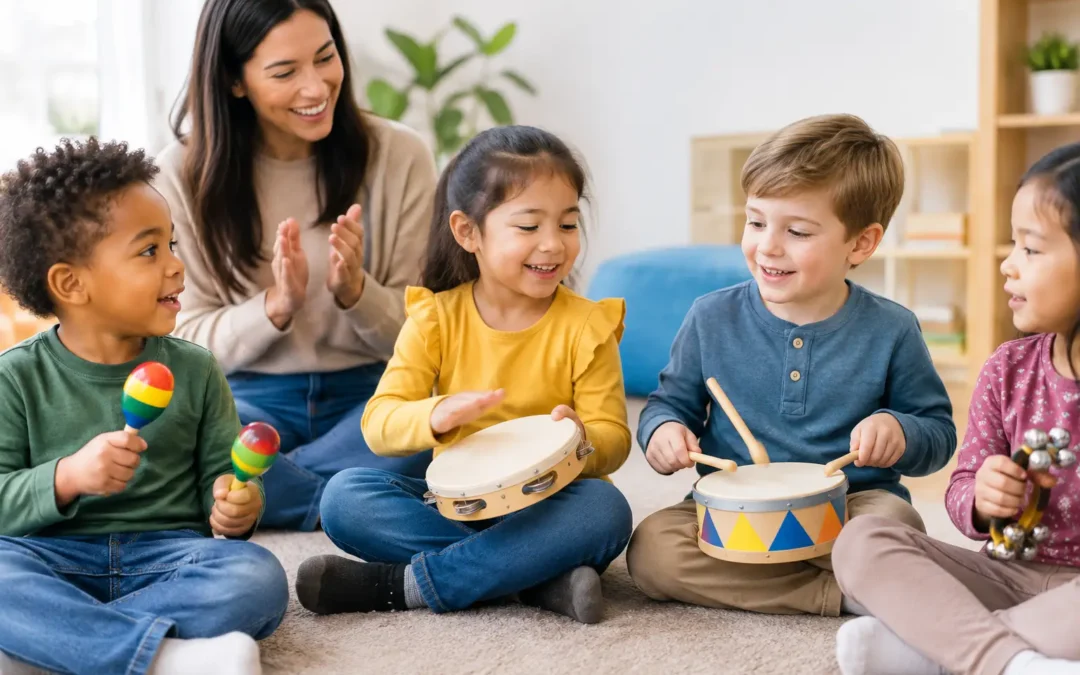
A three-year-old may not be ready to count eight beats or remember a full dance routine, but they can often copy a clap, stamp when they hear a musical cue, and move with a favourite song. So, can preschoolers follow rhythms? Yes – especially when rhythm is introduced as a joyful game rather than a test they can get wrong.
For young children, rhythm is not about perfect timing. It is about listening, noticing patterns, moving their bodies and feeling proud when they join in. These early experiences can become the foundations for dance skills, musical awareness, confidence and a lifelong enjoyment of being active.
Can preschoolers follow rhythms in a dance class?
Most preschoolers can respond to a simple, steady beat. They may clap along to a song, march in time, copy a teacher’s stamp or stop moving when the music pauses. Their timing will vary from week to week, and sometimes from one minute to the next. That is completely normal.
At this age, children are still developing the ability to listen, process an instruction and coordinate their movement at the same time. Some will quickly find the beat and love taking the lead. Others may watch for several weeks before confidently joining in. Both approaches are valuable, and neither tells us whether a child will enjoy dance or become a strong dancer later on.
A good pre-school dance class gives children plenty of chances to try again without pressure. Rather than asking them to perform a complicated sequence, the teacher might use a familiar song and invite them to clap, tap their toes, march, freeze or copy a simple pattern. Repetition helps the beat become familiar, while variety keeps little ones interested.
Irish dance is particularly well suited to this kind of early learning. The clear sounds of feet, hands and music give children something they can hear as well as feel. A gentle stamp-stamp-clap pattern can be far more memorable to a young child than an explanation about musical counts.
What rhythm skills develop during the pre-school years?
Rhythm develops gradually, alongside speech, balance, coordination and attention. A child does not need to have every skill in place before joining a class. Dance can help them practise these skills in a positive, social setting.
Keeping a steady beat
A steady beat is the regular pulse underneath the music. Young children may first show awareness of it by bouncing, walking or clapping at roughly the right speed. They may rush when excited, slow down when concentrating or lose the beat halfway through. This is part of learning.
Teachers support steady-beat skills by choosing music with a clear pulse and matching movements to it. Marching around the room, tapping knees and stepping over colourful floor markers all make the beat physical and easy to understand.
Copying short patterns
Once a child can join a steady beat, they can begin to copy very short rhythms. For example, a teacher may clap twice and ask the class to clap twice back. In time, the pattern might become clap-clap-stamp, or step-tap-step.
The key is keeping patterns short enough for children to remember. A preschooler may manage two or three sounds brilliantly, then need support when the pattern becomes longer. Small successes build willingness to try rather than fear of making a mistake.
Listening and responding
Rhythm activities also strengthen listening skills. Children learn to start when they hear music, pause at a signal and change their movement when the song changes. These are useful skills for dance, but they also support classroom readiness and everyday confidence.
A child who initially finds it hard to wait may gradually learn to watch the teacher, listen for their turn and join the group. This progress can be quiet but meaningful. For many families, the growing confidence to take part is just as exciting as learning a new step.
Coordinating both sides of the body
Following a rhythm involves more than hearing it. A child needs to organise their body to make the movement. Alternating feet, clapping hands, balancing on one leg or moving forwards in time with others all take practice.
This is why preschool rhythm activities should be active, playful and age-appropriate. Sitting still for a long explanation is rarely the best route to learning. Moving, copying and having another go gives children the information they need.
Why some children seem to find rhythm easier
Children develop at different rates. One child may naturally move to music, while another may be more interested in watching, chatting or exploring the room at first. Personality, tiredness, familiarity with group activities and confidence away from home can all affect how readily a child joins in.
Previous exposure can make a difference too. A child who regularly sings nursery rhymes, claps games or dances in the kitchen may recognise simple beats sooner. Yet this is not a requirement. A structured beginner class exists to introduce these experiences in the right order.
It also helps to remember that a child who appears not to be participating may still be learning. Watching closely, listening to the music and copying later at home are all signs that they are taking things in. Gentle encouragement works better than repeatedly asking a hesitant child to perform in front of everyone.
How teachers make rhythm feel achievable
The best early-years teaching combines clear structure with plenty of imagination. Children need predictable routines, but they also need a reason to care about repeating a movement. A marching game, a musical freeze or a chance to make loud and quiet foot sounds can turn repetition into fun.
At Kane Irish Dance, pre-school learning is designed to meet children where they are. Teachers break skills into manageable moments, celebrate effort and create a welcoming environment where children can grow used to moving as part of a group.
Simple language matters. “Can you make your feet sound like raindrops?” is often more effective than technical terminology. Visual demonstrations matter too, because many young children understand by seeing and copying. A teacher may stand alongside the group, use clear hand signals and repeat the same cue each time.
There is a balance to strike. Too much correction can make a child self-conscious, but no guidance at all can leave them unsure what to do. Supportive teachers notice the attempt first, then offer one small next step: perhaps slower feet, a bigger clap or waiting for the music to start.
Ways parents can encourage rhythm at home
There is no need for formal practice at this age. A few relaxed musical moments during the week can reinforce what children experience in class and help them see rhythm as something enjoyable.
Try clapping along to nursery rhymes, marching from one room to another, or taking turns making a simple sound pattern for the other person to copy. Use everyday moments too. You can tap a beat while putting toys away, make a rhythm with wooden spoons, or pause a song and see who can freeze first.
Keep it light. If your child loses interest after thirty seconds, finish while it is still positive. Short, happy repetitions are more useful than insisting they complete an activity when they are tired or frustrated.
Avoid comparing siblings or friends. Preschoolers flourish when adults notice their own progress: “You listened for the stop,” or “You kept marching until the music finished.” Praise that describes effort helps children understand what they have achieved.
When should parents be concerned?
Most variations in rhythm, coordination and confidence are typical in the pre-school years. A child who cannot yet clap in time, who prefers to observe, or who needs lots of reminders is not falling behind simply because another child seems more confident.
If you have broader concerns about hearing, communication, movement or development, it is sensible to discuss them with your health visitor, GP or early-years setting. A dance teacher can share observations from class, but they cannot assess a child clinically.
For most children, the answer is patience, regular opportunities and a class that feels safe. Rhythm is learned through experience. Every clap, skip, stamp and smile adds another small piece to the picture.
A preschool dance class is not asking children to be polished performers. It is giving them a place to listen, move, make friends and discover what their bodies can do. When the music starts, joining in with one small beat is already a wonderful beginning.