
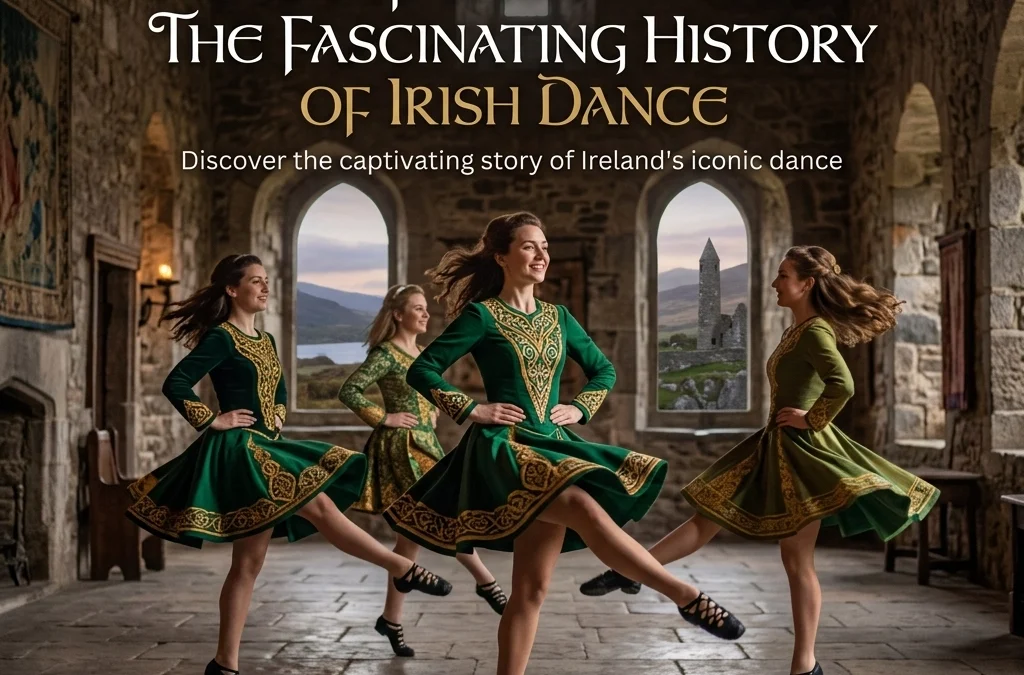
Ever watched an Irish dancer and wondered, "How on earth do their feet move that fast while their arms stay so still?" You aren't alone! Whether you're a seasoned pro or someone looking for irish dance classes huddersfield, there is something absolutely mesmerizing about the rhythm, the precision, and the sheer power of this art form.
But behind those lightning-fast feet lies a story that spans over two thousand years. It’s a tale of Druids, traveling "rockstar" dance teachers, and a cultural resilience that refused to be quieted. Irish dance isn't just a workout (though, boy, does it get the heart rate up!); it’s a living, breathing piece of history. At Kane Irish Dance, we aren't just teaching steps; we’re passing on a legacy that has captivated audiences across the globe.
Let’s take a journey through time and see how we got from ancient Celtic rituals to the vibrant, high-energy classes we run today.
The Ancient Roots: Dancing with the Druids
Long before the glitz and glamour of modern costumes, Irish dance had a much more spiritual beginning. The roots of traditional irish dance stretch back to the Celts and the Druids, who inhabited Ireland over 2,000 years ago. For these ancient people, dance wasn't just for fun: it was a way to honour the sun, the seasons, and the gods.
The Celts had a rich tradition of music and storytelling, and their rituals often involved circular dances. While we don’t have video footage of a Druid doing a heavy jig (sadly!), many of the circular patterns we see in modern team dancing: or céilí dancing: are thought to be echoes of these ancient sun-worshipping rituals. It’s pretty cool to think that when you’re spinning around a studio in Huddersfield, you’re actually repeating patterns that are thousands of years old!
The Normans and the "Rince Fada"
Fast forward to the 12th century, and the Normans arrived in Ireland, bringing their own flair to the local scene. They introduced the "Round Dance," a style where dancers would follow a leader and move in circles. By the 16th and 17th centuries, records began to emerge of specific dances like the Rince Fada (the Long Dance).
Imagine a grand hall filled with dancers in two long lines, holding white handkerchiefs between them as they moved to the sound of a bagpipe. It sounds a bit more formal than our modern classes, but the joy and the community spirit were exactly the same. Irish dance has always been one of the ultimate irish cultural activities, bringing people together to celebrate life’s big moments.

The Era of the Dance Masters: The Original Influencers
If we had to pick a "Golden Age" for Irish dance, it would probably be the 18th and 19th centuries. This was the era of the Dance Masters. These men were the celebrities of their day. A Dance Master would travel from village to village, usually dressed in a flashy waistcoat and carrying a staff. He would stay with a local family for a few weeks, teaching the local children (and the adults!) the latest steps in exchange for food and a place to sleep.
These masters were incredibly protective of their "signature" moves. They each had their own unique style, and competition between masters from different counties was fierce. They would often meet at fairs or crossroads to have "dance-offs" to prove who was the best. Sound familiar? It’s basically the 18th-century version of a TikTok dance challenge!
It was during this time that the "stiff arm" style we know today really took hold. There are plenty of myths about why the arms stay still: some say it was because the Catholic Church didn't want people dancing too "expressively," while others say it was because dancers often performed on small wooden doors or table tops and needed to keep their balance. Whatever the reason, it created a style that is unique and unparalleled in the dance world.
The Gaelic League and the Birth of Competition
By the late 1800s, there was a huge movement to preserve Irish culture, which had been under threat for a long time. In 1893, the Gaelic League was formed. They wanted to make sure that Irish music, language, and dance didn't just survive: they wanted it to thrive.
The League organized the first official competitions, known as feiseanna (singular: feis). This was a game-changer. Suddenly, there were rules and standards. The dances were categorized into the forms we recognize today: the Reel, the Jig, and the Hornpipe. They also created new "Céilí" dances to encourage social dancing, like "The Walls of Limerick" and "The Siege of Ennis."
This period turned Irish dance from a casual village pastime into a disciplined art form. It’s because of this push for preservation that we still have the magic of Irish dance today, passed down through generations of teachers to us here at Kane Irish Dance.
From Solo to Synced: The Modern Evolution
In the late 20th century, Irish dance exploded onto the global stage. What was once a niche cultural activity became a worldwide phenomenon. Today, you can find Irish dance schools from Tokyo to Texas, and of course, right here in Huddersfield!
Modern Irish dance is a blend of that ancient tradition and incredible athletic fitness. We use two main types of shoes:
- Light Shoes (Pumps): These are soft leather shoes that allow for graceful, ballet-like movements. You can learn more about the magic of light shoes and how they help dancers soar.
- Heavy Shoes (Jig Shoes): These are the ones that make the noise! They have fiberglass tips and heels to create those iconic rhythms. Exploring the history of heavy shoes is a journey into the percussive heart of the dance.

Why History Matters at Kane Irish Dance
You might be thinking, "That’s all very interesting, Penny, but I just want to learn how to dance!" And we totally get that. But at Kane Irish Dance, we believe that knowing where these steps come from makes the dancing even more special. When you master your first easy reel, you aren't just hitting points; you’re connecting with centuries of Irish culture.
We pride ourselves on creating a community that respects these traditions while embracing modern fitness coaching. Whether you’re a child starting your first class or an adult looking to improve your bone health, there’s a place for you in our story.
Ready to Make Your Own History?
The best part about history is that it’s still being written: and you can be a part of it! Whether you want to dance for fun, for fitness, or to compete, we would love to welcome you to the Kane Irish Dance family.
We’ve made joining us easier than ever with our brand-new digital booking system. No more faffing around with paperwork; you can book your spot in seconds from your phone or computer.
If you’re new to the world of jigs and reels, why not try one of our trial classes? It’s the perfect way to see what we’re all about without a long-term commitment.
Our Trial Class Pass Prices:
- Children (Ages 3+): £10.00
- Teens & Adults: £12.50

Whether you're looking for fun for young minds or a new way to get fit and have fun as an adult, we have a class for you. Come and discover why this vibrant and rich cultural tradition is still going strong after 2,000 years.
Irish dance is more than just a hobby; it’s a journey through time, a fantastic way to stay fit, and a brilliant community to be a part of. We can't wait to see you on the dance floor and help you find your rhythm!
See you at the studio,
The Kane Irish Dance Team